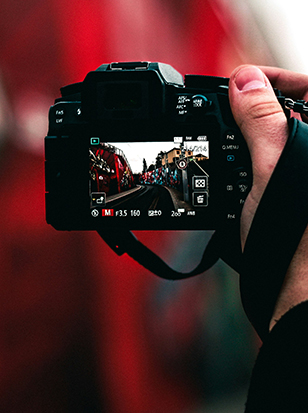
If you want to capture perfect people pictures, the first step is picking the best camera for portraits. For great portraiture, there are some features you can do without: a fast burst rate, for instance, isn’t particularly necessary. It’s best to concentrate on getting a sensor with plenty of resolution, so you can crop and print your images if necessary. Eye-detection focus can also be a bonus, to make sure you’ve nailed your focal point exactly where it needs to be, and a good selection of short telephoto, large-aperture lenses is a must.
We’ve picked out a range of cameras for different systems that will excel at capturing crisp, dynamic portraits. We’ve included both professional and budget-friendly options, and a range of formats from mirrorless to medium format, with a DSLR in there too for those who prefer classic handling.
|
Pros:
Cons:
|
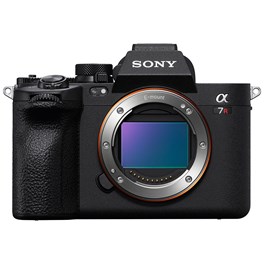
Sensor: 61MP full-frame BSI-CMOS Autofocus: 693-point phase detection with subject recognition Video: 8K at 24fps; 4K at 60fps; 10-bit 4:2:2 Stabilisation: 5-axis in-body image stabilisation (IBIS) Viewfinder: 9.44M-dot EVF with 0.9x magnification |
The latest in Sony’s high-resolution A7R mirrorless series, the Sony A7R V gives you 61 megapixels to play with on a back-illuminated full-frame sensor. Now, granted, this was also true of the previous camera in the series, the Sony A7R IVA, so what’s new with this edition?
Sony has outfitted this newer mirrorless camera with new processing engines that make its operation faster and more powerful than ever. Crucially, these enable the use of the hot-ticket camera feature of the last couple of years – AI-powered subject-detect focusing and exposure systems. The A7R V can recognise human shapes, faces and eyes with incredible reliability, and track humans in a variety of poses and positions. It can find eyes even when they’re barely visible, and you can dial into the settings to focus on eyes and nothing else, if you want.
For portraiture, the Sony A7R V is a dream – as was the A7R IVA. So if you can live without next-gen autofocus and want to save some cash, the older camera is definitely worth consideration too.

|
Pros:
Cons:
|
Sensor: 45MP full-frame stacked CMOS Autofocus: Dual Pixel AF with Eye Control Focus Video: 8K at 60fps; 4K at 120fps; 10-bit 4:2:2 internal recording Stabilisation: 5-axis IBIS Continuous Shooting: Up to 30fps (electronic shutter) |
The Canon EOS R5 Mark II has set a new benchmark for full-frame photography, and it’s an absolutely perfect camera for portraits. Not only does it deliver sublime images thanks to a 45MP back-illuminated, stacked CMOS sensor, but this resolution can be boosted still further with clever, AI-powered in-camera upscaling. This deep-learning system can produce high-resolution versions of images as large as 180MP, and thanks to the improved noise performance, detail survives well even at higher ISO sensitivities.
The Canon ecosystem is a good one to be in if you’re serious about portrait photography, with an extensive range of lenses and useful accessories like flashguns. While the EOS R5 Mark II uses the mirrorless RF mount, it can also easily be adapted to make use of older EF-mount DSLR lenses, giving you tons of affordable optical options for your portraiture.

|
Pros:
Cons:
|
Sensor: 40.2MP APS-C X-Trans CMOS 5 HR Stabilisation: 5-axis IBIS rated to 7 stops Video: 6.2K at 30p; 4K at 60p; FHD at 240p Autofocus: 425-point hybrid AF with subject detection Shooting Speed: Up to 15fps (mechanical shutter) |
The Fujifilm X-T5 is a class-act all-around, and an ideal choice for portrait photography. Its considerable resolution bump to 40MP, compared to 26.1MP on the X-T4, makes it a compelling choice for portrait photographers, and it’s a wonderful camera to use thanks to the system’s resolutely analogue-style handling. Dials on the top plate and aperture rings on the lenses? Yes please.
Images from the X-T5 look absolutely gorgeous. You get exceptional quality in RAW at most settings, of course, though if you prefer to shoot in JPEG and take advantage of the creative Film Simulation modes, the X-T5 is great for that too. Its autofocus system is an AI-powered subject-detect system, and while it’s not as powerful as those you’ll find on the likes of Sony and Canon, it’s more than enough for portrait shooting.
There aren’t many flaws to this camera as far as portraits are concerned. Full-frame sensors will give you shallower depth of field, but let’s not get carried away– APS-C gives you plenty, and the superb selection of large-aperture lenses for X-mount more than makes up for it.
|
Pros:
Cons:
|
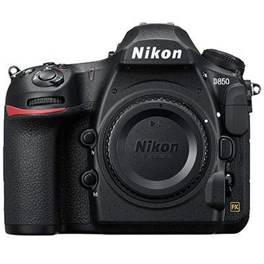
Sensor: 45.7MP full-frame BSI-CMOS Autofocus: 153-point AF system with 99 cross-type sensors Video: 4K UHD at 30p; FHD at 120p ISO Range: 64–25,600 (expandable to 32–102,400) Battery Life: Approx. 1840 shots (CIPA) |
Best DSLR ever made? You could find no shortage of photographers who’d argue that case. The Nikon D850 is a workhorse camera that just shoots and shoots, and does so in glorious 45.7MP detail thanks to its full-frame back-illuminated sensor. All the classic advantages of DSLRs are present and correct – the D850 has a weather-sealed body, enviable battery life and a big, beautiful viewfinder. There are plenty of other useful features too, including dual card slots – one for XQD/CFExpress, one for SD UHS-II. But more than that, it’s a camera that just feels great to use – one you can trust to nail the shot, time and again. Being able to batch-process RAW files in-camera is handy too.
It’s not a light camera, and if you’re using it handheld for an extended shoot, you’ll be keenly aware of the weight. Also, be aware that the AF speed does suffer if you’re using Live View with the LCD rather than composing in the viewfinder.

|
Pros:
Cons:
|
Sensor: 100MP medium format CMOS (44 x 33mm) Stabilisation: 5-axis IBIS rated to 10 stops Autofocus: 425-point phase detection with LiDAR and subject tracking Storage: 1TB internal SSD + CFexpress Type B slot Display: 3.6" tilting touchscreen with 1400-nit brightness |
Is this the finest camera that Hasselblad has ever produced? The Hasselblad X2D 100C II is an astonishing achievement, a stunning camera that delivers sublime images with that impossible-to-replicate medium format depth, while also making dozens of other improvements that make it easier than ever to operate.
Unlike previous Hasselblad medium format cameras, this one has continuous autofocus, and this pairs with LiDAR autofocus and subject-recognition to make for a camera that just flows so much better in a portrait shoot. Its stunning 16-bit images deliver 15.3 stops of dynamic range, and this helps provide that vivid three-dimensional quality of medium format, one that you just don’t get with smaller sensor systems. If you want to make portraits with impact, this is the best way to do it.
Also, this isn’t quite as relevant for portrait shooters, but it bears mentioning: 10 stops of stabilisation?! Nothing short of witchcraft.
|
Pros:
Cons:
|
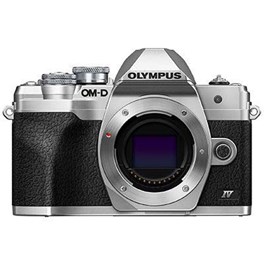
Sensor: 20.3MP Four Thirds CMOS Stabilisation: 5-axis IBIS rated to 4.5 stops Autofocus: 121-point contrast-detect AF Video: 4K at 30p; FHD at 60p Weight: 383g (including battery) |
Portrait photography isn’t just for those with deep pockets. While we’ve seen plenty of high-end professional portrait cameras in this guide, there are also plenty of options for those who have comparatively little to spend – and you don’t just have to restrict yourself to point-and-shoots. Since lens choice is so important in portrait photography, we’ve picked this as it will produce stunning portraits without breaking the bank.
One of the best beginner mirrorless cameras around, the Olympus OM-D E-M10 Mark IV is a clever and stylish little camera that ticks a lot of boxes for portrait shooters. For one, it is part of the Micro Four Thirds system, meaning you have absolutely loads of lenses to choose from, including plenty of fantastic large-aperture short telephotos that hit the portraiture sweet spot. What’s more, the E-M10 Mark IV has a stellar stabilisation system that makes it easier to use slower shutter speeds without incurring image blur.
Of course, the Micro Four Thirds system does also mean a smaller sensor than full-frame or APS-C. This does impact depth of field in images, as well as dynamic range, and can be restrictive in low light. It’s certainly not a deal-breaker – plenty of photographers have created dazzling portraits with Micro Four Thirds. You just have to be aware of what you’re working with, and get to know the camera.
While all the cameras we’ve listed here can all be bought new, we’d also recommend checking out our constantly changing selection of Used cameras, as this is the best way to pick up a professional-spec camera without having to pay professional prices.
How to choose
Here are the key things you’ll need to think about when choosing the best camera for portraits.
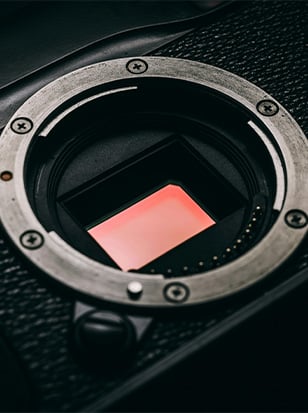
Sensor size - Larger sensors have many advantages in terms of image quality, delivering better dynamic range and high-ISO performance. What’s especially interesting for portrait shooters though is that a larger sensor allows for a narrower depth of field, meaning you can more effectively isolate a pin-sharp subject against a blurred background. However, larger sensors also come in more expensive cameras, so it’s a matter of weighing your needs against your budget.
Resolution - Quite simply the number of pixels on a sensor. Ideally, for portraiture you want a fair few megapixels to play with, particularly if part of your process or business is going to be offering prints of your images. Big megapixel counts deliver more detailed images, but also require your focusing to be dead-on, and your lenses to be as sharp as possible. Speaking of which…
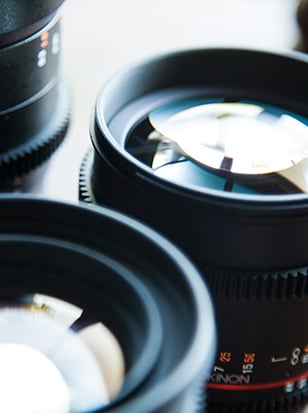
Lens selection - Getting the right lens is of critical importance in portrait shooting, as you need a generous maximum aperture to create an image with a sharp main subject and an artfully blurred background. This means you generally need to opt for an interchangeable-lens camera, as compacts won’t have big enough apertures, and also means you need to think carefully about the lens options you’ll have available, which we’ve kept in mind when making our choices for this guide. You can see our dedicated guide to the best lenses for portraiture here [link].
Eye AF - In portraiture, focusing sharply on the eyes is critical for successful pictures. Your autofocus and burst rates don’t need to be as mind-blowingly fast as they do for wildlife and sports photography, but with that said, having a camera that can accurately pick out and keep focus on a person’s eyes will make your life a lot easier.
FAQs
What is portrait photography?
Portrait photography is a type of photography that focuses on capturing images of individuals or groups of people. It can be shot in a variety of styles, ranging from traditional, formal poses to more candid, spontaneous shots.
What equipment do I need for portrait photography?
A camera and a wide aperture lens. This combination will help you capture a shallow depth of field that is essential for portrait photography. A tripod and lighting equipment, such as soft boxes, reflectors, and strobes, can also greatly enhance the quality of your portraits.
What is the best time of day to shoot portraits?
The best time to shoot portraits is during the “golden hour”, which is the hour before sunset or the hour after sunrise. During this time, the light is warm, soft, and diffused, which creates a flattering and natural-looking environment for your subjects.
How do I pose my subjects?
Posing your subjects depends on their comfort level, the mood you want to convey, and the setting. A good starting point is to have them stand or sit with their shoulders back, chin slightly raised, and eyes looking directly into the camera. From there, you can have them lean, turn, or move in different directions to create variety and interest.
Do I need lighting to take portraits?
While it can be beneficial, you can take excellent portraits without it. However, if you do use lights, the key is to find the right balance of light and shadow to create depth and texture. You can use a single light source, such as a strobe, to create a dramatic look, or multiple light sources, such as soft boxes and reflectors, to create a more balanced and natural look.
What are the most common mistakes in portrait photography?
The most common mistakes in portrait photography include shooting with too much contrast, using too much flash, or not paying attention to the background. It’s also important to effectively communicate with your subjects, otherwise, it can lead to unflattering and unnatural-looking portraits.
How do we decide?
Our in-house photography specialists, store staff, and industry partners work together to review our buying guides and advice articles. We also monitor emerging trends and listen closely to customer feedback, ensuring our recommendations stay current and relevant to what photographers and filmmakers are actually looking for.
By carefully curating the products we recommend, our guides are designed to offer clear, trustworthy advice that helps customers choose the right kit with confidence.
If you would like further advice, our contact centre team are here to help. You can also reach us via email or social media. And remember, if you purchase based on our recommendations, your order is covered by our full returns policy.

Sign up for our newsletter today!
- Subscribe for exclusive discounts and special offers
- Receive our monthly content roundups
- Get the latest news and know-how from our experts