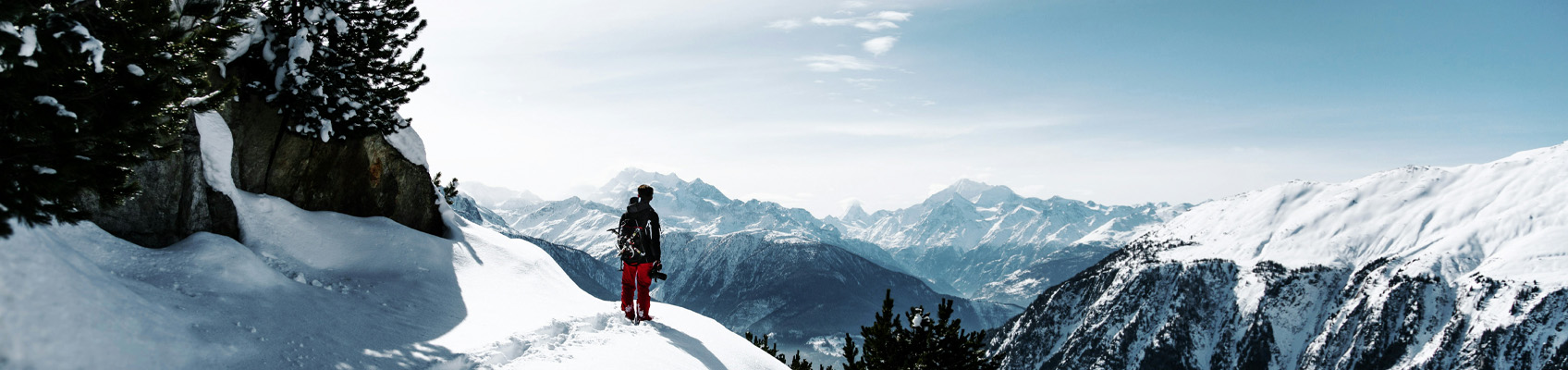
In this guide, we’re dealing with the best accessories for landscape photography that you may not have thought of. We’re assuming you already have the three essentials that every landscape photographer needs: a camera, lens and tripod. This guide covers smaller and inexpensive accessories that can make your life easier and improve your chances of bagging the perfect shot you’re after.
With the accessories on this light, you can modulate light, protect your camera, organise your essentials and more. We’ve aimed to keep things affordable on this list, and have only included accessories that we believe will make a genuine difference to your landscape photography.
For the foundational building blocks of your setup, check out our guides to the best camera for landscapes, best lens for landscapes and best photography tripods. Otherwise, read on to see what we’ve picked as the essential accessories for landscape shooters to add to their kit bags
Our top picks


Pros:
- Enables quick switching between horizontal and vertical orientations
- Flexible camera and system compatibility
- Adapter available for Peak Design Capture Clip
Cons:
- It may seem complex at first
L-brackets are essential as they enable you to quickly change the orientation of my camera from landscape to portrait without affecting the ball head of the tripod. While a standard quick-release plate can be very useful, some find that moving the camera into a portrait position using one of these is awkward, fiddly and has a tendency to off-centre the camera. With an L-Bracket fitted, swapping orientations is the work of moments.
Many L-brackets are made to suit only one make and model of camera — however, the 3 Legged Thing Ellie is a universal design that can be adjusted to fit pretty much anything. This makes it a lot more versatile and well worth the investment. Also, if you use Peak Design’s Capture Clip system, Ellie can be bought with an adapter to seamlessly work with it. You can find the whole Ellie range here.

Pros:
- Can create effects not easy to replicate digitally
- Small, light and portable
- Huge range of options
Cons:
- Need to get the right size to fit your lens or holder
- Wide landscape zooms often don’t take circular filters
Filters are a key piece of equipment every landscape photographer should have in their bag, whether that’s an ND, Graduated ND or a circular polariser. They enable us to make small and large adjustments to the look and feel of the image, and in many cases allow us to achieve things that simply can’t be achieved in post-processing, such as smoothing over moving water or cutting out reflections.
Generally, serious landscape photographers will have at least four filters in their kit bag for all outings: a 3-stop ND, a 10-Stop ND, a 0.9 Graduated ND and a circular polarising filter. For more on the best filters for landscapes, see our dedicated lens filters buying guide where we’ve put together a complete rundown.


Pros:
- Brilliant for time-lapse and long exposures
- Wireless and wired compatibility
- Powered by common AA batteries
Cons:
- Need to get the right model for your brand of camera
The avid landscape photographer can find a multitude of uses for a shutter release and intervalometer. You can remotely fire your camera’s shutter, shoot exposures longer than 30 seconds in bulb mode and create great time-lapses using the interval settings. Triggering your camera’s shutter remotely can also be very handy for avoiding the tiny but perceptible amounts of camera shake that can be caused by physically depressing the shutter button — especially handy if you’re shooting a long exposure.
The Hahnel Captur Timer Kit is a brilliant option. Available for Canon, Nikon, Fujifilm, Sony and Olympus/OM System/Panasonic, this intervalometer and remote trigger can connect wirelessly with your camera at ranges of up to 100m, though it also has a cabled mode if you prefer.

Pros:
- Cheap, simple way to keep your gear clean
Cons:
- Not many!
In landscape photography, Mother Nature is sometimes on your side and is sometimes… not. As such, it’s always a good idea to have a way to keep your gear clean and dry, especially the front element of your lens. Most landscape photographers have learned the value of keeping handy a microfibre cloth like this one from Zeiss. Not only are these useful if it rains but also when working on the coastline, as seawater can sometimes spray onto the lens.
It’s always best to use a dedicated microfibre cloth rather than just any old rag to clean your lenses, as this will protect the delicate coatings on the front elements from being compromised.

Pros:
- Can be lifesaving on dark country roads and paths
- Affordable and portable
Cons:
- Not the most dignified thing to wear (but it is worth it)
The thing about landscape photography is that it’s often done around sunrise and sunset. That’s when you get the most brilliant light, and those spectacular views you just can’t help but capture. However, photographing at these times means you’ll often be walking either to or from your location in the dark. And with many landscape photographs being taken in remote rural areas, there may not be much artificial lighting to speak of.
That’s why a head torch is a good thing to always carry with you. Walking around in the dark can cause accidents, and can be extra dangerous if you have to cross or walk on a road where drivers might not see you. Also, it can be tricky to see your camera controls and tripod locks in the dark, especially if you’re in a hurry to set up before the sun rises. So we’d recommend Filmsticks Head Mounted Torch, which is a great choice — small and affordable, with charging via micro USB.

Pros:
- Holds plenty of cards and batteries
- Hard-shell water-resistant build
- Comes with carabiner for easy transport
Cons:
- Not fully waterproof (can’t be submerged)
- Hardshell can make it more awkward to transport
An ideal way to protect all your spare memory cards and batteries (you definitely picked up spare memory cards and batteries, didn’t you?) the Calumet Battery & Memory Card Case is a hard-shell holder. It can carry up to four SD cards, six MicroSD cards, and two CF or XQD cards, as well as two camera batteries or a selection of AA and AAA batteries.
Its tough design is water-resistant, impact-resistant, dustproof, shockproof and thermal-resistant, keeping your vital accessories safe when you’re out on location. Measuring just 15.5cm along its longest edge, it won’t take up too much space in your kit bag, and it is supplied with its own carabiner for easy attachment to a bag or belt.

Pros:
- Super-portable and convenient
- Holds multiple charges
Cons:
- You may prefer a bank that can hold more charge
In an age of constantly advancing technology, smartphones have become a huge part of our lives, to the point where we heavily rely on them. Landscape photographers are no exception, and will tend to use smartphones a lot when working out in the field to check the weather, maps, exposure details and more. Unfortunately, as we all know, battery life is never great, in some cases only lasting a few hours!
That is why we highly recommend buying a power bank to put in your camera bag, so you can charge the battery when it’s getting low. Even if you don’t plan on using the phone for anything photography-related this is a useful thing to have – imagine if you had an accident and you couldn’t contact anyone due to your phone being dead?
The Ansmann Powerbank 10.8 Mini is a simple, portable power bank that allows you to carry around a little extra juice for your devices. While there are other power banks available that provide more capacity, this one offers a good balance between portability and power.
FAQs
What are the must-have accessories for landscape photography?
When it comes to landscape photography, you will want to invest in a sturdy tripod for stability, polarising filters to reduce glare and enhance colours, neutral density (ND) filters for long exposures, and a remote shutter release to minimise camera shake.
Why do landscape photographers use polarising filters?
Polarising filters are designed to enhance landscape photos by cutting through reflections on water or glass and boosting the contrast in skies. They help deepen the blue tones in the sky and make clouds pop, making your scene more vibrant and detailed.
What tripod features are important for landscape photography?
You’ll want a tripod that is sturdy, lightweight, and easy to carry on long hikes. You’ll also want to look for adjustable legs for uneven terrain and a ball head; these allow you to easily adjust your composition.
How do ND filters improve landscape photography?
Neutral density (ND) filters allow you to use longer exposures even in bright conditions, which is perfect for capturing smooth water effects or adding motion blur to clouds. They reduce the amount of light entering the lens without altering the colour balance, giving you more creative control.
Is a remote shutter release necessary for landscape photography?
While not absolutely necessary, a remote shutter release is highly recommended for reducing camera shake when taking long exposures or using a tripod. It helps ensure sharpness by allowing you to trigger the shutter without physically touching the camera, especially useful in low-light conditions.
How do we decide?
Our in-house photography specialists, store staff, and industry partners work together to review our buying guides and advice articles. We also monitor emerging trends and listen closely to customer feedback, ensuring our recommendations stay current and relevant to what photographers and filmmakers are actually looking for.
By carefully curating the products we recommend, our guides are designed to offer clear, trustworthy advice that helps customers choose the right kit with confidence.
If you would like further advice, our contact centre team are here to help. You can also reach us via email or social media. And remember, if you purchase based on our recommendations, your order is covered by our full returns policy.
Sign up for our newsletter today!
- Subscribe for exclusive discounts and special offers
- Receive our monthly content roundups
- Get the latest news and know-how from our experts