With the best cameras for landscapes, you can achieve absolutely dazzling images of the natural world. Whether you’re roaming the Peak District, capturing long exposures of the tides on the south coast, or shooting atmospheric images of a forest at night, a landscape camera will give you the resolution and flexibility you need to bag the shot.
There are a number of factors that might make one camera a better choice than another for landscapes, and we’ve broken down our criteria in the ‘how to choose’ section at the bottom of this page if you’d like to learn more. Suffice to say, there are certain features you want to prioritise (resolution, dynamic range, lens selection) and certain features you can do without (burst rate, fast autofocus). Doing so will allow you to maximise the value of your budget, and get the best possible landscape camera you can afford.
We’ve included a range of terrific cameras for landscapes here, including options for budget-conscious users as well as high-end premium cameras for those who want the best of the best. We’ve prioritised the best mirrorless cameras, but have also included a DSLR for those who prefer to shoot this way. Let’s take a look.
What's coming up:
Best landscape camera overall: Fujifilm X-T5
Best high-resolution landscape camera: Sony A7R V
Best medium format camera for landscapes: Fujifilm GFX 100S II
Best DSLR for landscape: Nikon D850
Best budget camera for landscapes: Olympus OM-D E-M10 Mark IV
Best Mirrorless Camera for Landscapes

Pros:
- Gorgeous JPEG quality
- Big resolution upgrade over X-T4
- Tons of terrific lenses
Cons:
- Not full-frame
- Screen not fully articulating
Capable of producing sublime images and available at a more affordable price than full-frame professional cameras, the Fujifilm X-T5 is our pick as the best landscape camera for most users. If you like tactile, dial-based control and rugged cameras that hearken back to a classic era of manual photography, you’re going to be in absolute heaven with the X-T5.
It produces gorgeous, punchy, vivid images in both RAW and JPEG format, which is great for those who don’t want to spend too much time editing. You can take advantage of Fujifilm's lovely Film Simulation modes to imbue your images with specific looks, from the intense colours of Velvia to the B&W intensity of Acros. Furthermore, the X-mount lens range has loads of brilliant, sharp optics, not only from Fujifilm but also from third-party manufacturers like Sigma and Tamron.
It’s not a full-frame camera, but the Fujifilm X-T5 makes a compelling argument for the viability of the APS-C sensor for enthusiast and professional photographers. It’s difficult to think of a reason a landscape photographer would have any reason to be disappointed with this camera.
Best high-resolution landscape camera:
Pros:
- Stunning 61MP images
- Pixel-Shift mode can bump this up to 240MP
- Excellent lens selection
Cons:
- Same sensor as cheaper A7R IVA
- Pixel-Shift can’t be completed in camera
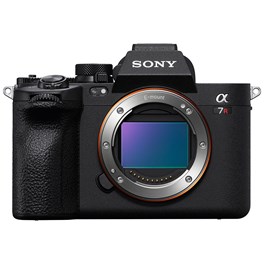
The A7R cameras have always been the resolution specialists of the Sony mirrorless family, and the A7R V is the most accomplished camera in the series yet. It’s built around a 61MP sensor that’s among the highest-resolution full-frame sensors you can get right now. The A7R V is capable of capturing simply stunning images in all conditions; while all those pixels mean it’s at its best in good light, it still does well when conditions get dim.
As a recent camera, the A7R V can take advantage of modern computational photography features to push things still further. Engage the Pixel-Shift multi-shot mode and you can produce stitched images up to 240MP in resolution, and Sony’s software will use AI to cleverly correct for microscopic camera movements (though you’ll need desktop software to complete the final product).
With a fantastic selection of E-mount lenses, the A7R V is one of the best possible choices for landscape photographers — though if it’s out of your budget, the cheaper A7R IVA also sports a 61MP sensor.
Best Medium Format Camera for Landscapes:

Pros:
- Incredible 102MP image quality with large-sensor depth
- Relatively affordable for medium format
- 400MP pixel-shift mode
Cons:
- High resolution demands precision and perfection
Fujifilm has done an incredible job of revolutionising digital medium format with its GFX series, making large-sensor photography genuinely accessible to many more people. Cameras like the superb Fujifilm GFX 100S II deliver dazzling high-resolution image quality in a body that’s both more portable and more affordable than these kinds of cameras used to be. The level of detail captured by this camera is simply dazzling; it truly has to be seen to be believed, with its 16-bit RAW and 10-bit HEIF images offering a simply tremendous amount of flexibility.
Alternatively, just like the X-T5, the GFX 100S II also boasts the full complement of Film Simulation modes, allowing you to imbue your high-res images with specific analogue-style looks, which is handy if you’re someone who prefers not to mess around in editing too much. It does have a few disadvantages compared to smaller-sensor cameras, but none of them really matter for landscape photography — you don’t need faster burst rates or super-speedy autofocus. All that resolution requires pinpoint accuracy in focusing and exposure, but if you take the time and care to get things right, you’ll be rewarded with images like no other.
Best DSLR Camera for Landscapes:
Pros:
- Extremely tough magnesium-alloy body
- Exceptionally good battery life
- Sublime image quality
Cons:
- Fast card slot XQD, not CFExpress
- A big, bulky camera
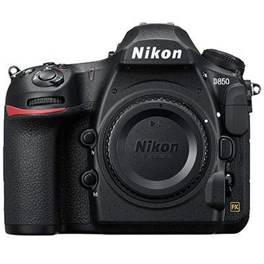
One of the finest DSLRs ever made? Nikon’s D850 certainly has a claim to the title. This full-frame beast isn’t a small camera by any means, but its 45.7MP full-frame sensor produces absolutely dazzling images that will print beautifully, and it’s more than capable of capturing landscapes of all types. The magnesium-alloy body of the D850 is weather-sealed and hardy, and you also have the huge selection of F-mount lenses to play with, giving you a nicely broad suite of options. If you simply prefer the idea of shooting on a DSLR, with a big chunky body and an optical viewfinder, then the Nikon D850 is a fantastic choice for landscapes.
The D850 really leans into a lot of the natural advantages of DSLRs. For instance, while it lacks the USB charging you get in a lot of newer mirrorless models, its EN-EL15a lithium-ion battery is rated to last at least 1,840 shots. Pack a couple of those and it’s very unlikely you’ll find yourself running out across a day’s shoot. The D850 is a camera that nails the shots in all conditions, and even as we’re closing in on a decade since its release, it’s still one of the best cameras for landscape photography enthusiasts.
Best Budget Camera for Landscapes:
Pros:
- Easy to use for beginners
- Live Composite mode for long exposures
- Solid 20.3MP resolution
Cons:
- Smaller MFT sensor makes it harder to get ultra wide-angle
- Plasticky construction
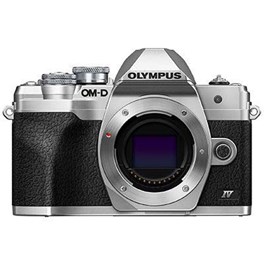
While it’s one of our favourite beginner cameras of all time, the Olympus OM-D E-M10 Mark IV sports a number of easy-to-use but advanced features that make it excellent for landscape photography. We particularly like the Live Composite feature, which allows you to create long-exposure images and monitor their progress on the LCD in real time. With 20.3MP of resolution, the E-M10 IV offers a reasonable amount of pixel power for making prints of your images. It captures punchy and vivid images with great-looking colours, and benefits from the huge selection of Micro Four Thirds lenses.
One thing to note is that the 2x crop factor of MFT can make it more difficult to achieve ultra-wide angle images, as the effective focal length of a lens is double. It’s certainly not impossible though.
The camera has a plastic body, rather than the heavier metallic construction of premium and professional cameras, and while this does mean it’s a bit less tough, it also makes the E-M10 Mark IV incredibly light and portable. This is great if you’re planning to take it on some landscape-focused hikes.
How to choose the best landscape camera
While any camera can be used to shoot landscapes, if you do a little research and pick out a camera that’s especially suited for it, you’ll find a host of interesting creative options open up for you. For our money, the below are they key specs to keep an eye on when picking your landscape camera:
Resolution - Megapixel counts aren’t always as important as some photographers like to make out, but with that said, in landscapes it pays to have a decent amount of resolution in your pocket. Having more pixels in your images means it’s possible to make them into larger, higher-quality prints, and printing is often a big part of landscape photography – competition-winning images are often printed to be exhibited.
Sensor size - Different sensor sizes have different advantages, but large sensors are especially suited to landscape photography for two reasons. One, larger sensors provide greater dynamic range (the range of lightest to darkest tones in an image), opening up your options in low light. And second, landscape photography often requires a wide-angle perspective, and smaller sensors incur a crop factor on lenses that narrows their field of view (see our Photography Jargon Buster if you need an explainer on how this works).
Lens selection - We’ve stuck to interchangeable-lens cameras for this guide, as landscape shooters generally need more options than a fixed-lens camera can provide. When picking your camera for landscape, it’s worth looking at the lens selection, focusing in particular on whether there are some good, sharp wide-angles in your price range. See our guide to the best lenses for landscapes for some more suggestions.
FAQs
What kind of camera is best for landscape photography?
Generally, a camera with a high-resolution sensor and a wide-angle lens is best for landscape photography. Many professional landscape photographers prefer full-frame cameras because they provide better image quality and low-light performance, as well as more versatility when editing.
What are the best settings for landscape photography?
This depends on the lighting conditions and the desired outcome. Generally, you'll want to use a small aperture (high f-number) to get a larger depth of field, a low ISO to reduce noise, and a slower shutter speed to capture movement and create a sense of motion.
How do I compose a good landscape photograph?
You should consider the rule of thirds, which divides the image into thirds both horizontally and vertically. Place the main subject in one of the intersections of these lines to create a balanced and aesthetically pleasing composition.
What accessories are essential for landscape photography?
Essential accessories for landscape photography include a sturdy tripod to stabilise the camera, a polarising filter to reduce glare and increase contrast, and a remote shutter release to prevent camera shake. Additionally, a backpack to carry your equipment and extra batteries and memory cards is a good idea.
What post-processing techniques can I use to enhance my landscape photos?
Adjusting the exposure, contrast, saturation, and white balance can help enhance the colours and details in your landscape photos. You can also use tools like cloning and healing to remove distractions or add a vignette to draw attention to the main subject. However, be careful not to over-edit your images and maintain a natural-looking result.
How can I protect my camera equipment while shooting landscapes?
Protect your camera equipment from dust, moisture, and impact by using a camera rain cover, a camera bag with padded dividers, and a protective UV filter for your lens. Additionally, keep a microfiber cloth handy to wipe off any debris or moisture that may come in contact with your lens or camera body.
How do we decide?
Our in-house photography specialists, store staff, and industry partners work together to review our buying guides and advice articles. We also monitor emerging trends and listen closely to customer feedback, ensuring our recommendations stay current and relevant to what photographers and filmmakers are actually looking for.
By carefully curating the products we recommend, our guides are designed to offer clear, trustworthy advice that helps customers choose the right kit with confidence.
If you would like further advice, our contact centre team are here to help. You can also reach us via email or social media. And remember, if you purchase based on our recommendations, your order is covered by our full returns policy.
The Wex Blog


Sign up for our newsletter today!
- Subscribe for exclusive discounts and special offers
- Receive our monthly content roundups
- Get the latest news and know-how from our experts