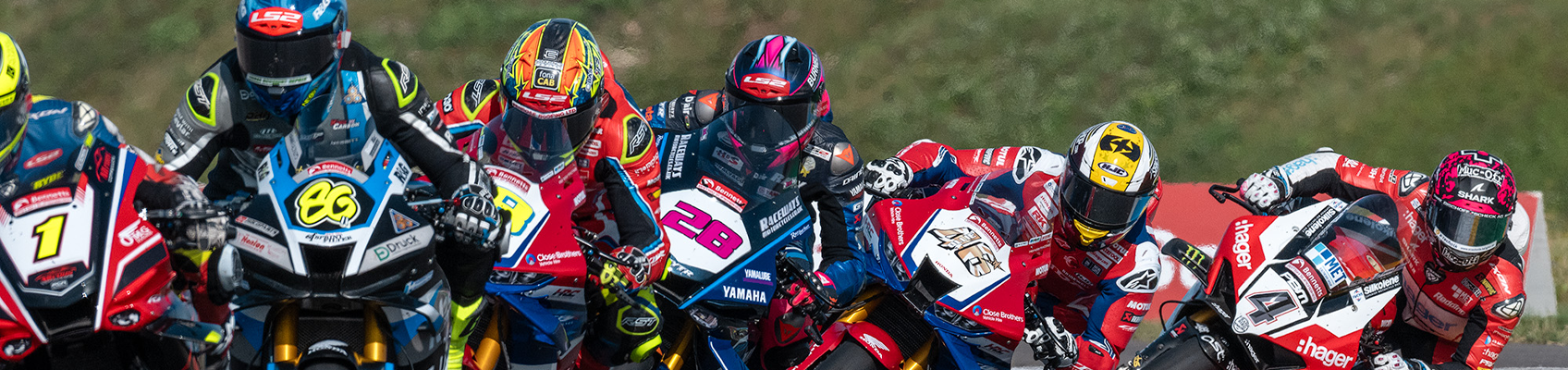
The most challenging photographic subjects can also be the most rewarding. And I can imagine that a racing motorcycle, whipping its way around a track, has to be one of the most challenging subjects going.
I’ve never dabbled with motorsport photography personally, but I have huge admiration for those who do. I wanted to know more about this exciting, formidable discipline – and in particular, what makes photographing motorbikes different from photographing other racing vehicles. So, once again, I went to the experts, and spoke to two photographers who have spent a lot of time shooting two-wheeled speedsters. How do they get the pictures they get? Here’s what I learned…
Mike Harris:
“Don’t be disheartened by a low hit rate.”
Long-term Wex readers will know Mike, as he was formerly Production Editor at this very parish, responsible for writing and editing many of our blogs. These days, he works as How-To Editor at Digital Camera World, but when he’s not writing tips and tricks to help photographers improve their craft, you can often find him at the side of a motorsport track with a camera and a long lens.
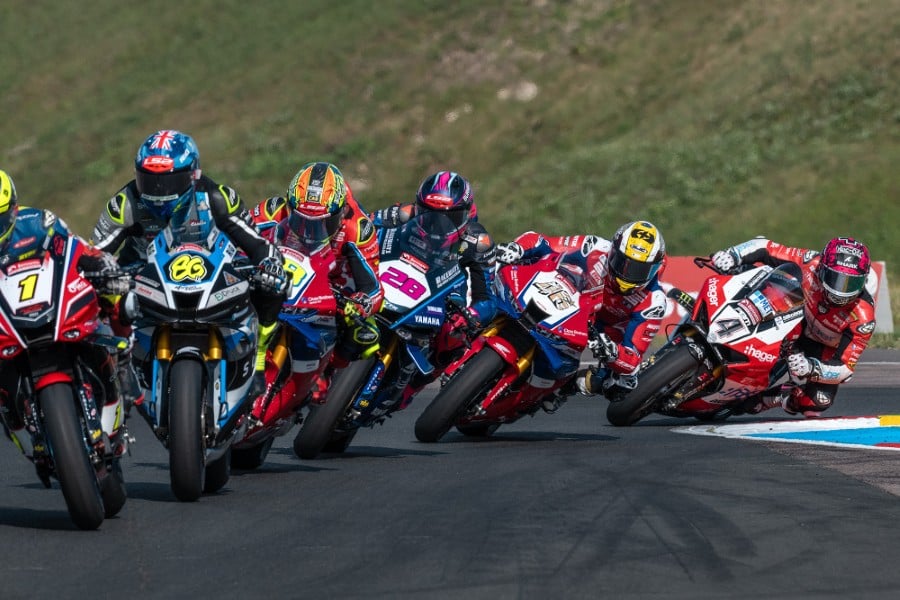
“I’m a lifelong fan of motorbike racing,” he says. “Photography allows me to engage with motorsport in a way that wouldn’t otherwise be possible. It’s as close as I could ever hope to get to the on-track action without donning a pair of leathers and gingerly heading out on a bike (not going to happen).”
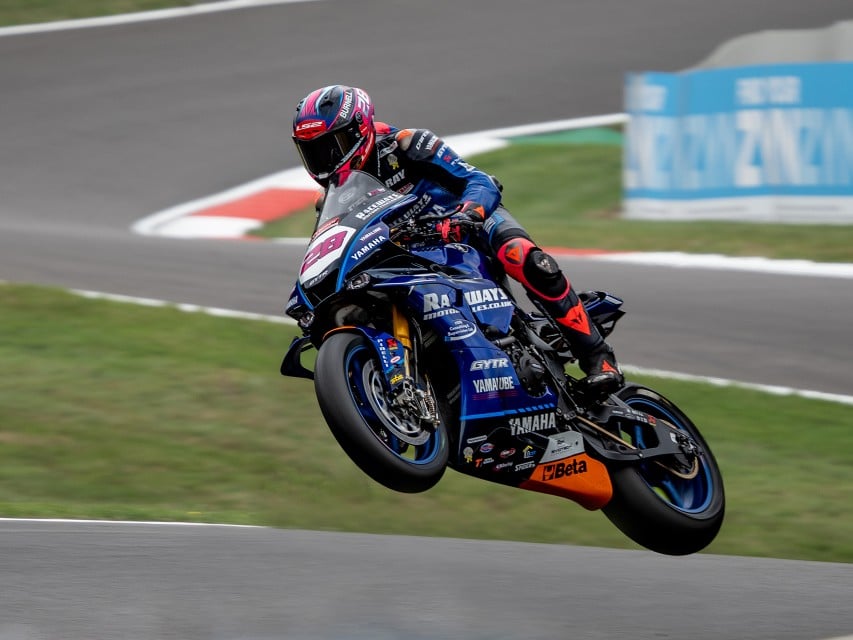
Mike has a few tricks for freezing and framing fast-moving motorbikes. One is to use a slightly wider focal length than you intend for the shot, giving you latitude to crop in and therefore a little extra margin for error. It’s also best to use a slightly slower shutter speed than you might think – Mike recommends 1/320sec – as this will allow you to get a more dynamic image with a feeling of motion, rather than a shot of a static-looking motorcycle frozen in space. And this brings us onto the key technique: panning.
“Use continuous focus to lock onto the rider’s helmet and fire the shutter as you ‘pan’ to keep the bike in your viewfinder as it passes,” says Mike. “If you matched the speed of the bike perfectly when you took the photo, you’ll end up with a sharp subject surrounded by sweeping lines of motion blur and spinning wheels.”
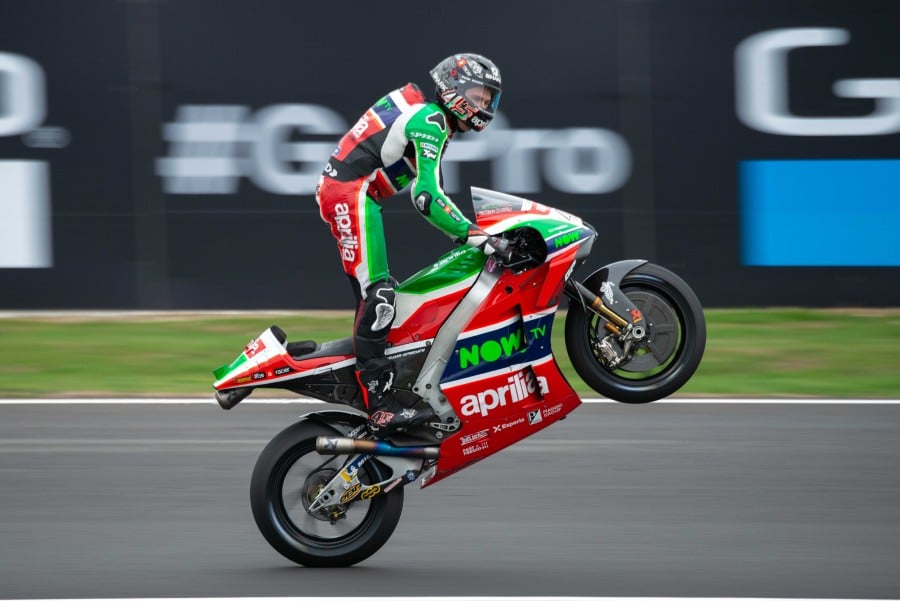
This is tricky, and Mike is keen to stress that it’ll take practice to get it right. “Don’t be disheartened by a low hit rate,” he says. “My advice is to visit your local circuit during a track day and embark on a few hours of non-stop panning. You’ll soon get the hang of it.”
And as for circuits, while the dream might be to photograph MotoGP or F1 at Silverstone, crowds and fencing and access restrictions will make this a non-starter for most people. “Most of my images were captured at British Superbike Championship events,” he says. “Rounds are held at smaller circuits like Snetterton and Brands Hatch, which tend to offer plenty of unobstructed views. And from the paddock to the pit lane, you have plenty of freedom to roam the circuit with your camera.”
Derek Crunkhorn:
“Light is always important.”
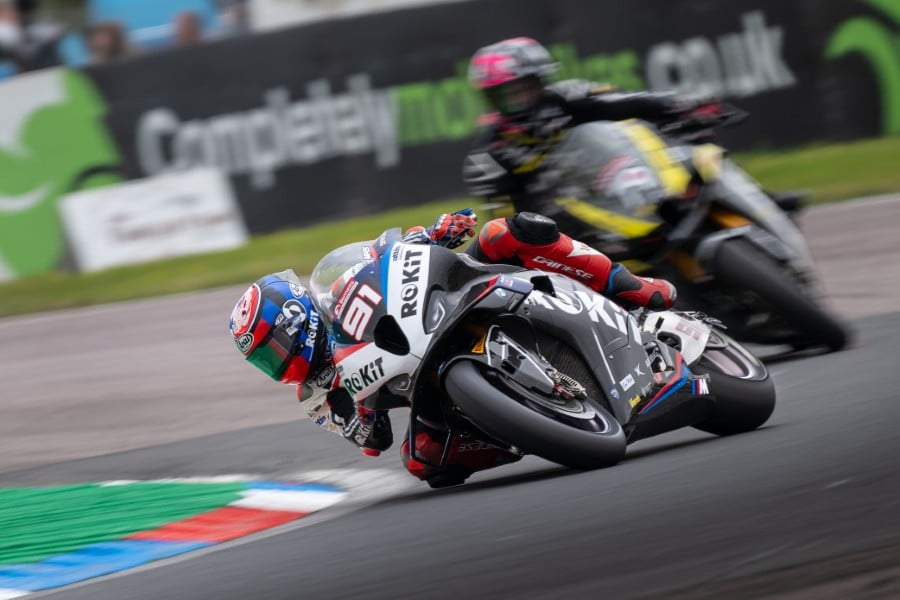
Derek Crunkhorn is an avid motorcycle-racing enthusiast and OM System photographer – a speedy, outdoorsy mirrorless system that’s ideal for the rough-and-ready world of motorcycle photography. He’s been a fan of watching the motorbikes for years, and eventually this turned into wanting a means of recording his memories of the race days. “I enjoy capturing the atmosphere of the race – speed, overtakes, near misses,” he says.
As an amateur photographer, Derek is limited in where he can capture images from. “Some very good positions are often only available to pros with track side access,” he says. Many circuits, you are shooting through the chain-link fence. This is an issue on bright days, with sun highlighting and reflecting the fence.”
And this raises a crucial point – even while dealing with the tough challenge of capturing a moving motorcycle, the photographer also needs to be aware of their conditions. “Light is always important,” Derek says. “Your favourite corner may only be a good shot in the morning.”
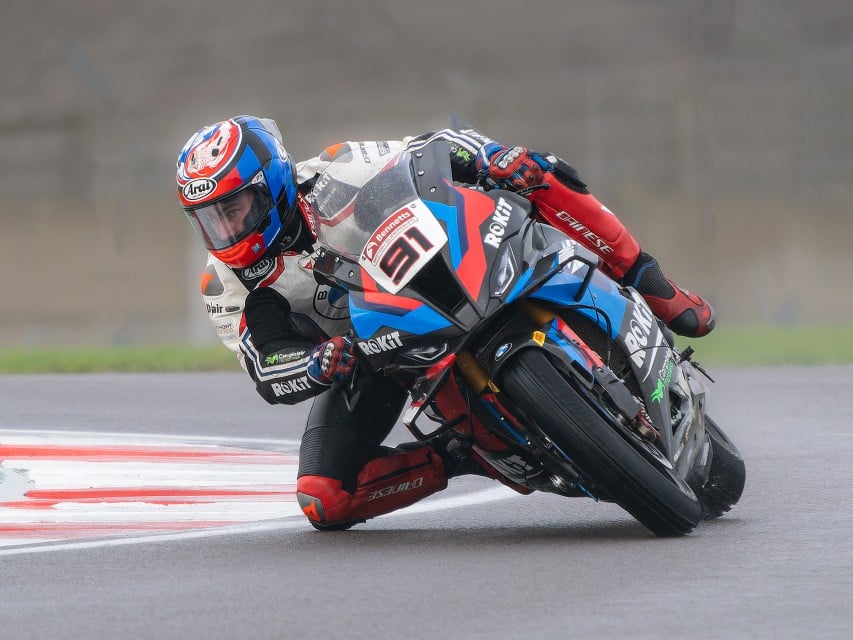
And as far as technique goes, Derek’s advice concurs with Mike’s. “Practice panning and shutter speeds to get good blur in the wheels and background,” he says. “Some good places to practice are Cadwell Park and Oulton Park – they both have less high fences.” Gear-wise, he recommends a zoom lens with 300mm or more at its disposal, and a camera with a decent frame rate is a plus.
“Also, good quality memory cards with a fast write speed,” he says. “You don't want the camera buffering because the card is slow, meaning you miss the action.”
About the Author
Jon Stapley is a London-based freelance writer and journalist who covers photography, art and technology. When not writing about cameras, Jon is a keen photographer who captures the world using his Olympus XA2. His creativity extends to works of fiction and other creative writing, all of which can be found on his website www.jonstapley.com
The Wex Blog



Sign up for our newsletter today!
- Subscribe for exclusive discounts and special offers
- Receive our monthly content roundups
- Get the latest news and know-how from our experts