Cats enjoy an enviable status of being one of the most photographed subjects in the world, and one of the most challenging to photograph. I can admit that a not-insignificant proportion of my own hard drives are filled up with photographs I’ve taken of cats. My own cat, other people’s cats, random cats that I have met, all of whom were distinctly disinterested in being photographed. Not that that stopped me.
But what is it that makes cats such compelling subjects to photograph? Sure, they’re cute, but lots of animals are cute. I wanted to find out — as well as perhaps getting some tips on how to get more photos of cute cat faces, and fewer photos of hastily retreating backsides — so I went to the experts. I spoke to three pro photographers who have completed lengthy, large-scale photo projects on cats, with two key questions in mind: why did you photograph cats, and how did you get great pictures of cats?
Pascale Weber:
“Cats do things entirely on their own terms.”
Pascale Weber is the photographer and author of the brilliant book For Cats Only (Nur für Katzen), which is available now from Hatje Cantz.
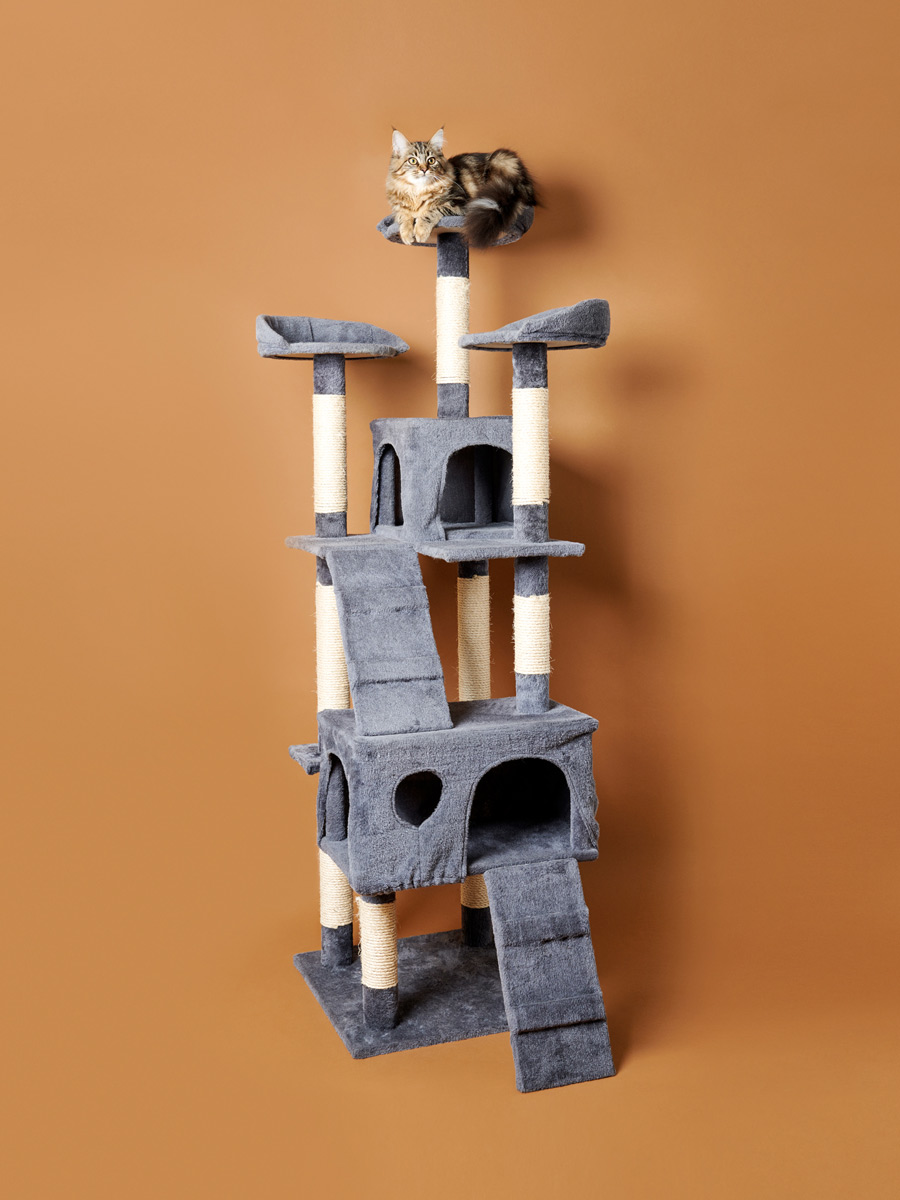
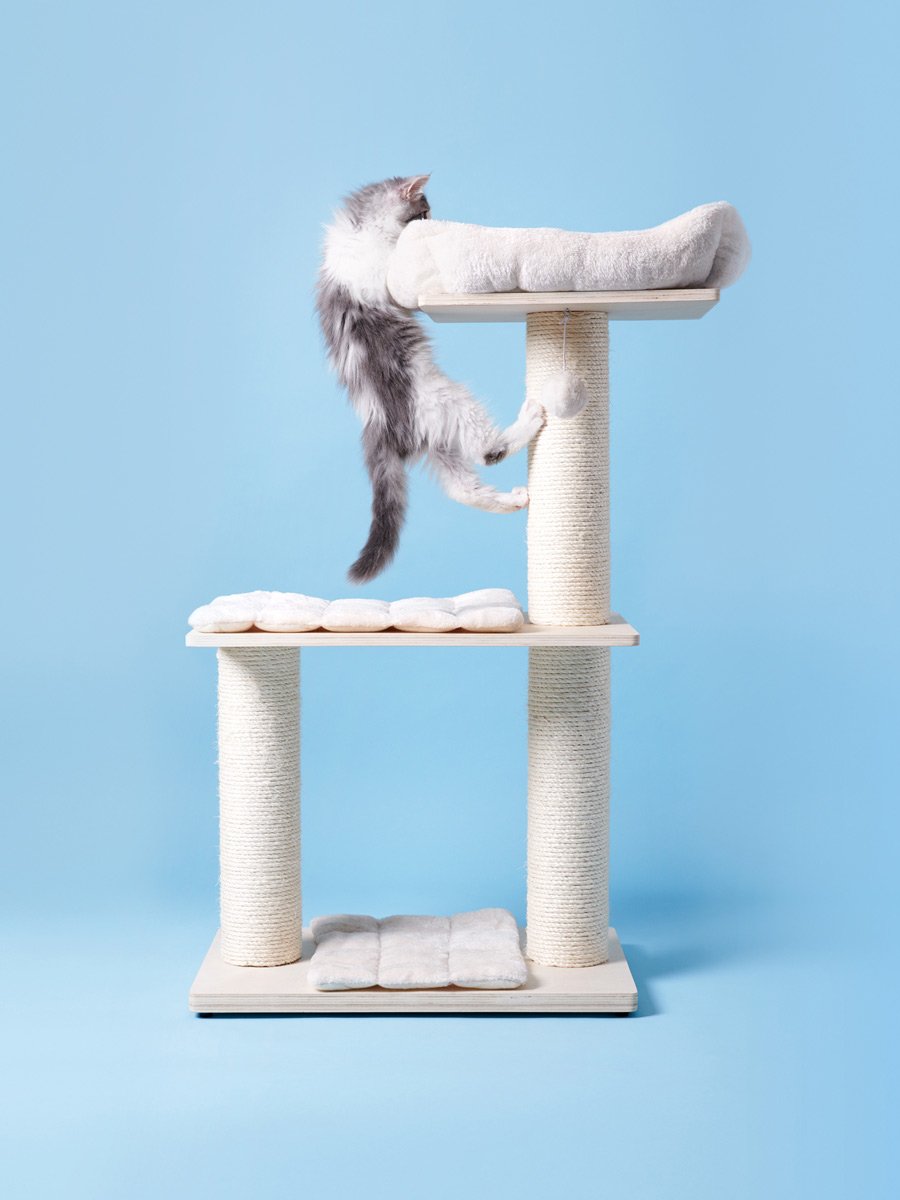
Pascale is primarily a still-life photographer, and originally the focus of her project was going to be cat trees (for the uninitiated, these are the extremely unattractive multi-tier climbable objects that cat owners ruin their living rooms with, and I can say that because I own one). She was inspired in part by Bernd and Hilla Becher’s photography of water towers.
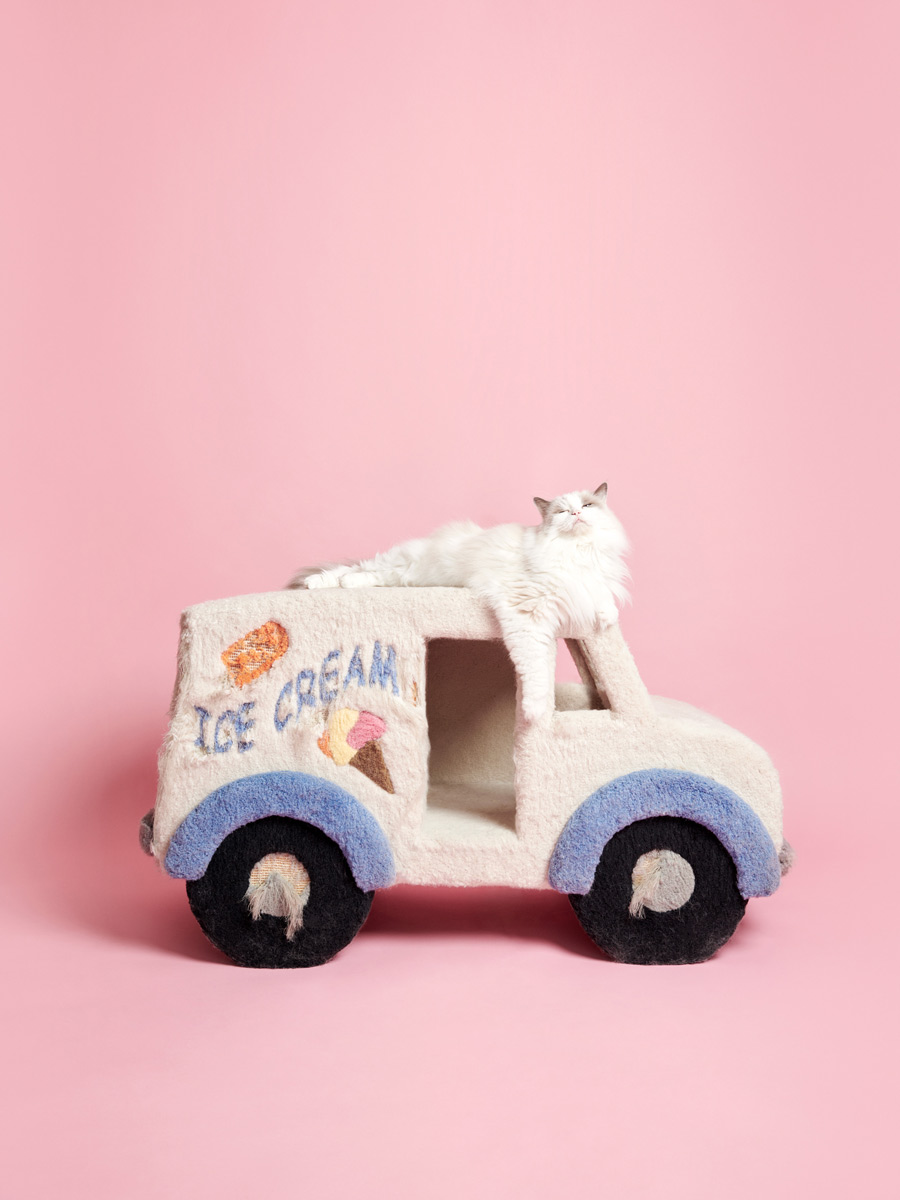
“I found these objects fascinating: sometimes strange, sometimes honestly quite ugly, but always unique,” she says. “Later I realized that including the cats changed everything. They brought humor, character, and a touch of chaos that made the project come alive.”
What Pascale loved about the cats she photographed was their independence, though this also necessitated some patience on her part. “I love that cats do things entirely on their own terms,” she says. “You can’t force them, they decide when and how they want to take part. That independence makes them unpredictable, sometimes frustrating, but also very funny once they realize they’re being watched. Every cat brought its own character into the pictures, and that’s exactly what makes them so fascinating to me.”
This project also meant that Pascale had one key advantage on her side when it came to photographing cats: novelty. One of the reasons I don’t get too many interesting photos of my own cat these days is that he has known me for a long time and is sick of me (girl, same). So, when I approach him, camera in hand, he tends to roll over and go to sleep, or politely leave the room until I get it out of my system. Pascale, however, was an unknown presence.
“Cats are curious by nature, so the moment something new appeared in their very familiar homes, they wanted to investigate,” she says. “Often I had their attention right away, but I had to be fast before they lost interest again. It took patience and sometimes a bit of luck. Not every cat was keen from the beginning, but in the end they all had their moment.”
Tim Flach:
“The humble feather remained our most reliable lure.”
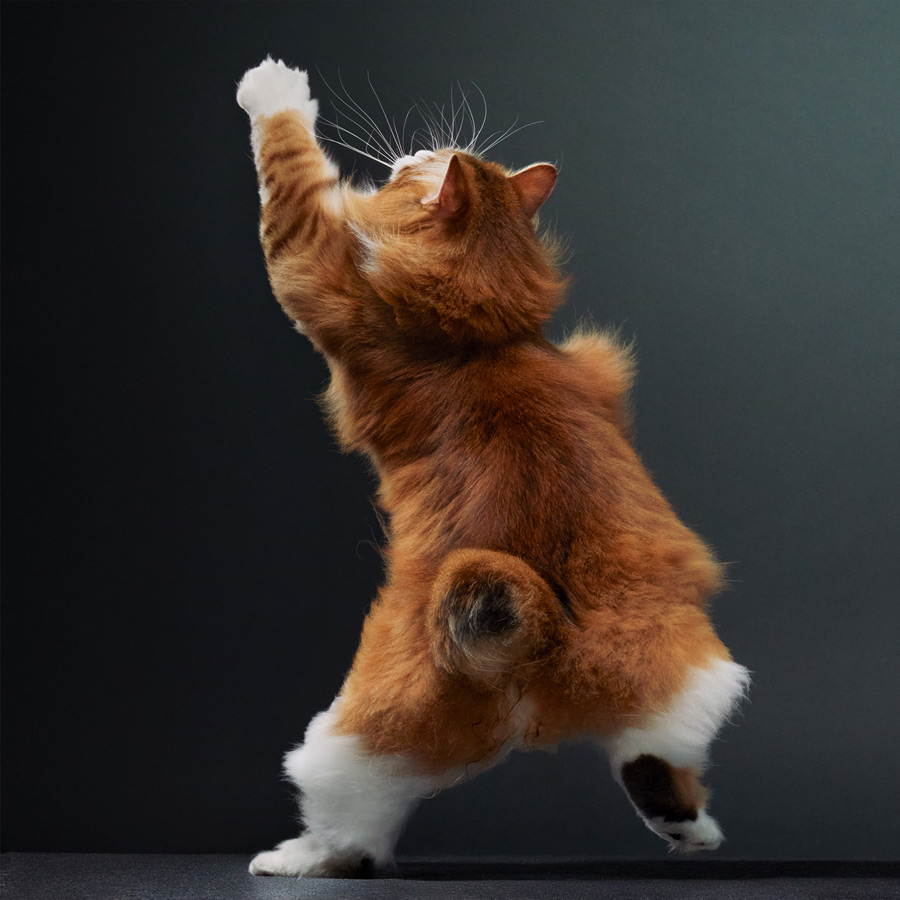
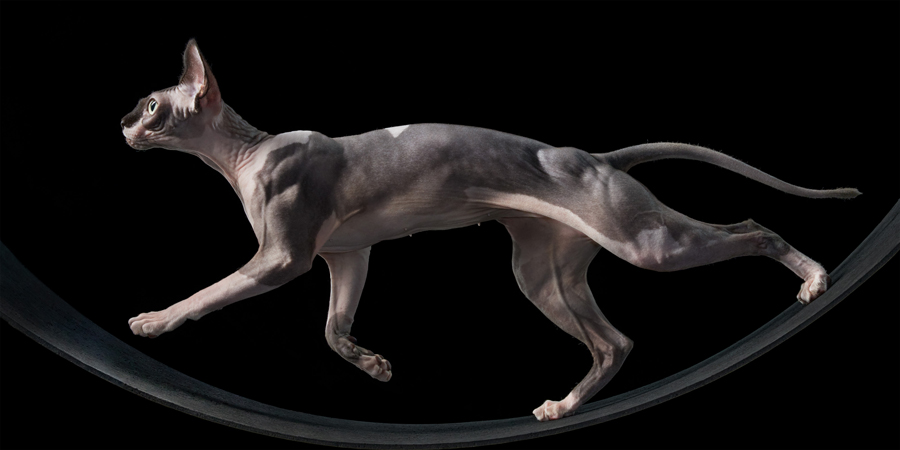
A well-known photographer of animals of all kinds, Tim Flach has published many award-winning books and had his work exhibited around the world. He has trained his lens on zebras, dogs, monkeys, pandas, insects, jellyfish, red crown cranes and many more. But of all these multifarious subjects, the one he says has undoubtedly made him work the hardest is the common domestic cat.
“With cats, you have to win them over,” he says. “Unlike dogs, who are often eager to please, cats insist on their own terms… The only thing predictable about them is their unpredictability. Yet at some fundamental level, I respect that independence.”
Tim has developed a number of tricks and ploys for getting his distinctive images of feline subjects. He uses a toy cat — named Dave — for pre-lighting, so that when the real subject comes in, he’s ready to take advantage of what might only be a brief window of opportunity. Having a few other distracting toys on hand was also helpful: “For all the sticks and streamers we stocked up on in our arsenal of toys, it was the humble feather that remained the most reliable lure,” he says.
And don’t underestimate how useful modern camera functions can be. “The Canon EOS R5’s eye-tracking technology has proved invaluable for keeping up with my more athletic models,” Tim says.
But of course, all the tech in the world can’t compare to the simple power of putting your subject at ease. “While many of the cats were photographed in the studio, we often visited them in their own habitats, shooting in kitchens, bedrooms, and sitting rooms, wherever they felt most comfortable,” Tim says.
We recently visited Tim at his Shoreditch studio for a masterclass in feline photography. Be sure to check out that video here!
Jo Sax:
“Cast the right cat for the job.”
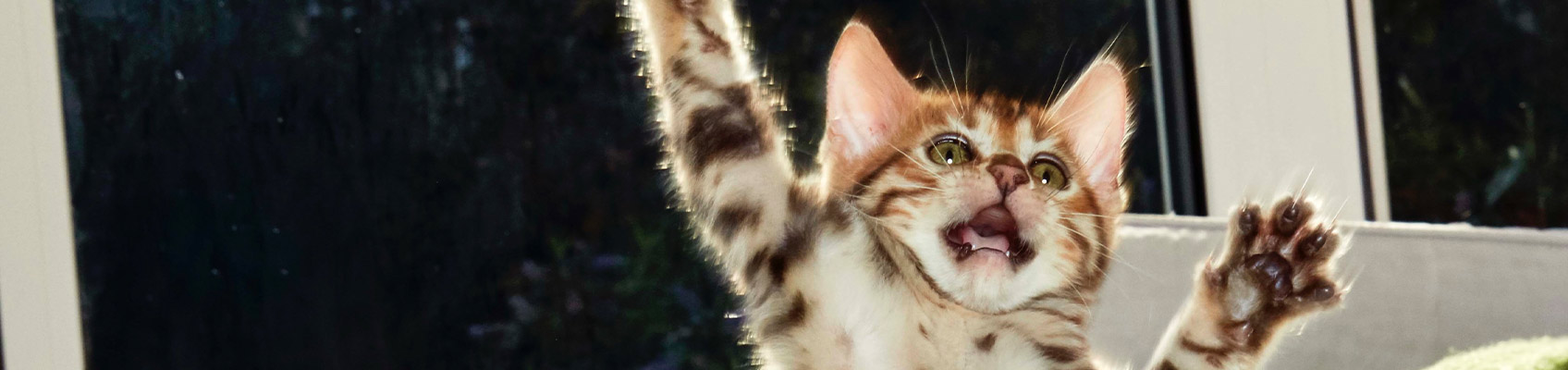
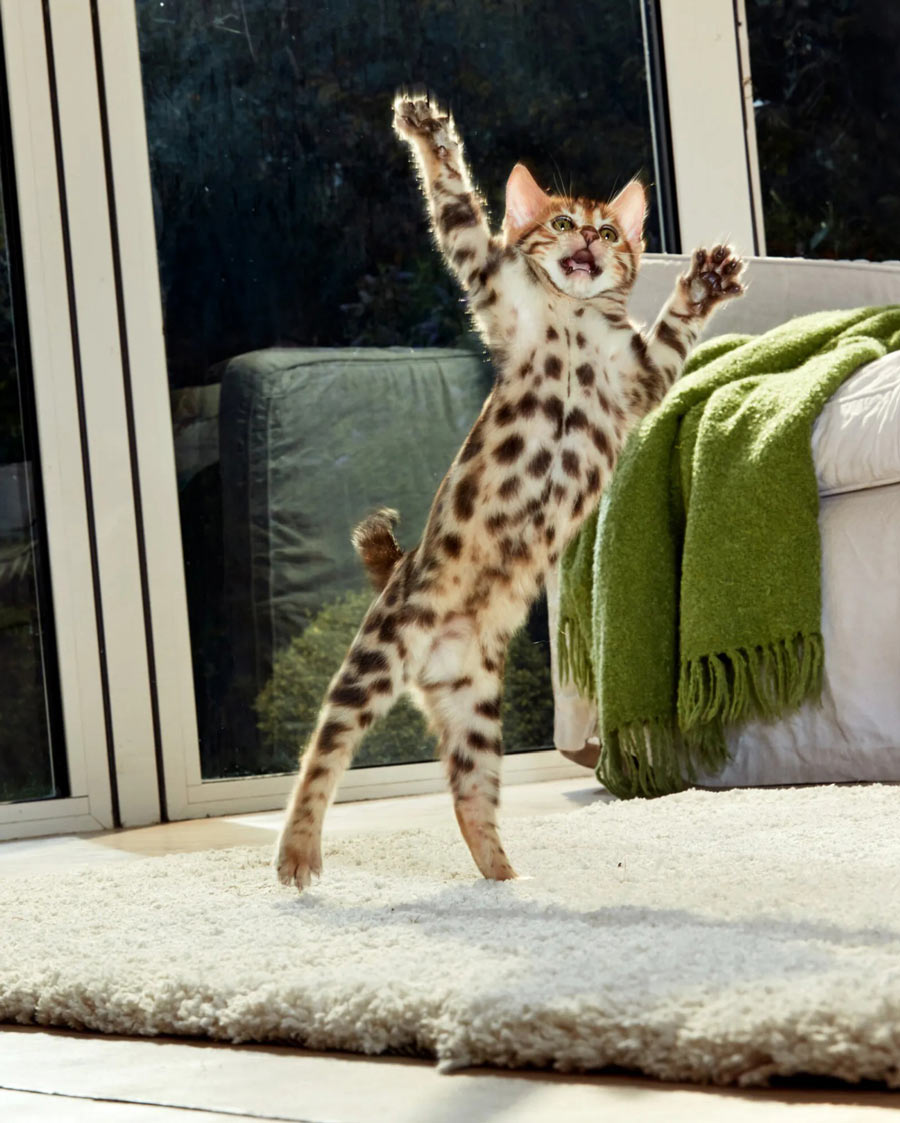
Jo Sax is a photographer who specialises in capturing vivid imagery of animals, showcasing their personalities with an observant and humorous eye. She’s done several projects involving cats, all of which are brilliant, but I will editorialise for a minute and admit that my favourite is “Jumping Kittens”, which is, gloriously, exactly what it sounds like.
“I love that the kittens were so oblivious and confident,” Jo recalls. “I loved their energy, and capturing those moments.”
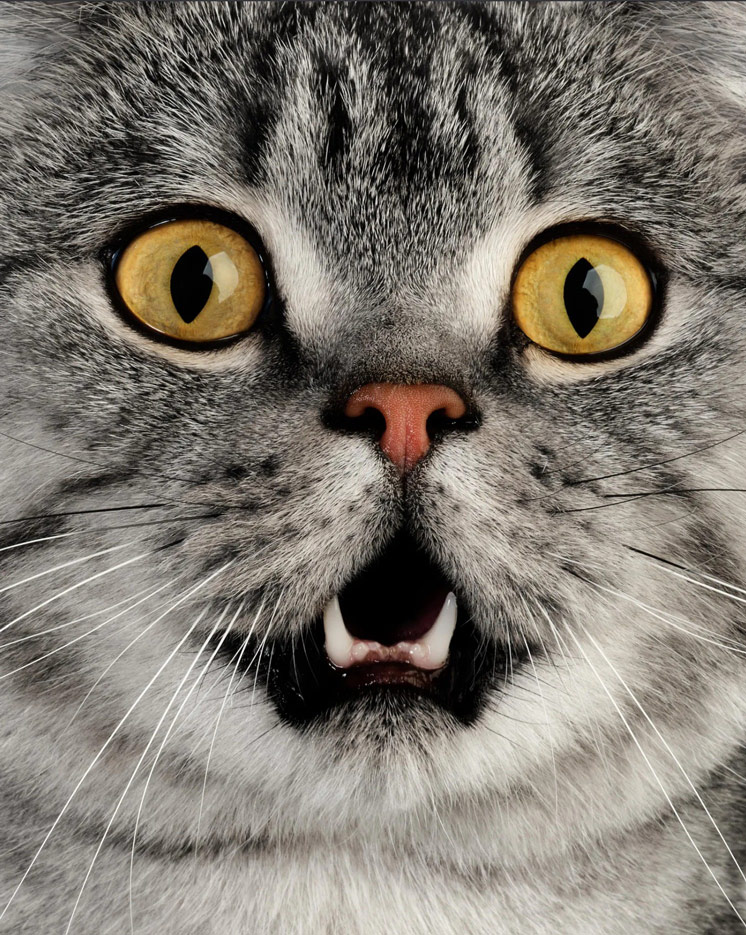
One reason Jo loves photographing cats is that you’re always getting an authentic performance. “Cats are not really interested in your agenda as they have their own,” she says. “This makes them a beautifully natural subject to photograph; they don’t fake smiles or fake emotions so everything you capture is honest.They do the most natural and beautiful behaviours and they are always authentic.”
Jo has photographed cats in advertising and design contexts too, which often requires quite specific positioning and behaviours. The main trick to this is something that happens before the camera is even picked up: casting. “I would say always cast the right cat for the job,” she says. “Find the cat’s motivation, be patient and if possible flexible. Cats do a lot of unscripted gorgeous things.”
“When I am shooting for myself, I love just to work with the cat's natural personality. I make a situation that the cat is comfortable in, as I observe their natural behaviours so I can capture beautiful moments and insights of their personality.”
About the Author
Jon Stapley is a London-based freelance writer and journalist who covers photography, art and technology. When not writing about cameras, Jon is a keen photographer who captures the world using his Olympus XA2. His creativity extends to works of fiction and other creative writing, all of which can be found on his website www.jonstapley.com
The Wex Blog

Sign up for our newsletter today!
- Subscribe for exclusive discounts and special offers
- Receive our monthly content roundups
- Get the latest news and know-how from our experts