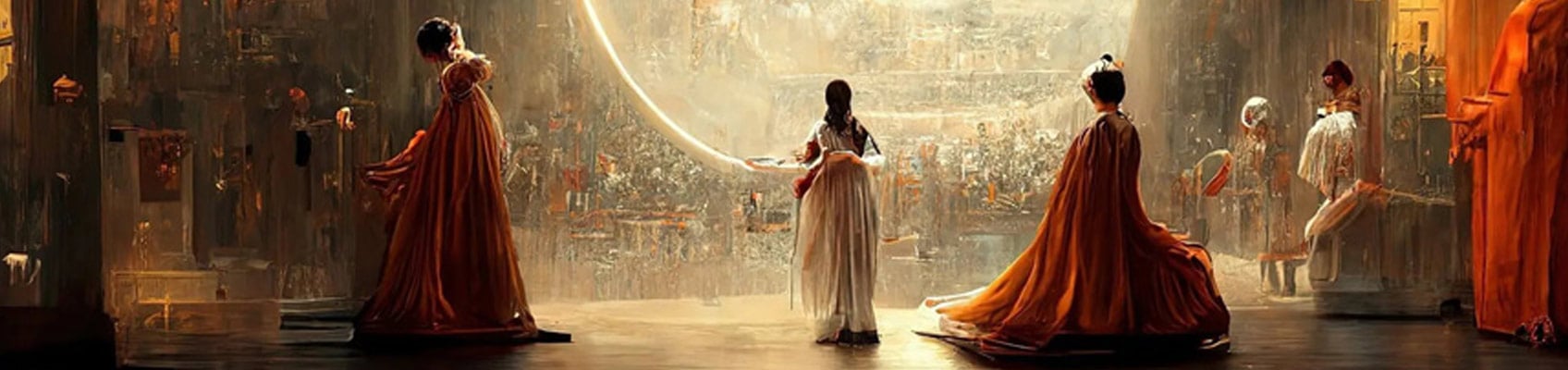
In 1935, the philosopher Walter Benjamin wrote that the here and now of an artwork constitutes the concept of its authenticity.
By that, he meant that the uniqueness of an original piece of art has an aura that cannot be replicated simply by reproducing it. He went so far as to say that this aura applies to anything that we perceive in the here and now, such as passing a landscape of significant beauty or an original oil painting.
His essay, The Work of Art in the Age of Mechanical Reproduction, was written in a time when the world order was changing, between world wars, class wars and political upheavals across large swaths of Europe. It was also just after the first wave of the avant-garde had shocked the art world from the turn of the 20th century all the way through the 1920s.
Artists had risen up in protest against the churn of industrial machinery that was dictating the very rhythm of human life. New mediums like photography and film pushed aside traditional art and artists.
Just like the printing press, these new mediums opened up a formerly elitist discipline to the masses. In a way, the pace and mass production of art both devalued the art and made it more democratic by allowing a larger portion of the population to participate.
The reaction within the art world to the cultural temperature of the time was as faceted as a broken mirror.
On one side, we had Dadaism, highlighting the meaninglessness of it all. On the other hand, Futurism, embracing the pace of the machinery; Cubism, which abstracted the world almost to a point of no recognition; and Art Nouveau, which tried a holistic return to nature-inspired shapes as a means to protest industrial conformism and nihilistic Bauhaus aesthetics.
What is art? And who gets to call themselves an artist? These two questions are a volatile fuel of discourse within art history. Throughout the twentieth century, various avant-garde movements have sought to push the boundaries of our understanding of art and the definition of an artist. Now, with the rise of AI tools and AI artists, we have reached another tipping point of this century-long discussion.
Copyright and AI
One of the biggest worries for creators today is the theft of their intellectual property to be regurgitated by a large language model (LLM), without context, without understanding and without feeling.
This is a valid and understandable sentiment. The responsibility to safeguard artists’ intellectual property and copyright lies with the companies that keep their LLMs on the market. It’s also the responsibility of governments to create policies that scrutinise AI companies more closely and ensure they adhere to copyright laws.
The discussion as to whether or not AI art and artists deserve a spot at the table often focuses on copyright and theft of original art. Those are two separate conversations; the copyrighting issue is a valid and important concern that should be addressed by governments everywhere with urgency.
However, there are vast libraries of original artworks that no longer fall under copyright-protection law. For the purpose of this article, we will discuss only AI-generated art that has been created exclusively using training data of artworks that are not stolen and that do not fall under copyright protection laws.
So when is art, art?
Emotions and feelings play a crucial role in the current debate around AI and art. Often-repeated concepts are that the LLMs cannot understand and feel, and therefore, the “art” created will invoke no feeling in the beholder. The definition of art then comes down to: “True art will make me feel something that false art cannot”.
But this definition falters. The AI art might not have made them feel a positive emotion, but it sure made them angry. Is anger not an emotion? Would it be invalid for an artist to create a piece with AI, as a means to invoke exactly that anger in the beholder? And then to have the viewer question their own anger and, in turn, reflect on why it makes them angry as a means of starting a cultural discourse around AI in society?
Our understanding of art has changed rapidly throughout the ages, but generally, the accepted definition of art is that it exists in its own space. Since the days of Marcel Duchamp’s readymades, art is art when it is declared as such. And then it is up to society to extract any worth from what has been created. But the artwork still exists outside of that worth, because a human has declared it so, and as long as there is one human finding a piece worthy of being declared art, the piece effectively becomes art.
Who has the right to call themselves an artist?
Whenever there is a new art form, there is scepticism and the initial outcry that it is not a valid means of creating artistic expression. Most of the time, the arguments are the same: “There is no talent involved in printing, pressing a button, pointing and clicking”. Real art requires real effort; real art has to be earned. To be an artist, you need talent; to be an artist, you must suffer.
The idea that the right to “artist” status has to be bought with suffering is an elitist one, as the avant-garde movements have rightfully shown us. Art can exist outside of any societal norms; as mentioned before, art just is, because the artist decreed it so.
The truth is that through a long tradition of breaking with tradition, our most modern definition of art and artists is that every medium of artistic expression has the right to earn its place in society. Artists are the ones who are allowed to push at the boundaries of what’s acceptable – they’re allowed to hold a mirror to our society and make us question what we believe in. Because art is inherently a product of the cultural background it sprang from.
Artists create because they play, and there is a childish excitement when playing around with AI, even if we’re consciously aware that AI does not understand what it creates. It’s like putting a coin into a slot machine and watching the symbols pop into place at random.
How do you tell the difference between real art and AI slop?
You don’t. Increasingly, most people can’t. Circling back to the previous point about emotions – what if a person doesn’t know the art was created by a prompt? We’ve had very prominent examples in recent years of artists using AI to create works of art, to make a statement, to test their audience and to play around with what is possible.
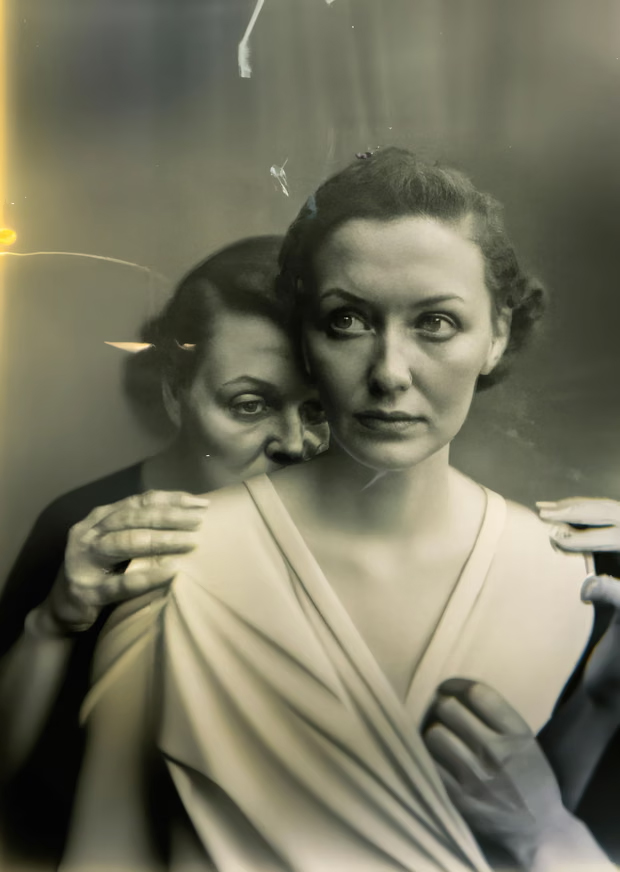
In 2023, Boris Eldagsen won the Creative Open category at the Sony World Photography Awards with an AI-generated image called “Pseudomnesia: The Electrician”, much to the embarrassment of the judges, who weren’t aware that the image had been AI-generated.
In a Guardian interview from 2023, he described the process of generating images as a very involved one still requiring inherent knowledge. “I don’t see it as a threat to creativity. For me, it really is setting me free. All the boundaries I had in the past - material boundaries, budgets - no longer matter. And for the first time in history, the older generation has an advantage, because AI is a knowledge accelerator. Two-thirds of the prompts are only good if you have knowledge and skills, when you know how photography works, and when you know art history. This is something that a 20-year-old can’t do.”
Though he is enthusiastic about AI, he does give a caveat to copyright and to upholding the truth about how an image came to be.
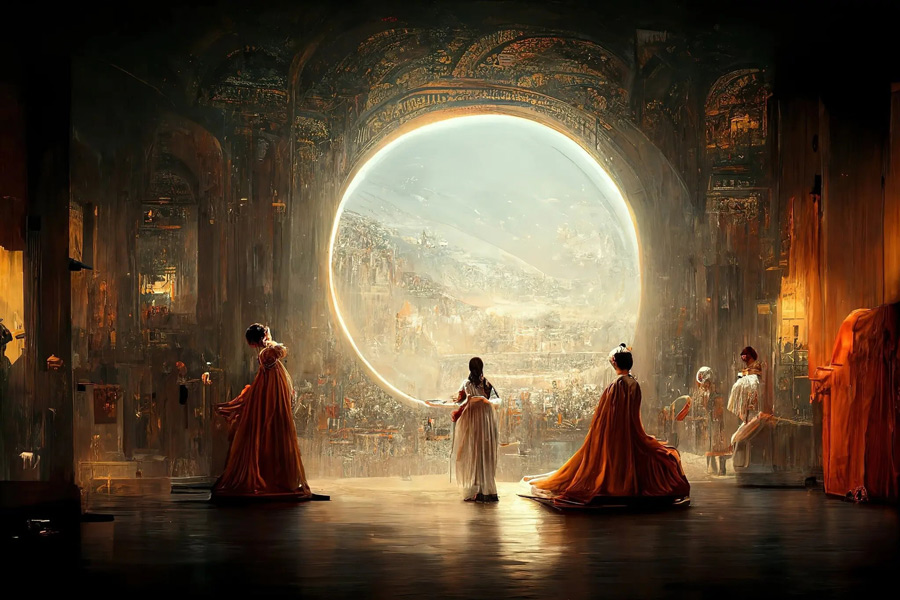
In 2022, the artwork Théâtre D'opéra Spatial was submitted for judging at the Colorado State Fair’s annual fine art competition and was disqualified when it was revealed to have been generated with AI. According to the artist, the piece was created using more than 600 prompts and further manual manipulation to create the final composition.
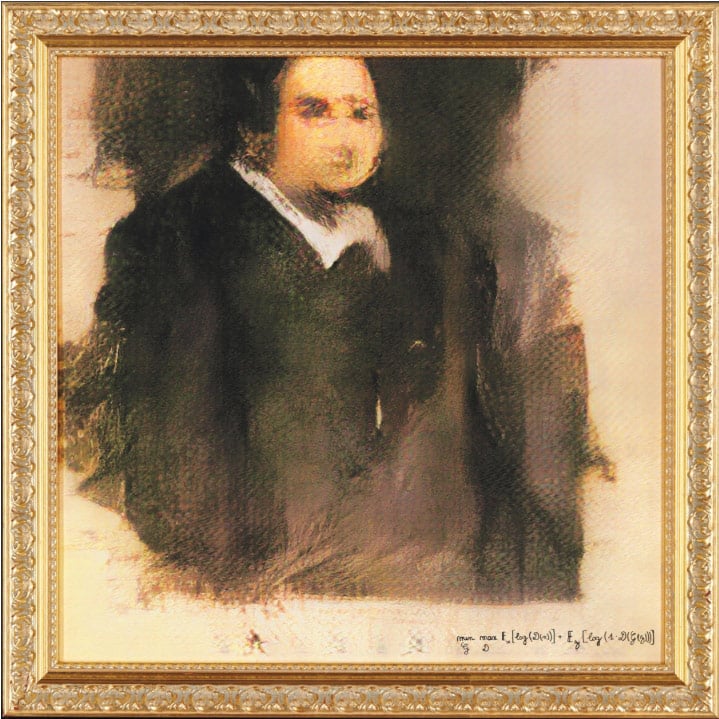
The first AI artwork sold at auction was created by a French artist collective called Obvious and their portrait of fictional character Edmond de Belamy. It was sold in 2018 at auction for $432,500 at Christie's. This further showcases the fact that despite the different process of creation, AI art can be attributed a value. The work was validated as authentic in its own right in order to create a monetary value.
All of the above examples show that AI art can be created with thought, presence and an involved process. That it can be respectful to the trade and that it can have an assigned monetary value.
Where does that leave artists?
The general assumption appears to be that AI artists fall under the definition of people who have no skill and are out to game the system. They do this by stealing from those who have earned the right to call themselves artists through hard work, suffering and maximum effort.
As discussed earlier, the greatest worry and the greatest care we must have as a society is that we do not let AI take away the things that are inherently part of the human domain. To create something with feeling, love and care is what makes us human.
From a purely theoretical standpoint, however, from the definitions of what is acceptable as art, we have manoeuvred ourselves into a corner. We cannot discard an artist as invalid just because they used AI to generate their art.
We cannot make a blanket statement about their talent, time and effort, about whether or not they’ve suffered enough, brought enough effort to the table to warrant their artist’s status.
If used ethically, thoughtfully and with a purpose, AI is just a tool like any other. The results might not please everyone, and that’s okay. Art is subjective.
There are many facets to the AI art debate. On one side, there is the very valid worry that AI will push artists out of their field entirely, and that society will be drowned in stolen and meshed AI slop. On the other hand, there is a lot of FOMO (fear of missing out) that those who refuse AI will be forced out of the market, out of creating what they love.
But I think there has always been a difference between the commercial market - the fast consumer art that pleases the masses and fulfils a certain purpose - and the quieter, curated art world, of galleries, fine art with unique originals that don’t exist in mass production.
Additionally, the worry that AI will replace artists in the workforce, as designers, videographers and photographers, is also ignoring that the vast consumer market is already vehemently pushing back against AI-generated ads and movies and that companies that replace humans with AI are facing more backlash than praise, at the end of the day. The more likely scenario is that the demands for AI legislation will become pressing enough to prompt enforcement.
There are already some governments, like Ireland, that have created initiatives to support the creative sector with a basic income for artists. It stands to reason that eventually the general fear of missing out regarding AI will subside, and companies will realise that “AI everything” is neither feasible nor does it move the needle at the bottom line.
Artists are creators, they’re human, and to create art means to remain curious, playful and open-minded. As a society, it is our responsibility to hold AI companies and governments to account for things that threaten artists’ intellectual property and livelihoods and to ensure that AI will always remain an impartial tool that does not threaten what makes us human.
About the Author
Tabitha Hornagold has been part of the Wex Marketing Team as SEO Manager since 2023. She’s a professional portrait and wedding photographer outside of her day-to-day job and holds a Master of Arts in Visual Culture from Lund University, Sweden. Tabitha’s expertise spans theatre, arts and anthropology and she enjoys writing social commentary aimed at inviting a discourse on controversial topics that face the art and cultural world today.
The Wex Blog
Sign up for our newsletter today!
- Subscribe for exclusive discounts and special offers
- Receive our monthly content roundups
- Get the latest news and know-how from our experts