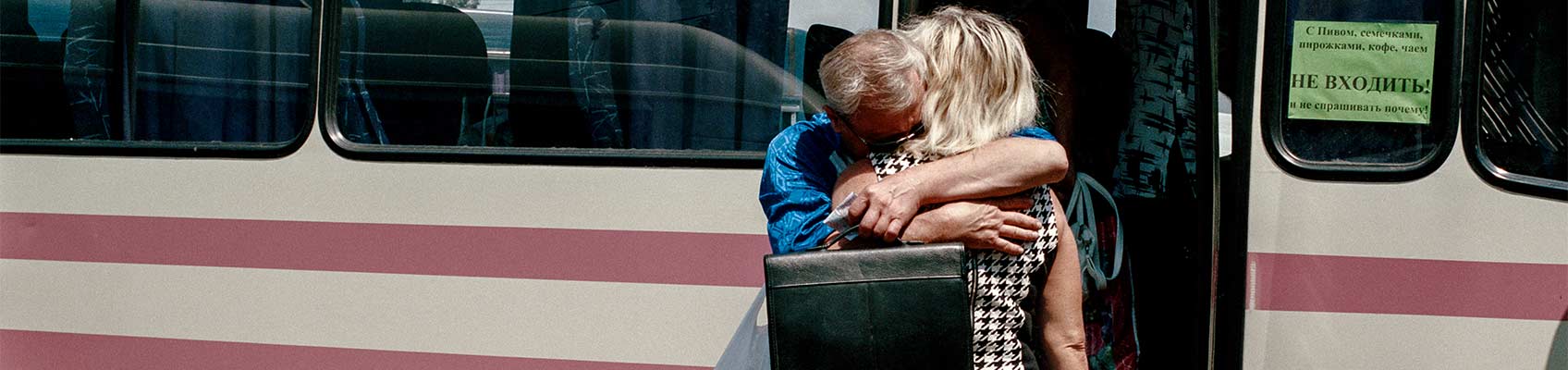
For more than twenty years, Anastasia Taylor-Lind has committed herself to long-form photojournalism: slow, in-depth storytelling that is framed through repeated visits to the same communities. Her work reveals the daily lives of those living on the front lines of war in Ukraine. We spoke to Anastasia about her photographic journey and how her experiences have shaped the work she produces.
Photography was far from her chosen subject while studying, and her route into this world was in no way typical. Growing up in rural Devon without electricity, running water or television, she and her family lived an “off-grid” life. “I didn't have a very visually stimulating childhood, and we didn't have a TV, so I really hadn't seen pictures of the news, breaking news, wars, what was happening in the world,” she says.
But books were always present, particularly war poetry, which she took a keen interest in while growing up. When she encountered a volume of Vietnam War photographs on a darkroom bookshelf during her A-level photography course, there was an immediate connection. She announced to her teacher, “I want to do this. Where do I learn to do it?”
Her answer was to study documentary photography at university after she’d finished her A-Levels. And she did exactly that.
Over time, her relationship with photojournalism has evolved. There have been moments when she considered leaving the profession entirely, particularly when she realised that images alone would not be enough to prevent the kind of violence she was documenting. “I had naively assumed that photojournalism could be part of a solution to violence… I discovered that, in fact, is not the case.”
Instead, she began to understand the role photographers play within the wider context of war. “You can't have a revolution or a war without photojournalists… photojournalism is one small cog in the war machine”. She likened her feelings to soldier poets in the First World War, understanding “that the act of writing about and against war may actually play a part in glorifying and romanticising it”.
The realisation was connected to something more personal. Her earliest experience of violence happened within her childhood home. “Naively”, she admits, she believed no one in her extended family or community knew about it, but as she grew up she learned the opposite; everybody knew, “... just no one did anything [about it]”.
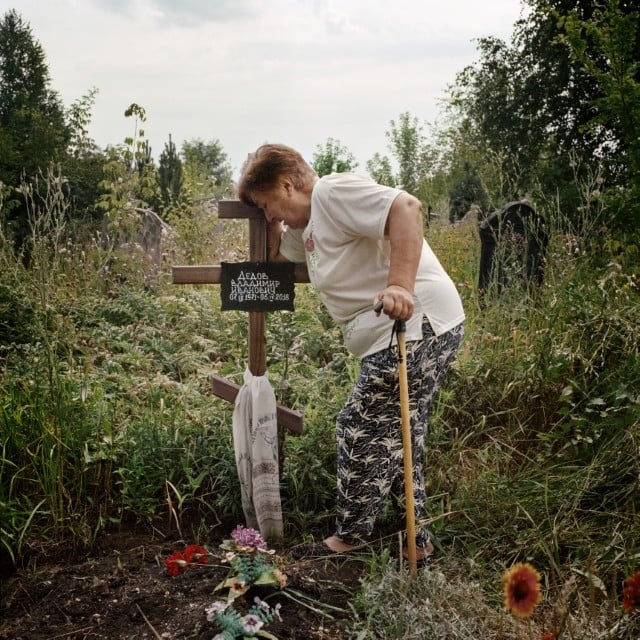
She learned that there is great importance in witnessing. “Violence in particular, whether it takes place inside the home or on a mass scale, needs to be proven”. She believes there is a “denial of perpetrators of violence and the counter-narratives, and the gaslighting of people who are on the receiving end of that violence… photographs are evidence of that”.
Longevity in her work matters. Anastasia speaks openly about the habits she’s formed that help her personally and professionally; it’s all about rest, her creative space and daily structure. “Rest… is an ingredient that's necessary in order to make creative work”
But it is a fine balancing act, where she tries to remain as unattached from the outcomes of her work as she can, because to focus on that would be to return to that time in her life where she was disillusioned with photojournalism. Approaching each assignment with calmness rather than expectation.
However, one of the most meaningful outcomes of her photography is also one of the quietest.
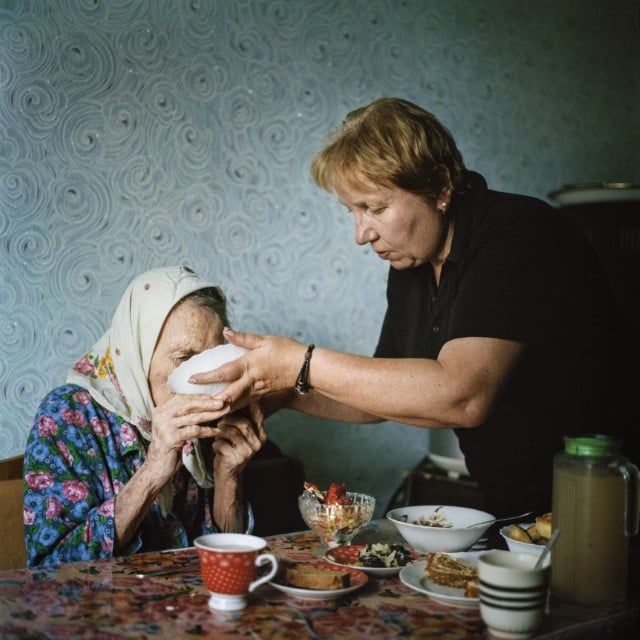
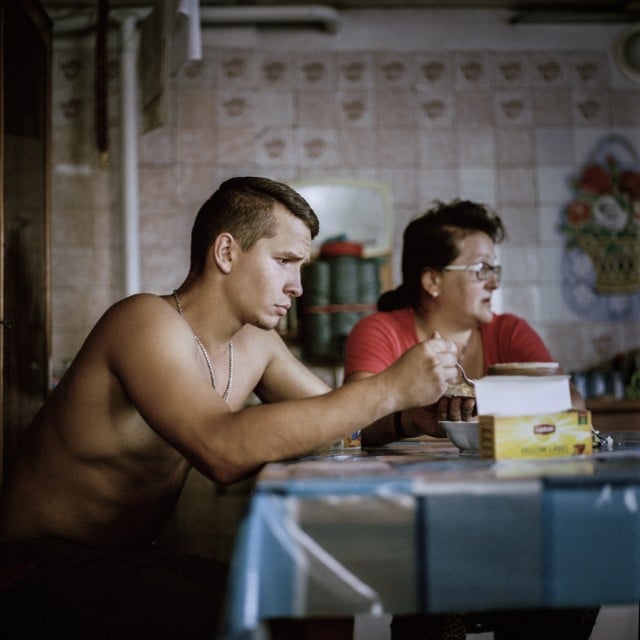
Some of the families she has documented over the last seven years now keep small prints of her work in their albums, even though those photos were taken during some of the most difficult times in their lives. Because they’re also records of the houses they used to live in, their communities, their neighbours, and what their weekends were like before the full-scale Russian invasion.
It’s these relationships that have been built over years that give Anastasia’s work a personal legacy as well as a journalistic one.
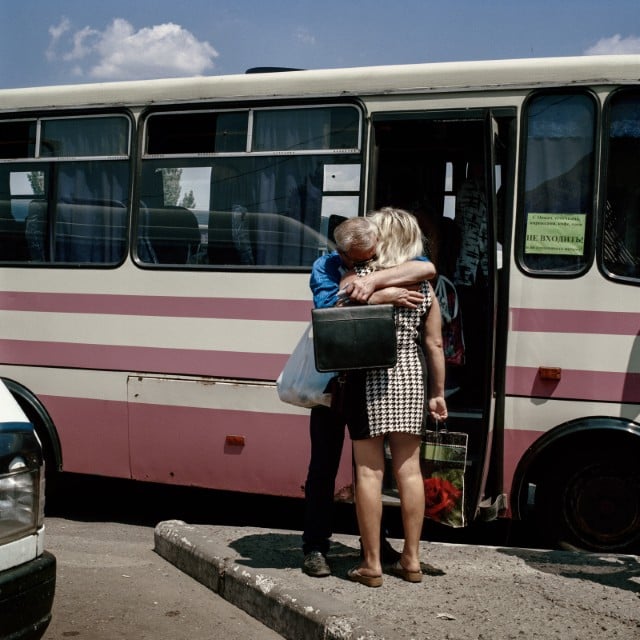
“That’s what I hope for my pictures and our reporting… that we were able to be with people… in their most difficult moments. That we were just there with them, witnessing and recording”
For Anastasia, photojournalism is about presence: being a witness to the events that unfold, even if the images do not change the course of the future. For the families she documents, the photographs serve a purpose, documenting their reality.
You can watch the full video interview on our YouTube channel here.
This article is part of our #ChangeTheImage | Capturing Humanity campaign.
For generations, photographers and journalists have pursued a single, enduring ambition: to reveal our shared humanity. The images and films they create do more than document events — they shape our understanding of the world and our place within it.
Here at Wex Photo Video, we are constantly reminded that how we choose to capture the world has never mattered more. The way we see — and the way we portray others — holds the power to influence the world around us, from shifting public opinion to inspiring meaningful change. We are reminded once again of the profound importance of documenting the lives, stories, and moments that shape our shared human experience.
About the Author
Leo White has been part of the Wex Photo Video team since 2018, taking on roles from the contact centre to the product setup team. Holding both a BA and an MA in photography, Leo brings a wealth of expertise he’s always ready to share.
The Wex Blog

Sign up for our newsletter today!
- Subscribe for exclusive discounts and special offers
- Receive our monthly content roundups
- Get the latest news and know-how from our experts