“When I take somebody’s photograph, it’s not just that I've created an image; it’s that I've got their story and I can help that story to be heard by the world”
Wex #MoreThanAnImage: Giles Duley
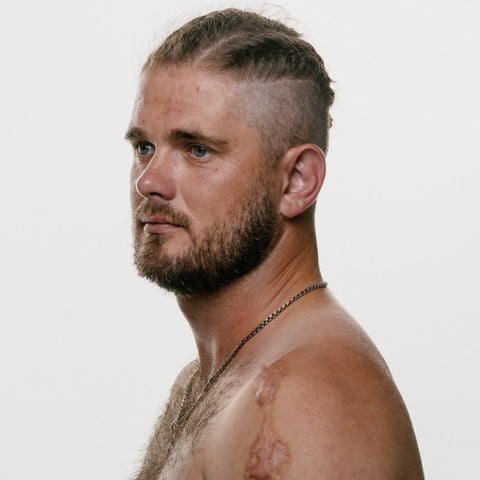
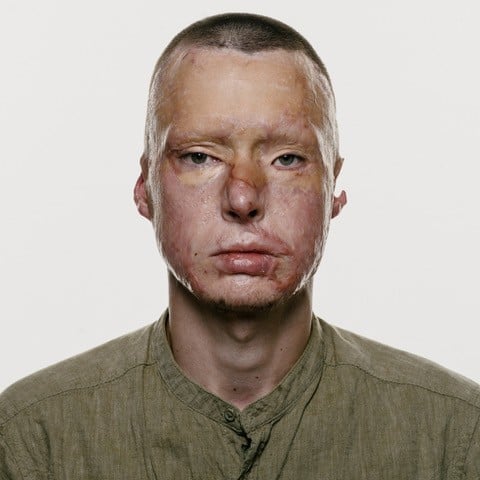
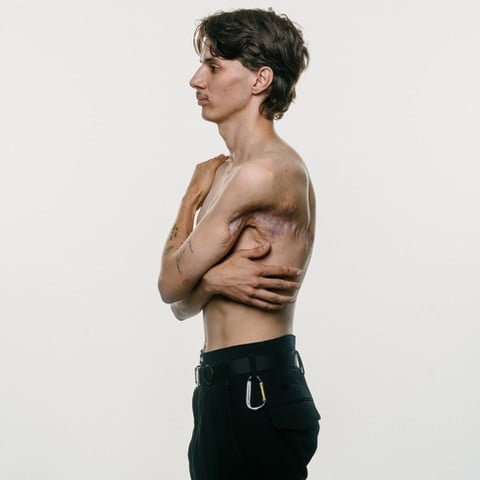
For Giles Duley, photography has grown into something beyond the obvious. He’s developed an approach to portraiture as a therapeutic and humanising practice — a practice that empowers those affected by trauma, conflict, and life-changing injuries. The images focus on the individuals, shifting the narrative away from the cause of the affliction and, by doing so, restoring their identities and highlighting their resilience.
Giles’ story
Photography wasn’t present in Giles’ early life. He’d been a problematic child, and at 18 years old, he was in a car accident, badly damaging his knees and throwing his future into jeopardy. While lying in a hospital bed, he became angry and fearful of what would come of his life.
At the same time, his godfather, whom he was very close to, passed away. But he left him two gifts: an Olympus OM-10 and a book by war photographer Don McCullin. These two items had a profound effect on Giles.
Giles pursued photography, and before long, he found himself in a somewhat unintentional but successful career in music photography spanning the 90s and early 2000s, working with artists including Mariah Carey, Oasis and Lenny Kravitz.
In 2004, Giles found himself questioning his purpose. He had a persistent sense that he should be doing more with his life — he felt disengaged and empty. Then he remembered those gifts from his late godfather: the camera and the work of Don McCullin, whose work had inspired him so much as a young man.
Shifting focus to work in documentary photography and photojournalism, Giles travelled the world, partnering with aid charities such as HI (Humanity and Inclusion), EMERGENCY, Save the Children, and UNHCR to shed light on the lesser-known and often horrific stories that needed to be seen.
In 2011, while working in Afghanistan, Giles stepped on a landmine and was severely injured, resulting in both his legs and left arm being amputated.
Giles found incredible strength, and in 2012, after a year in hospital, 46 days in intensive care, and 37 operations, he returned to Afghanistan to continue his work documenting the people directly affected by the conflict — documenting their resilience and community rather than the conflict itself.
The power of portraiture, resilience, and therapeutic storytelling
For many of the people Giles photographs, the camera they see him holding becomes more than a tool for documentation. It becomes a means of restoring dignity. After injury or trauma, individuals can feel reduced to their scars or to the label of “victim”. But having your portrait taken can be an act of reclamation, allowing them to present themselves on their own terms, with agency over how they are seen.
During a TED talk titled “The Power of a Story”, Giles was telling a story of a family he’d visited to take their photo:
“One of the key elements of my work is that I never want to portray people as victims. They’re victims of circumstance, but I don't like to see them as victims. So I said to the people I was with, I said, ‘I can’t take this photograph, it’s wrong and it won’t represent her in the right way’.
As soon as I wasn’t going to take a photograph, her family started to come back in, and people started to chat, and her mother, Shihan, said to me, ‘You should meet her sister, Iman. Iman and Aya are the two who should be photographed together. I said, ‘Why’s that?’ and they then told me the story.
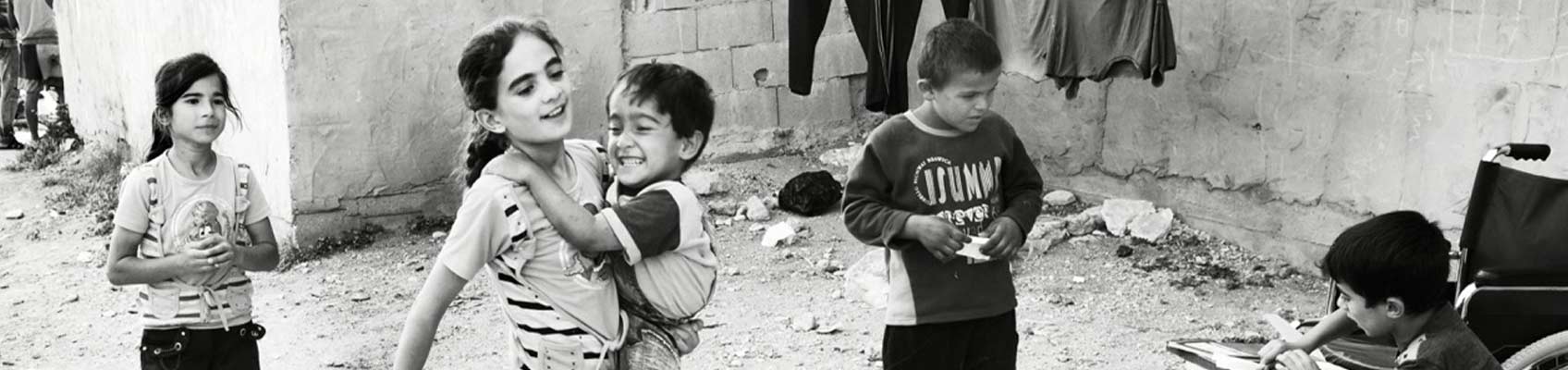
Iman, who was only 12 herself, when their house was bombed in Syria, had taken Aya in her arms. They’d gone and sheltered in the basement for three days with no food or water, and then they’d begun the perilous journey from Syria to Lebanon, that took them nearly three months. She had carried her sister Aya that whole journey.”
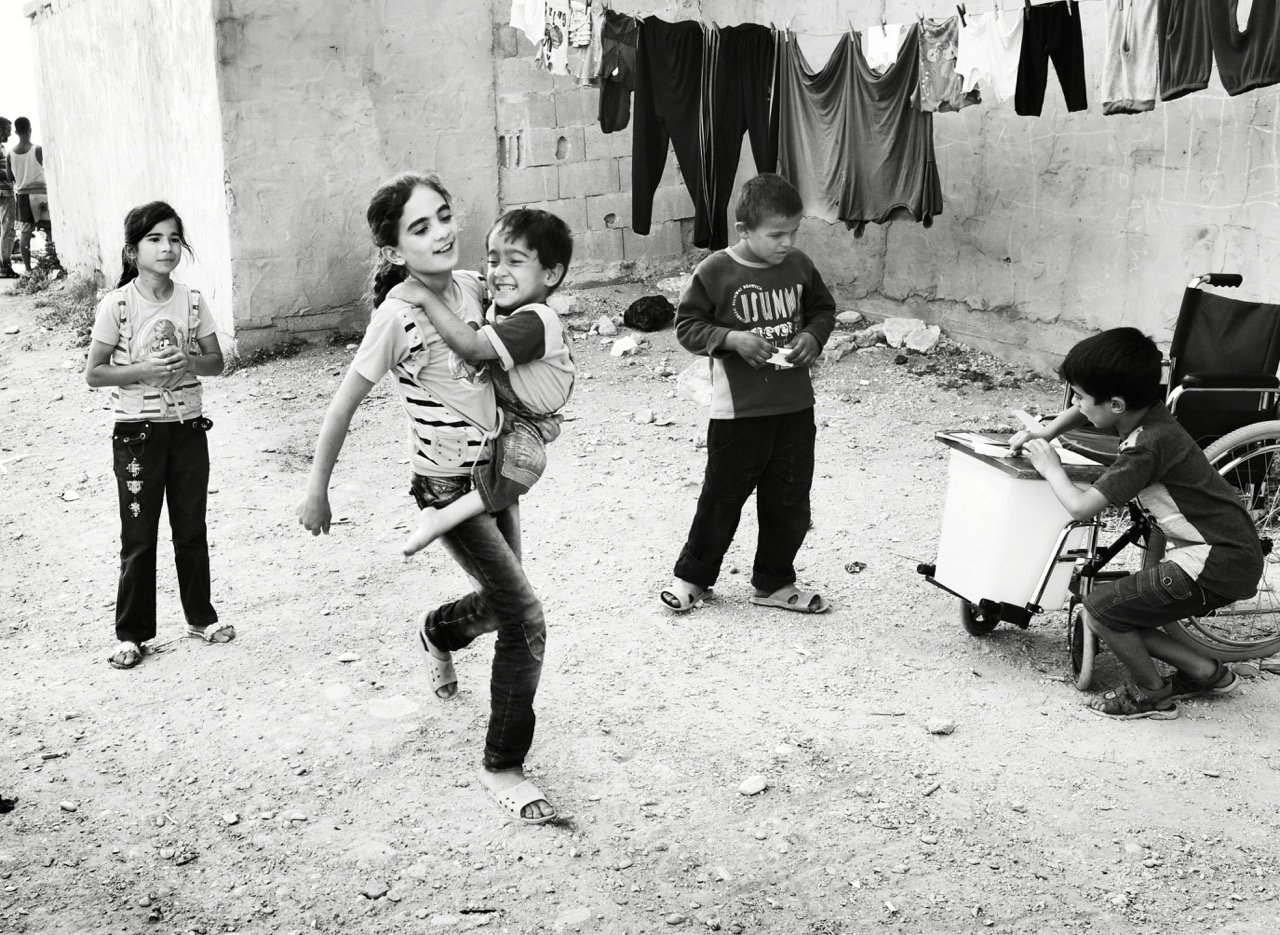
Giles approaches each subject with patience and empathy. He spends time listening to their stories before lifting the camera, ensuring that what follows is a genuine partnership. And, Iman and Aya’s photograph is a prime example of this.
The resulting image does not centre on loss; instead, it reveals beauty, strength, and resilience. For many, seeing themselves depicted truthfully and sensitively can be profoundly healing. It shifts the focus from what has been taken away to the resilience that remains.
In another of his talks, Giles explained that resilience is not something we can actively learn or teach ourselves. When asked how to become more resilient, he described it instead as a strength that grows out of hardship. Much like an athlete in training, with the result coming at the end, resilience comes from enduring life’s most difficult moments. It’s a gift that allows us to cope with challenges in a different way.
But trauma or injury can shatter your self-image and severely impact your mental health. This is why Giles’ images offer a step onto the healing journey, allowing individuals to see themselves beyond their scars. And it’s not just an emotional renewal, but this effect can be practical, rippling through their family and communities. It allows them to be represented truthfully and beautifully.
Legacy of War Foundation
Legacy of War Foundation is an international charity providing support to civilians affected by conflict. We aim to start conversations, build collaborations and support communities.
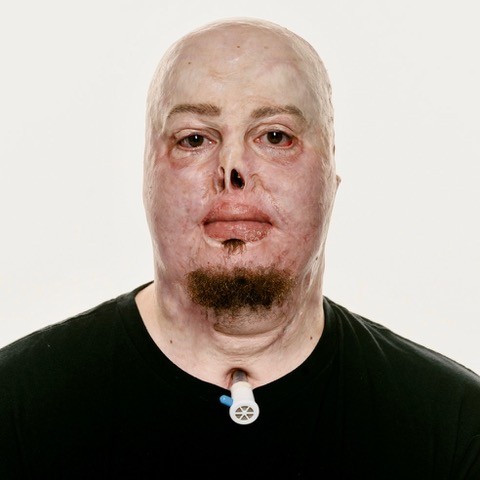
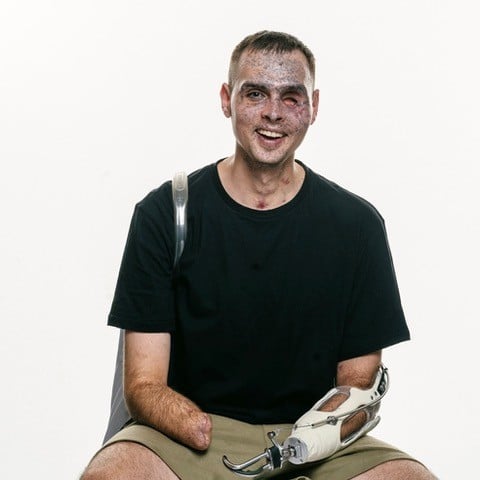
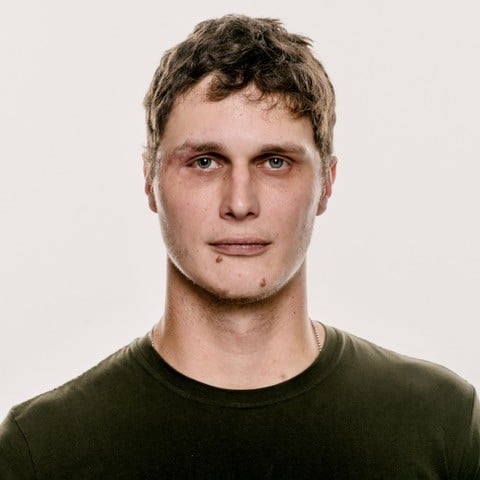
Founded by Giles, the Legacy of War Foundation is about the long-term impact of conflict and the longevity of support. As he mentions in a recent interview, “for more civilians and soldiers, war doesn't end with a peace treaty. Look at Vietnam, for example,160,000 people have been injured by unexploded bombs since the war ended. There are still people being born with the effects of Agent Orange from the contamination of the land. There are people with deep psychological trauma from the war, both in Vietnam and America. Using that as one example, you can see 50-60 years after a war, people are still deeply impacted…”
It isn’t just a charity, but a movement that uses art, culture, and community to support those living in the aftermath of conflict, where politics and policy often fail.
For example, the foundation is currently working on providing ambulances primarily for elderly people with disabilities. They are also training injured soldiers to become prosthetic technicians. Giles has observed that while international organisations often provide funding and support during times of conflict, this assistance tends to disappear in the years that follow. For those with severe injuries who require lifelong care, the absence of specialised training means both they and their families are left to suffer.
Photography and art sit at the centre of many of the foundation's projects, helping to create awareness of the long-term effects of conflict. In 2021, Legacy of War partnered with VENT to launch their No More War campaign. Part of this was a call for artistic collaborations focused on the stories of Afghan civilians. The project invited almost any medium, from photography and paintings to dance, allowing people to share their feelings and stories through art.
Projects like these bring survivors, artists, and local communities together, sparking conversation and collaboration. They create lasting connections between people whose voices might otherwise remain unheard.
Giles’ journey is a reminder that photography can hold more than just aesthetic value; it has the power to restore dignity, spark conversation, and create lasting change. Through his images and the Legacy of War Foundation, Giles continues to prove that photography can be more than a record; it can be a turning point in how people see themselves and how the world sees them.
If you would like to donate to the Legacy of War Foundation, click here and see what difference your donation could make, such as providing farm equipment for one of the women on our Land for Women cooperatives (including watering cans, hoes, spades and secateurs), to culturally sensitive therapeutic sessions, including support with gender-based violence, HIV, trauma counselling and PTSD.
This article is part of our #ChangeTheImage | Capturing Humanity campaign.
For generations, photographers and journalists have pursued a single, enduring ambition: to reveal our shared humanity. The images and films they create do more than document events — they shape our understanding of the world and our place within it.
Here at Wex Photo Video, we are constantly reminded that how we choose to capture the world has never mattered more. The way we see — and the way we portray others — holds the power to influence the world around us, from shifting public opinion to inspiring meaningful change. We are reminded once again of the profound importance of documenting the lives, stories, and moments that shape our shared human experience.
About the Author
Leo White has been part of the Wex Photo Video team since 2018, taking on roles from the contact centre to the product setup team. Holding both a BA and an MA in photography, Leo brings a wealth of expertise he’s always ready to share.
The Wex Blog


Sign up for our newsletter today!
- Subscribe for exclusive discounts and special offers
- Receive our monthly content roundups
- Get the latest news and know-how from our experts