
When the question is put to war photographer Lynsey Addario, she’s on a morning news sofa. She has just returned from Libya, where she had been held in captivity for six days, along with three of her colleagues, by forces loyal to the country’s then-ruler (though not for much longer), Muammar Gaddafi. The journalists’ driver had been killed and they themselves had been threatened with death; Addario had been repeatedly groped while blindfolded.
To most people, it likely seems reasonable when the host questions whether Addario is going to keep on doing this. “Is it worth it?” he asks, with slight incredulity.
Lynsey Addario is not most people. Still, she skirts around giving a definitive answer. “I do it because I believe in it,” she says, “but is it worth my life? [...] It’s a difficult question.”
It’s this unresolvable internal contradiction that makes Addario such a compelling subject for the 2025 documentary Love+War, produced and directed by Elizabeth Chai Vasarhelyi and Jimmy Chin. I’ve seen documentaries about war photographers before, and have sometimes found them a bit hagiographic, but I sat through this one honestly spellbound. Addario is not presented as a hero, but as a woman doing a job — a difficult and dangerous job that exacts a toll on her and everyone who loves her.
“Why don’t you try to live?”
Lynsey Addario was born in 1973, the youngest of four sisters — an environment that necessitated growing up with a thick skin. She discovered photography at an early age after being gifted a camera by her father, and fell in love. Her sisters had each received a gift of $10,000 from their father on their wedding days — Addario, however, told him that since she was never going to get married, she wanted the $10,000 to spend on camera equipment. This investment resulted in a storied photographic career, taking Addario from India to Pakistan, Afghanistan, Iraq, the Congo — and, latterly, Ukraine.
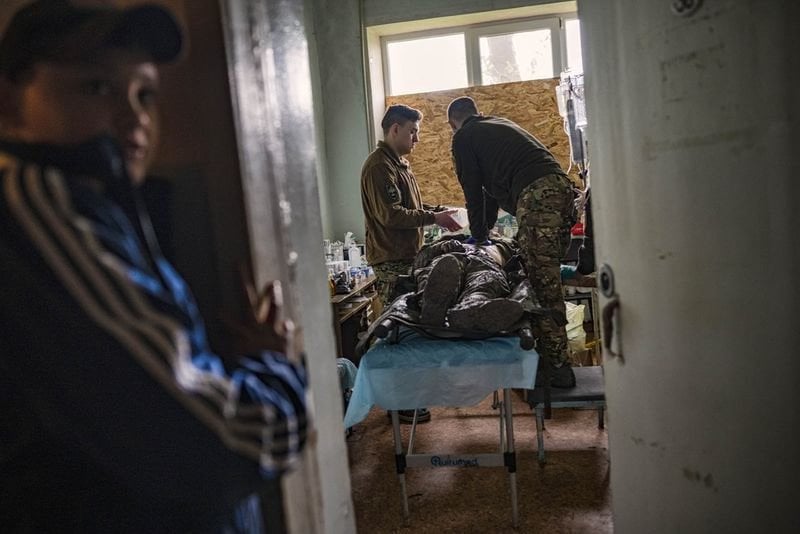
It’s in Ukraine that we first meet Addario in the film’s harrowing early minutes. With several colleagues, she is documenting civilians fleeing the suburb of Irpin in the immediate aftermath of Russia’s invasion in 2022. The journalists are mocked by a local woman for attempting to seek cover (“Why don’t you try to live, like us, instead of hiding?”). Moments later, a shell explodes in the street, close enough that the fireball is captured on camera.
When the smoke clears, a family is found dead. Addario is visibly upset, but her camera clicks away. The resulting images are broadcast around the world, making a mockery of Russian President Vladimir Putin’s claims that his military were minimising civilian casualties.
Addario was nominated for a Pulitzer Prize for this image — though the overwhelming sense you get from Addario is that she’s not doing this for the prestige. Makes sense. Of course, some might say there are easier ways to win prizes.
“Kids are so much harder than war.”
Women war photographers have existed for as long as there has been photography and war — the documentary’s whistlestop tour through famous names, from Lee Miller to Anja Neidringhaus, underscores this point. Being a woman in a conflict zone presents unique challenges, but also opportunities; while Addario frustratedly notes that Ukrainian soldiers treat her differently because she’s a woman, she also acknowledges that some of her breakthroughs have come from finagling her way into spaces where men are not welcome.
Where Addario is unusual, as a colleague notes, is that she is both a working war photographer and a mother. People who spend significant amounts of time in danger of being vaporised by explosives tend to have problems with maintaining stable relationships.
But Addario is married, despite what she promised her father. She has two sons, who were aged three and ten when the documentary was filmed. Her husband, Paul de Bendern, is a former Reuters journalist, now a stay-at-home father. Their relationship clearly has its challenges.
The same day Addario arrives home exhausted from a conflict zone, she is put to work reading a bedtime story (“Kids are so much harder than war,” she laments with an indeterminate level of irony). De Bendern needles Addario about how much time she spends away, teasing her about not knowing where her son’s school is (though she insists she does). Neither of them make any secret that it was de Bendern who pushed for a family. Though his raspy Scandinavian drawl — think Stellan Skarsgård with a cold — is not given to expressiveness, at one point you hear his frustration brim over on a call with Addario. “Why don’t you just be a mother?”
But, as de Bendern well knows, Addario does not want to “just” be a mother. She adores her children, but her work calls to her. In another TV clip, Addario is interviewed by journalist Christopher Dickey, shortly after the birth of her first child. Echoing the moments after her kidnapping in Libya, Dickey asks Addario if she’s really going to keep doing this. This time, her response is not circumspect, but testy.
“Do you ask men that question?” she snaps back.
“I think I’m another person.”
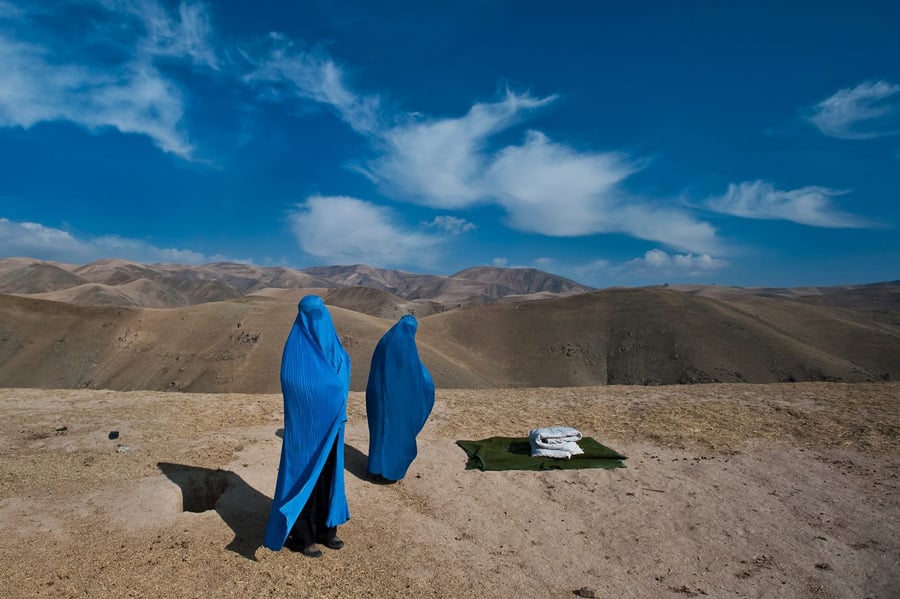
War changes people. In the film, Addario documents a Ukrainian woman named Yulia Bondareniko, a former schoolteacher who has picked up an assault rifle to defend her country. “I think I’m another person,” she says. The Ukrainian filmmaker Andriy Dubchak, who has done some incredible reporting on the front lines of the war, says much the same thing.
War certainly changed Lynsey Addario. Shortly after her kidnapping in Libya, news broke of the deaths of her colleagues Tim Hetherington and Chris Hondros in shelling outside the city of Misrata. She credits this tragedy, even more than her own experience, for her decision to step back from conflict and start her family. An understandable urge, to create life in response to so much death. But she couldn’t stay away forever.
Is it worth it? The question is impossible. You can’t weigh a photograph that exposes the crimes of a dictator against the idea of a young boy having to come to terms with the fact that his mother might any day be killed, and that this is a situation she is putting herself in voluntarily. The two things aren’t comparable.
The woman who has to balance this particular ledger every day sums it up like this:
“I have to convince myself that it’s worth it, and that it makes a difference. Because I would not be able to continue doing this work if I didn’t believe in it.”
Love+War is available to stream now on Disney+ in the UK.
This article is part of our #ChangeTheImage | Capturing Humanity campaign.
For generations, photographers and journalists have pursued a single, enduring ambition: to reveal our shared humanity. The images and films they create do more than document events — they shape our understanding of the world and our place within it.
Here at Wex Photo Video, we are constantly reminded that how we choose to capture the world has never mattered more. The way we see — and the way we portray others — holds the power to influence the world around us, from shifting public opinion to inspiring meaningful change. We are reminded once again of the profound importance of documenting the lives, stories, and moments that shape our shared human experience.
About the Author
Jon Stapley is a London-based freelance writer and journalist who covers photography, art and technology. When not writing about cameras, Jon is a keen photographer who captures the world using his Olympus XA2. His creativity extends to works of fiction and other creative writing, all of which can be found on his website www.jonstapley.com
The Wex Blog

Sign up for our newsletter today!
- Subscribe for exclusive discounts and special offers
- Receive our monthly content roundups
- Get the latest news and know-how from our experts