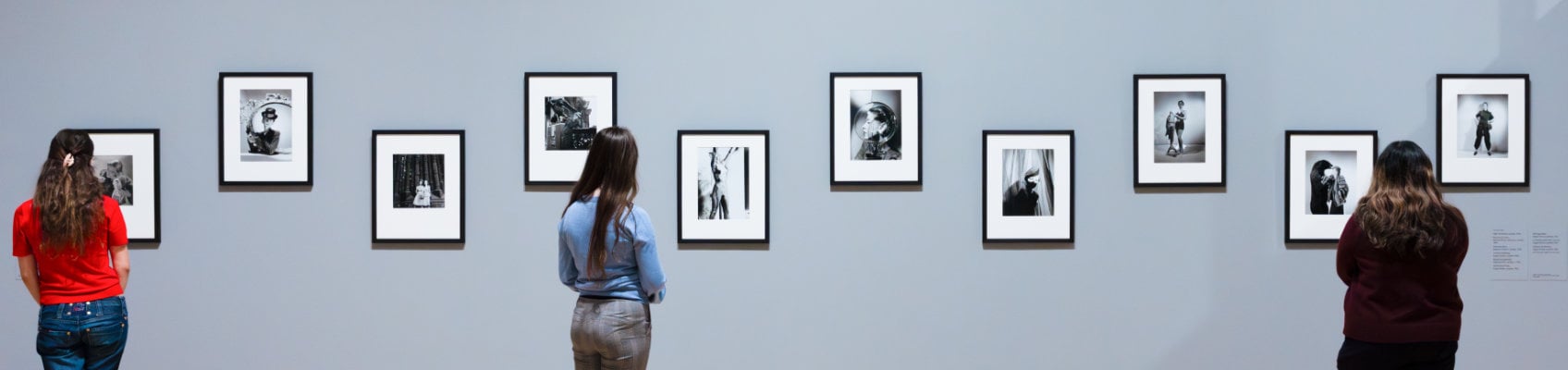
Trying to explain Lee Miller to people who don’t know her work is difficult. I often find myself saying things like, “No, really, that’s genuinely true.” Trying to summarise her extraordinary life puts me in mind of the parable where a group of blind men each feel different parts of an elephant and consequently provide wildly different descriptions of the animal. Miller was beautiful, funny and effortlessly talented, flitting between radically different career paths.
To one observer, Lee Miller is the pioneering female war photographer, who rode on trucks with American G.I.s as they raced to liberate Paris in 1944. To another, she’s the mesmerising surrealist with an endless appetite for the absurd, who devised new photographic techniques and joked around with the likes of Pablo Picasso and Jean Cocteau. To many, she’s the clocking-in fashion photographer, shooting women’s hats and coats for British Vogue while bombs rained on London.
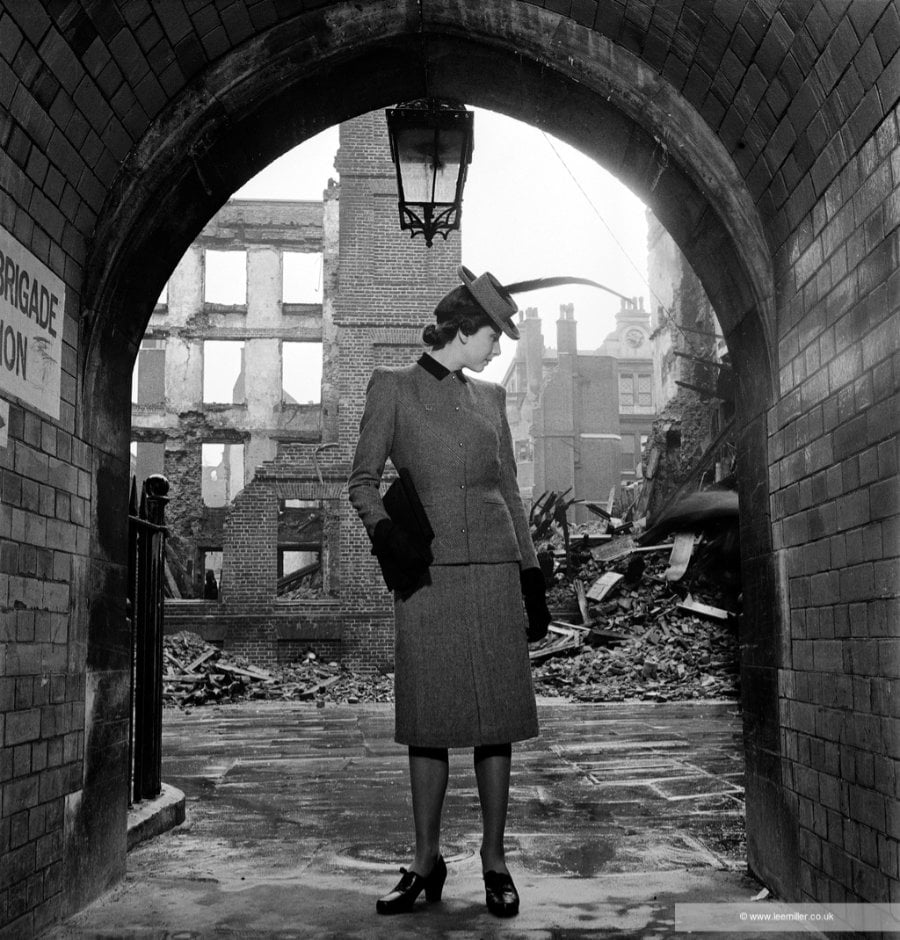
She was, of course, all those things – as evidenced by how many rooms the Tate Britain has been able to devote to her in its masterful exhibition of her life’s work. She flitted like a wild bird, from New York, to Paris, to Egypt, to London, and on. She picked up and abruptly dropped photography several times throughout her life. She trained as a dancer, worked as a model – a career that began when she literally fell into the arms of publishing magnate Condé Nast after a near miss in New York traffic. Her fruitful partnership with the surrealist artist Man-Ray famously began when she walked up to him in a Parisian cafe and announced that she was his new student. Some could say that she lacked direction, but her endless ability to succeed has forever earned her a place in the proverbial photography hall of fame.
Much ink has been spilled about the Miller/Ray partnership, which resulted in probably the most well-known imagery produced by either member. Some have misogynistically characterised Miller as his “muse”; a mere mannequin. Others, over-correcting, have accused Man-Ray of taking credit for work that was vastly Miller’s. The truth lies somewhere in between. It was collaborative, intertwined. A photo taken by one might be developed and printed by the other. Lines of authorship became blurry and indistinct, but all in consensual partnership.
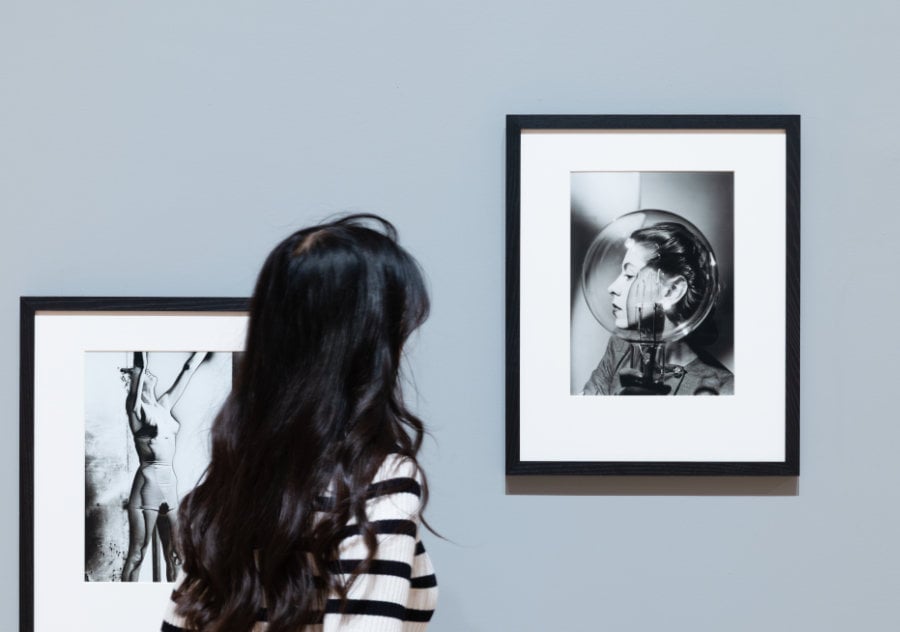
Take the famous “solarisation” technique, where the tones of a developing print are reversed by briefly re-exposing it to light. Man-Ray is generally credited with the technique, and he did much of the work of refining it. But it was Miller who made the initial discovery; according to legend, she reflexively switched on the light in the darkroom when a mouse ran over her foot. So much of her life was characterised by those kinds of strange turns of fortune – it’s one of the reasons she is so endlessly entertaining to revisit, appreciate and study.
And you know what else makes her entertaining? Lee Miller was funny! She had a wicked, playful, dirty sense of humour. I can’t think of many photographers whom I would describe as genuinely comical; the late Martin Parr is one, and Miller is another. When she photographed Blitz-stricken London in 1940, she came across the pulverised ruins of a church, with broken masonry pouring out of its front door like vomit from a mouth. The resulting image, she titled: “Non-conformist chapel”.
And like all genuinely funny people, she pushed things right to the line. In Paris in the 1930s, she earned a little extra cash photographing surgeries at a hospital. After documenting a mastectomy, she took the severed breast away with her and staged it on a dinner plate for a photoshoot. Tasteless? Insensitive? Disrespectful? Absolutely.
But you don’t get the genius of Miller without that lightning-streak of impulsivity (God only knows how she even smuggled the breast out). One of her most famous images, “Portrait of Space”, depicts a hole torn in a tent’s fly-screen, and a desert beyond. I always wonder how that hole came to be there, and it seems possible to me, even likely, that Miller tore it herself. That she reached forward, without thinking, to commit a quick, irrevocable act of destruction – and then from that, created something new.
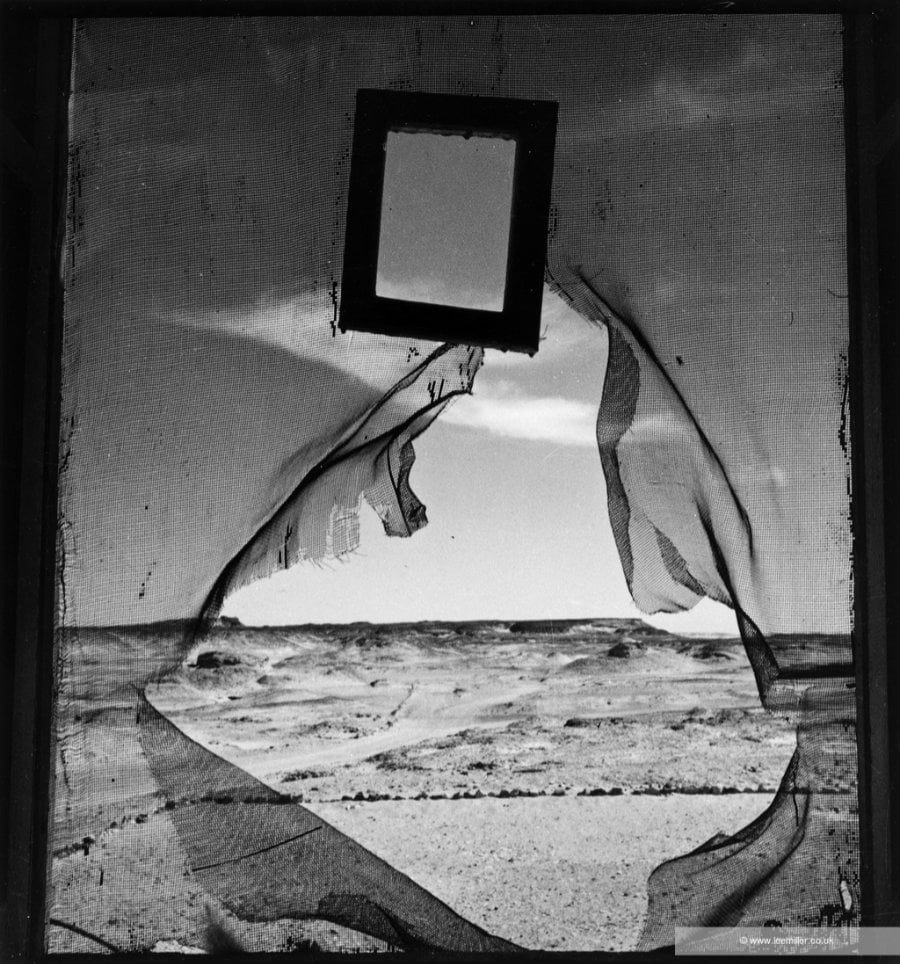
Lee Miller’s time in the desert in the 1930s felt like one long party – one of my favourite Miller anecdotes concerns her first ever desert expedition, when she almost led her party into ruin by filling the insulated container with perfectly chilled and mixed martini, rather than water (no, really, that’s genuinely true). But all parties end. And we all know what was coming next.
Miller’s work in the war was the most important she ever produced – and it broke her. She was present for the liberation of the Dachau and Buchenwald concentration camps. Her Rolleiflex camera had a wide-angle lens, forcing her to get as close as possible to mounds of dead and dying. Even as the unfathomably grim picture of the Holocaust was emerging, the dark spectre of Holocaust denialism too was taking shape. When she sent back her photographs, Miller added a handwritten note, simply reading: ‘I IMPLORE YOU TO BELIEVE THAT THIS IS TRUE’.
She returned home traumatised. Her post-war years were gentler. She convalesced amid the idyllic surroundings of Farley Farm in Sussex, surrounded by her artistic friends. You can hardly begrudge her that. She’d already lived a dozen lives. She’d already created a generational body of work – the Lee Miller Archives are still sorting through more than 60,000 negatives. She’d already ensured that almost fifty years after her death, one of London’s greatest galleries could exhibit her work to packed rooms. What a legacy. What a photographer. What a singular, multitudinous, indescribable life.
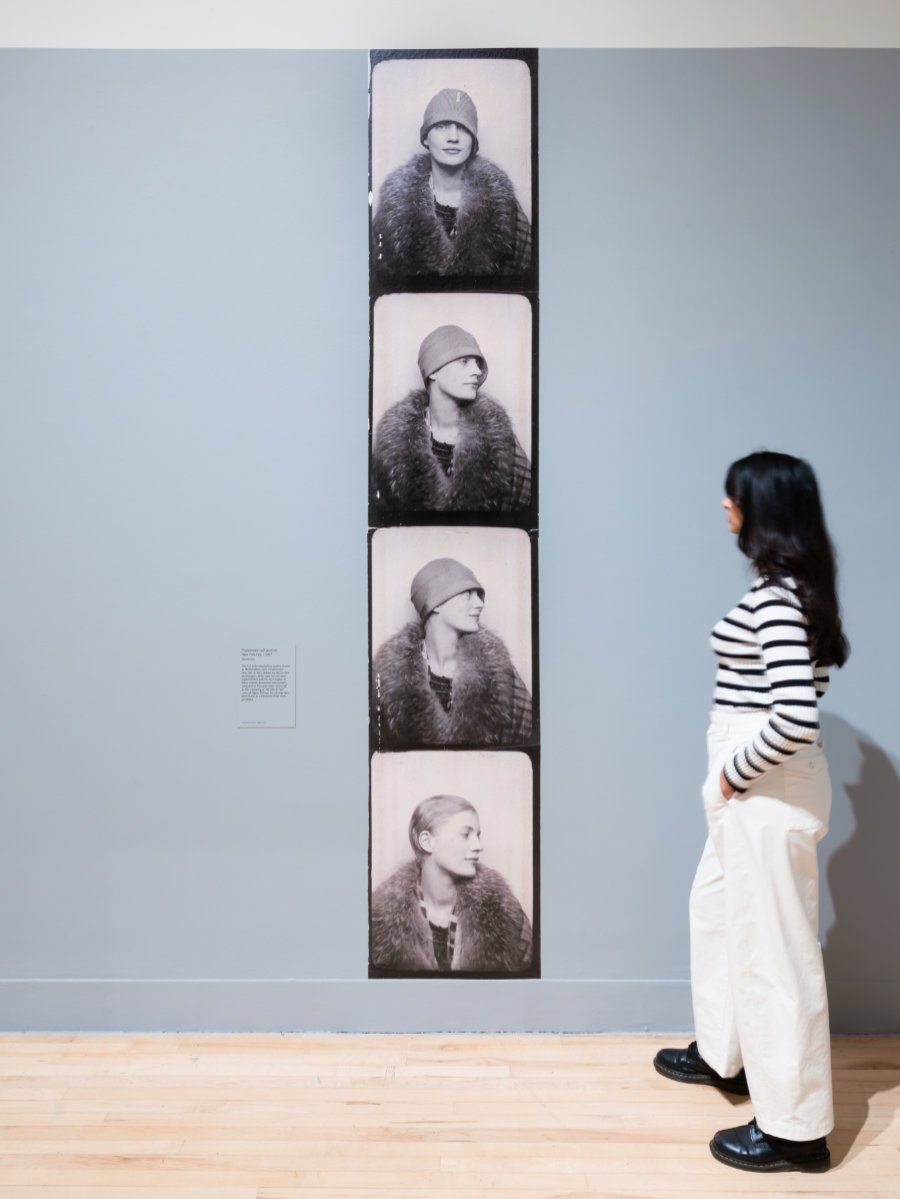
Lee Miller is showing at Tate Britain until February 15, 2026.
About the Author
Jon Stapley is a London-based freelance writer and journalist who covers photography, art and technology. When not writing about cameras, Jon is a keen photographer who captures the world using his Olympus XA2. His creativity extends to works of fiction and other creative writing, all of which can be found on his website www.jonstapley.com
The Wex Blog
Sign up for our newsletter today!
- Subscribe for exclusive discounts and special offers
- Receive our monthly content roundups
- Get the latest news and know-how from our experts