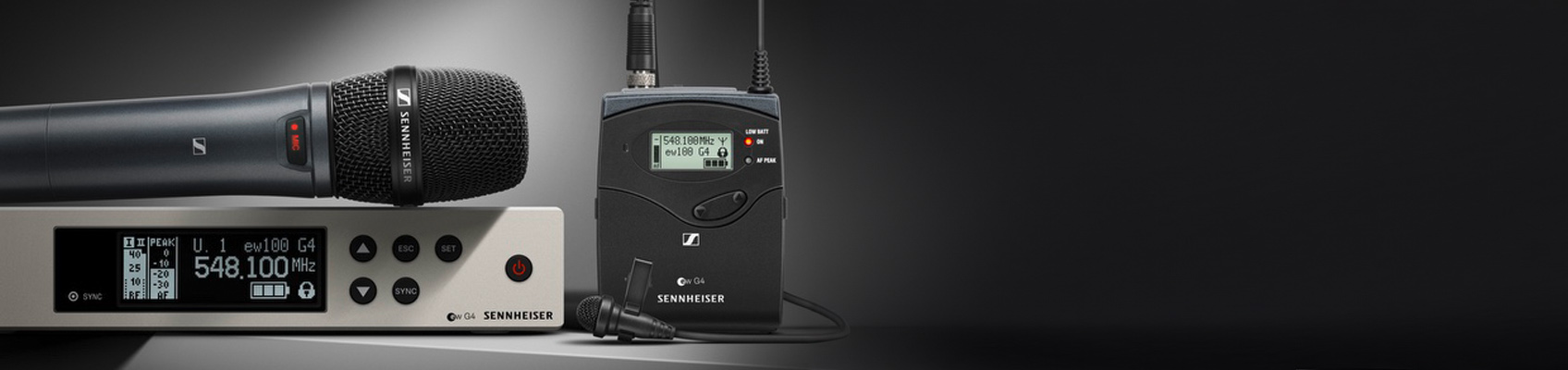
Radio licences exist to help coordinate wireless frequencies and minimise interference between users. If you're using a wireless microphone in the UK, whether you need a licence depends entirely on the frequency your system operates on. Many modern wireless microphones can be used licence-free, while others require an Ofcom licence before they can be used legally.
Using equipment on a licensed frequency without the appropriate licence could result in enforcement action by Ofcom, including hefty fines. Fortunately, working out whether you need a licence is much simpler than it sounds.
Before we get into the detail, here's the quick-fire version:
Q: Can I use my wireless microphone without a licence?
A: Almost certainly, yes.
Q: Do I need to pay for a licence?
A: Maybe. It depends on the frequency your microphone uses and where you're using it.
Q: Which option is right for me?
A: Here's a quick overview before we take a closer look...
|
Frequency |
Licence required? |
Best for |
|
Channel 70 |
No |
Weddings, interviews, small productions |
|
2.4GHz |
No |
Content creators, podcasts, mobile filmmaking |
|
Channel 38 |
Yes |
Professional videographers, live events |
|
Standard Licence |
Yes |
Television, theatre, festivals and large productions |
2026 update
Ofcom is currently reviewing how spectrum is allocated for wireless production equipment as demand continues to grow. The licensing options covered below remain unchanged, but it's worth checking Ofcom's latest guidance before purchasing or deploying new wireless systems.
Types of wireless microphone licensing
There are two types of wireless microphone licensing: Ultra High Frequency (UHF) and Very High Frequency (VHF). Both are licensed on a non-protected basis, meaning you could technically operate on these frequencies illegally without a licence (but if caught, you could face a penalty). These licences are communally shared within the UK.
UHF or VHF?
First things first, check the operating frequency band of your wireless microphone system(s). This will determine which licence will be most applicable. For example, some older systems can only operate under VHF. You can easily check this by looking at the labels on both your microphone and receiver.
UHF: The more popular of the two licences is often referred to as Channel 38. It falls between the frequencies of 606.500-613.500MHz, and will typically allow you to use up to 10 radio microphones at the same location and time without issue.
As there are many variables we can’t account for, interference is always possible when using a licenced frequency. However, because you can use any frequency that falls within the band, you can simply re-tune within that range until you find a clean, usable frequency (should you encounter any interference).
VHF: VHF has a range of 175.250-209.800MHz, but unlike UHF, is restricted to 15 usable spot frequencies within that band.
Both of these licences are straightforward to acquire and use; it’s simply a one-off payment for a set duration of time. You don’t even need to inform the regulator as to which frequencies you’ll be using within each of those bands. Touch wood, you shouldn’t have to deal with anything regarding frequency licensing or the regulator once you’re all set with your licence.
The standard licence
If you're working on a larger production where reliable wireless performance is essential, a Standard Licence offers greater peace of mind than using shared frequencies.
Unlike a Channel 38 or VHF licence, which gives you access to a shared pool of frequencies, a Standard Licence allows Ofcom to coordinate specific frequencies for your event, location and dates. This significantly reduces the chance of interference from other wireless users nearby, making it the preferred choice for television productions, major live events, theatre, concerts and other high-profile productions.
Standard Licences cover not only wireless microphones, but also equipment such as in-ear monitoring systems, talkback systems and wireless cameras. They're available for anything from a short event lasting just a few hours through to productions running over several months.
Because each licence is tailored to a specific location and time, you'll need to apply for a new licence for every production or event. The process is straightforward, and Ofcom will coordinate the frequencies allocated to your application.
While most videographers and content creators won't need this level of frequency coordination, it's invaluable when reliable wireless audio is critical and multiple wireless systems are operating in the same area.
What can I do without a licence?
If you do not wish to buy a licence and are using equipment that is capable of tuning into 863.100-864.900MHz, then you can operate within the UHF licence-exempt range, called Channel 70.
Channel 70
This is an excellent option for videographers, solo creators and small productions because it doesn't require a licence. However, because anyone can use it, congestion is more likely than on licensed frequencies, particularly at busy venues or large events. Ofcom suggests that around four wireless microphone systems can typically be operated together within Channel 70.
A slight drawback when using Channel 70 is that it has a limited power of just 10mW for handheld and 50mW for body-worn transmitters. There is also an equivalent VHF licence-exempt range that runs from 173.700-175.10MHz.
2.4GHz systems
There is also the generic Wi-Fi band that runs from 2.400-2.4835GHz. Many modern creator-focused wireless microphone systems, including compact options designed for cameras and smartphones, operate in this licence-exempt band e.g. DJI, Hollyland, Rode, Saramonic, and Shure. These systems are quick to set up and designed for content creation, although they share spectrum with Wi-Fi and Bluetooth devices, which can make them more susceptible to congestion in busy environments.
This band is free to use for all audio equipment below 10mW but as mentioned is the most congested of all frequency bands due to most consumer devices operating on it. Also, given that it’s a much higher frequency, the operating distance is going to be much less when compared to UHF and VHF. For example, if you queue outside of a nightclub or gig venue, you’ll likely hear thumping low-frequency sounds, while the higher-frequency sounds from the rest of the ensemble are hard to make out. This is because lower frequencies can easily diffract around objects.
What if my audio equipment exceeds 10mW?
If your audio equipment exceeds 10mW of power (or 50mW if body-worn) but doesn't exceed 1W, then you will need to have a licence that permits the use of high-powered links that sit within Channel 38.
Channel 38 is still the most popular licensed option for professional wireless microphone users in the UK. It provides shared access to the 606.500-613.500MHz band and typically supports around ten radio microphones operating at the same location.
How do I buy a licence?
You’ve come this far and now understand why you may need or indeed want a licence, but how do you go about obtaining one? Thankfully, it’s super straightforward. Simply head over to the Ofcom website, where you can apply and pay online for any of the licences. For access to UHF/Channel 38, the cost is £75 for one year, and £135 for two years when purchased directly through Ofcom's online portal. VHF is the same price as UHF’s standard yearly cost (there is no additional discount).
What happens after I get a licence?
Well, that’s it – you’re all good to go. Of course, interference-free transmission can never be 100% guaranteed as there are many variables at play (literally anything that emits a wireless signal or anything that’s going to get in the way of one). Licensing is all about trying to minimise that risk, which is especially important for us professionals. If you’re licensed and you do encounter interference, then Ofcom can provide you with technical support and advice on how to quickly resolve the situation.
Frequently asked questions
Not necessarily. It all comes down to the frequency your wireless microphone uses. Many popular systems designed for content creators and videographers operate on licence-free frequencies, meaning you can use them straight out of the box. Others use licensed frequencies, in which case you'll need an Ofcom licence before using them.
If you're unsure, check your microphone's specifications or user manual. The operating frequency should be listed there.
Channel 38 is the UK's most popular licensed frequency band for wireless microphones. It's commonly used by professionals working in live events, filmmaking, theatre and broadcast because it offers a reliable shared spectrum for wireless audio.
You'll need an Ofcom licence to use equipment that operates on Channel 38, but once you have one, you can tune your system to any available frequency within that band.
Channel 70 is a licence-free frequency band, so you don't need an Ofcom licence to use compatible equipment. That's one reason it's so popular with videographers, wedding filmmakers and content creators.
The trade-off is that anyone can use it. If you're filming somewhere busy, such as a conference, exhibition or event, there's a greater chance of other wireless systems using the same frequencies.
No. Wireless microphones that operate on the 2.4GHz band don't require a licence, making them a great option if you're just getting started with wireless audio.
Many modern systems use this frequency because it's simple to set up and works almost anywhere. Just bear in mind that 2.4GHz is also used by Wi-Fi routers, Bluetooth devices and plenty of other wireless technology, so performance can be affected in particularly busy environments.
At the time of writing, a Channel 38 licence costs £75 for one year or £135 for two years. If you only need licensed frequencies for a specific event or production, you can also apply for a Standard Licence instead.
As prices can change, it's always worth checking the latest information on the Ofcom website before applying.
Using a licensed frequency without the appropriate licence could result in enforcement action by Ofcom, including a fine.
Even if you aren't caught, using the wrong frequency could interfere with other wireless equipment nearby. That's why it's worth taking a few minutes to check which band your system uses before heading out on a shoot.
The easiest place to look is on the transmitter or receiver, where the operating frequency is often printed on a label. If it isn't, you'll usually find it in the user manual or on the manufacturer's website.
Once you know the frequency range, it's easy to work out whether you need a licence or can use your equipment licence-free.
If you're filming YouTube videos, interviews, podcasts or social content, a licence-free system is usually the simplest choice and will be more than capable for most situations.
If you're working on larger productions, live events or anywhere reliability is critical, a licensed system may be a better investment as it gives you access to less congested frequencies.
Yes. No wireless microphone is completely immune to interference, regardless of whether it requires a licence.
Busy venues, other wireless equipment, Wi-Fi networks and even physical obstacles can all affect performance. Choosing the right frequency band, keeping your transmitter and receiver within range, and scanning for a clear channel where possible will all help you get the best results.
About the Author
Kristian Hampton is a Wex Photo Video’s former Technical Editor for Pro Video. He is a video specialist who has worked in corporate studios for companies such as Vodafone Group and PwC, as well as working as a freelance grip on various TV productions and features. He also runs Krade Media, providing enterprises with production services. Follow Kristian on Twitter @KrissHampton
Trending Articles



Sign up for our newsletter today!
- Subscribe for exclusive discounts and special offers
- Receive our monthly content roundups
- Get the latest news and know-how from our experts