The best cameras for beginners are the ideal way to get serious about learning photography and video in 2026. While you can get great results with a smartphone, a dedicated camera with a larger sensor and an interchangeable lens mount (or at least a big old zoom lens) will give you so much more flexibility, and dramatically improve the quality of your images.
We’ve picked a selection of what we think are the best cameras for beginners, with a range of mirrorless, DSLR and compact options at different price points (scroll to the bottom of this page if you need a primer on the types of camera). Everything on this list can be picked up for less than £999 with a less — some for considerably less — as budget is of course a significant consideration for beginner shooters.
Whether you’re looking to learn to shoot photos, video or a bit of both, we’re confident there will be a great camera on this list to get you started.
What's coming up:
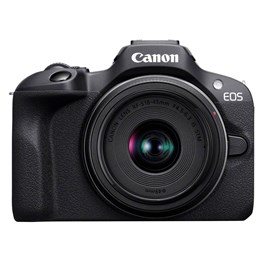
Best beginner camera overall: Canon EOS R100 with RF-S 18-45mm Lens
Best beginner camera for image quality: Fujifilm X-T30 III with XC 13-33mm f3.5-6.3 OIS Lens
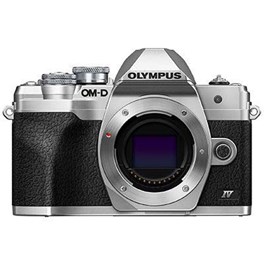
Best beginner camera for travel: Olympus OM-D E-M10 Mark IV
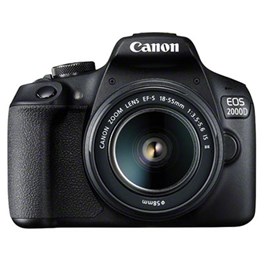
Best beginner DSLR: Canon EOS 2000D Digital SLR Camera with 18-55mm IS II lens
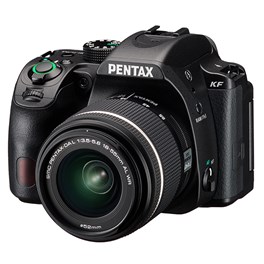
Best weatherproof beginner camera: Pentax KF Digital with 18-55mm WR Lens
Best bridge camera for beginners: Panasonic Lumix FZ82D
Best affordable camera for beginners: Kodak Pixpro AZ255
Best beginner camera overall:
|
Pros:
Cons:
|
Sensor: 24.1MP APS-C CMOS Lens Mount: Canon RF/RF-S mount Video: 4K/25p (1.55x crop), Full HD 1080p/60p, HD 720p/120p ISO Range: 100–12,800 (expandable to 25,600) Dual Card Slots: Single UHS-I SD |
New beginner cameras don’t come along as frequently as they used to, which is why we were so delighted when Canon took the wraps off the EOS R100. It’s the most affordable entry-point to the EOS R system, which also includes the firm’s flagship professional cameras, and it borrows a fair few features from its high-end cousins. One of the best is its Dual Pixel Autofocus system, which is consistently fast and effective.
As the heir apparent to Canon’s famous beginner DSLRs like the EOS 250D, the EOS R100 offers loads of helpful guide modes that explain the various settings and how to use them. While it takes great pictures in Auto mode, the EOS R100 really shows its strength once you start taking control of your images – that’s the point where you start to appreciate how much more quality you’ve got here compared to a smartphone. One thing you’ll have to get used to though is the lack of a touchscreen.
Best beginner camera for image quality:

|
Pros:
Cons:
|
|
Since the original X-T10, this particular line of Fujifilm cameras has been a lovely option for beginners. With the same size sensor as Fujifilm’s high-spec cameras like the X-T5, the X-T30 III similarly produces brilliant-looking images with vivid colours. Fujifilm X cameras are known for being amazing for shooting JPEGs — while the X-T30 III will shoot in RAW, it’s a great camera for those who like to spend more time shooting and less time editing.
A big factor in this is the selection of Film Simulation modes — essentially digital filters that emulate the looks of classic film stocks like Velvia and Provia. The X-T30 III adds a recent feature that has proven very popular on other Fujifilm cameras: the dedicated Film Simulation dial, allowing you to quickly flick between these modes without delving into the menus. This tactile, physical mode of shooting is what Fujifilm does best, and if your budget can stretch to the X-T30 III, you’ll find it to be a wonderfully rewarding platform to use for learning the ropes of photography.
Best beginner camera for travel:
|
Pros:
Cons:
|
Sensor: 20.3MP Micro Four Thirds Live MOS Lens Mount: Micro Four Thirds mount Video: 4K/30p, Full HD 1080p/60p ISO Range: 200–6,400 (expandable to 100–25,600) Dual Card Slots: Single UHS-I SD |
One of the most enduringly popular beginner cameras ever made, the clever little Olympus OM-D E-M10 Mark IV is an ideal way to hop on board the Micro Four Thirds system. Unlike many other beginner cameras, the E-M10 Mark IV sports built-in 5-axis image stabilisation – this helps compensate for unwanted movements when hand-holding the camera, enabling sharper shots at slower shutter speeds, in turn meaning you get better results in low light.
The Micro Four Thirds lens ecosystem is big, with loads of fantastic, lightweight lenses that make the E-M10 Mark IV one of the best beginner cameras for travel. It can shoot completely silently for those times you want to be discreet, its LCD monitor can flip down to face forward for selfies or vlogging, and it can also be powered up directly using its USB interface – just be aware it’s the older micro USB standard, not USB-C.
Best beginner DSLR:
|
Pros:
Cons:
|
Sensor: 24.1MP APS-C CMOS Lens Mount: Canon EF/EF-S mount Video: Full HD 1080p/30p, HD 720p/60p ISO Range: 100–6,400 (expandable to 12,800) Dual Card Slots: Single UHS-I SD |
When you’re looking for a beginner camera, it can make sense to jump into a well-established system, giving yourself plenty of lens options and room to grow. Systems don’t come much more well-established than Canon DSLRs, and the easy-to-use EOS 2000D is an ideal jumping-on point. A simple but capable DSLR with a 24MP sensor, it’s capable of capturing brilliant images, and the EF-S lens mount gives you a huge selection of lenses to choose from when you want to upgrade from the included 18-55mm IS II lens.
The EOS 2000D offers a number of handy in-camera guided shooting modes, giving you plenty of help with making your images look as good as possible while getting your head around the basics of photography. It also captures video in Full HD, with a 7.5cm LCD screen for composition and playback. A Canon DSLR is a brilliant camera to learn the basics on — many photography students have, and many more will.
Best weatherproof beginner camera:
|
Pros:
Cons:
|
Sensor: 24.2MP APS-C CMOS (with AA filter simulator) Lens Mount: Pentax K mount Video: Full HD 1080p/30p, HD 720p/60p ISO Range: 100–51,200 Dual Card Slots: Single UHS-I SD |
A new DSLR, in the 2020s? Yes! While other firms move away from the DSLR and plant their flags in the mirrorless camp, Pentax is sticking with what it knows and producing solid, rugged, back-to-basics DSLRs. The Pentax KF is a fairly minor refresh of the K-70, and its weatherproof build makes it an excellent choice if you plan to take your photography out into the rain, wind and snow. It also benefits from Pentax’s SR (Shake Reduction) stabilisation system.
The selection of Pentax K-mount lenses to go with the camera features many similarly weatherproofed optics. It’s not quite as comprehensive or advanced as the ranges for Canon or Nikon DSLRs, but there is still plenty of choice there. It’s also worth noting that this isn’t the best choice if you want to shoot lots of video as well as stills. It captures Full HD, but you can get more for your money elsewhere.
Best bridge camera for beginners:

|
Pros:
Cons:
|
Sensor: 18.1MP 1/2.3-inch High-Sensitivity MOS Lens: Fixed 20–1200mm equivalent (f2.8–f5.9) Video: 4K/30p, Full HD 1080p/60p ISO Range: 80–3,200 (expandable to 6,400) Dual Card Slots: Single UHS-I SD |
A relatively new bridge camera, the Panasonic Lumix FZ82D brings a classic formula nicely up to date, with modern features like a USB-C charging port. It pairs an 18MP sensor with a DC Vario 20-1200mm f2.8-5.9 lens, giving you both the image quality and the versatility that bridge camera users are looking for. There’s also an effective stabilisation system to help make the outer end of the telephoto lens easier to use when shooting handheld.
The lens construction features 14 elements in 12 groups, including aspherical lenses and extra-low dispersion elements to correct aberrations and distortion. Video-wise, the Lumix FZ82D also impresses; like all modern Lumix cameras, it’s capable of shooting great-looking 4K, and also comes equipped with useful 4K Photo modes. These allow you to extract a high-quality still from 4K footage, effectively giving you a 30fps burst rate.
Best affordable camera for beginners:

|
Pros:
Cons:
|
Sensor: 16.0MP 1/2.3-inch BSI CMOS Lens: Fixed 24–600mm equivalent (f3.0–f5.9) Video: Full HD 1080p/30p ISO Range: 100–3,200 Dual Card Slots: Single SD (standard speed support) |
An ultra-cheap bridge camera from the Kodak PixPro range, the AZ255 is a great buy for beginners who don’t have a huge budget but still want a capable, versatile camera. With a 25x optical zoom lens and optical image stabilisation, it’s a solid choice for day-to-day handheld shooting, and it’s equipped with 22 scene modes that allow you to tailor the look of your images for different situations.
The light weight and compact build of the Kodak Pixpro AZ255 means it works well for travel, despite that big zoom lens. It’s powered by four AA batteries rather than a rechargeable Li-Ion, and it’s rated to get at least 300 shots or 120 minutes of video out of a full charge. And on the subject of video, the Pixpro AZ255 captures 1080p Full HD, which can be activated with the touch of a single button. It’s not as sophisticated as the Lumix FZ82D, but it’s a good deal more affordable and can still capture great images.
How to choose the best camera for beginners
The first thing to do before you start picking specific models is to figure out which type of camera you want.
Mirrorless cameras - Interchangeable-lens cameras that boast the latest technology, mirrorless cameras are generally smaller and lighter than DSLRs – owing to the fact that they don’t have the mirror mechanism required to field an optical viewfinder.
DSLRs - Once the kings of the camera world, there are still plenty of photographers who prefer DSLRs, and if you join any photography college course you’ll see more than a few people wielding them. They’re generally bigger than mirrorless cameras, but many appreciate them for their rugged bodies, optical viewfinders and generous battery life.
Bridge cameras - While they may look like DSLRs, bridge cameras have fixed-on lenses that can’t be changed. While this makes them less versatile, it does make for a simpler proposition for the photographer who isn’t interested in spending more money on lenses. And the fact that the lens tends to be a big old superzoom certainly helps.
FAQs
What is the difference between a DSLR and a mirrorless camera?
DSLR (Digital Single-Lens Reflex) and mirrorless cameras both offer interchangeable lenses but differ in their design. DSLRs use a mirror to reflect light into an optical viewfinder, while mirrorless cameras have no mirror, relying on an electronic viewfinder or the rear LCD. Mirrorless cameras are typically more compact and have faster autofocus, while DSLRs often have better battery life and a broader lens selection.
What are megapixels, and do they matter?
Megapixels refer to the resolution of a camera sensor, indicating how many million pixels it can capture. While higher megapixel counts can provide more detail, for most beginners, anything above 12-16 megapixels is sufficient for everyday photography. Other factors like sensor size and lens quality play a significant role in overall image quality.
What is image stabilisation, and why is it important?
Image stabilisation compensates for camera shake, resulting in sharper images and smoother videos. It's crucial, especially in low-light situations or when using telephoto lenses. There are two main types: optical stabilisation within the lens and sensor-shift stabilisation built into the camera body.
What does "ISO" mean and how does it affect my photos?
ISO measures the sensitivity of the camera sensor to light. Higher ISO values (e.g., ISO 1600) allow for better performance in low-light conditions but can introduce digital noise, affecting image quality. Beginners should aim for lower ISO values (e.g., ISO 100-400) in well-lit environments to minimise noise.
Which lens should I choose for different types of photography?
The best lens for photography depends on the subject and your shooting style. For beginners, a versatile "kit lens" with a moderate zoom range is an excellent starting point. For portraits, a prime lens with a wide aperture (e.g. f1.8) creates beautiful background blur. Landscape photographers often prefer wide-angle lenses, while telephoto lenses are ideal for wildlife and sports photography.
What are the essential camera settings for beginners?
Beginners should focus on mastering the exposure triangle: aperture, shutter speed, and ISO. Aperture controls depth of field, shutter speed affects motion blur, and ISO adjusts sensitivity to light. Shoot in auto or semi-auto modes initially, gradually transitioning to manual mode as you gain confidence and skill.
What accessories are essential for photographers?
Apart from the camera and lens, essential accessories include a sturdy tripod for stability, extra memory cards and batteries, a camera bag for protection, and lens filters (e.g., UV or polariser) to enhance image quality and protect the lens.
How can I transfer photos from my camera to a computer or smartphone?
There are several ways to transfer photos: using a USB cable to connect the camera to your computer, removing the memory card and using a card reader, or using wireless transfer options such as Wi-Fi or Bluetooth, which many modern cameras offer. Some camera manufacturers also provide dedicated apps for seamless smartphone connectivity.
How do we decide?
Our in-house photography specialists, store staff, and industry partners work together to review our buying guides and advice articles. We also monitor emerging trends and listen closely to customer feedback, ensuring our recommendations stay current and relevant to what photographers and filmmakers are actually looking for.
By carefully curating the products we recommend, our guides are designed to offer clear, trustworthy advice that helps customers choose the right kit with confidence.
If you would like further advice, our contact centre team are here to help. You can also reach us via email or social media. And remember, if you purchase based on our recommendations, your order is covered by our full returns policy.

Sign up for our newsletter today!
- Subscribe for exclusive discounts and special offers
- Receive our monthly content roundups
- Get the latest news and know-how from our experts