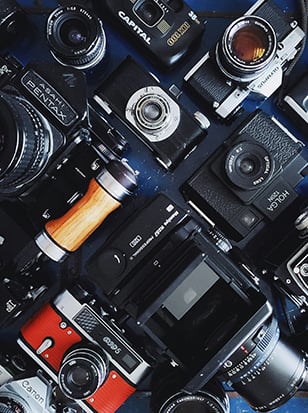

Here, we’re recommending the best cameras you can buy for travel filmmaking. Whether you have an eye on a career in filmmaking or video content, or just want something to document your trips and breaks for personal enjoyment, these are the cameras that’ll get it done.
Dedicated cameras for filmmaking have two big advantages over smartphones: bigger sensors, and the ability to change lenses. As such, every camera we’ve included on this list is an interchangeable-lens model with a decent-sized sensor, meaning you have as much shooting flexibility as possible.
You can also check out our guide to the best lenses for travel filmmaking for the perfect glass to pair with your camera.
What's coming up:
Best compact camera for travel filmmaking: Canon PowerShot V1
Best mirrorless camera for travel filmmaking: Sony ZV-E10 II
Best full-frame camera for travel filmmaking: Panasonic Lumix S5 IIX
Best budget camera for travel filmmaking: Nikon Z30
Best small camera for travel filmmaking: Fujifilm X-M5
Best compact camera for travel filmmaking:

|
Pros:
Cons:
|
Sensor Resolution: 22.3MP (1.4-type CMOS) Lens: 16–50mm equivalent, f2.8–4.5 Video Recording: 4K 60p, Full HD 120p Autofocus: Dual Pixel CMOS AF with Eye Detection Weight: 426g |
A compact camera is an ideal choice for travel filmmaking, as it provides a self-contained package that’s slim and portable. One of the best travel compacts for video, hands down, is the Canon PowerShot V1, which as the “V” in the name implies, is expressly built for vlogging. It uses a 1.4-inch sensor that is physically larger than the 1-inch sensors that are typically used in cameras of its type, which gives it a distinct advantage in terms of the quality of footage it is able to offer..
It’s capable of delivering 4K 60p with a crop, or 4K 30p using the full width of its sensor, oversampled from 5.7K to deliver superb colour accuracy and clarity. A built-in cooling fan effectively dissipates heat to allow for multi-hour recording times, and there’s a built-in 3-stop ND filter for controlling exposure.
Honestly, this is such a fully featured camera that it’s hard to fit in everything worth talking about. We haven’t even got to the optical and digital stabilisation, the highly accurate Dual Pixel CMOS AF II autofocus system, or the ability to instantly apply professional-grade colour effects.
The only potential downside is that you don’t have the option to change lenses; the 17-52mm equivalent lens is all you’re getting. This focal range is going to be suitable for the majority of filmmaking applications, but if you can see yourself needing ultra-wide angle or telephoto imagery, a mirrorless camera may be a better bet.
Best mirrorless camera for travel filmmaking:

|
Pros:
Cons:
|
Sensor Resolution: 26MP APS-C BSI CMOS Video Recording: 4K 60p, Full HD 120p, 10-bit 4:2:2 Autofocus: 759-point phase detection AF Image Stabilisation: None (lens-dependent) Weight: 377g |
If you want to get creative and introduce all manner of different lenses into your filmmaking, Sony’s E-mount is a good bet. As one of the longest-running mirrorless systems, it has built up a huge stable of optics, and you’ll have no trouble kitting out a Sony mirrorless camera like the ZV-E10 II. Specifically optimised for video, the ZV-E10 II delivers crisp and punchy 4K with 10-bit 4:2:2 colour sampling. You can make use of the flat S-Log 3 colour profile to deliver maximum detail and dynamic range, ready for colour grading later.
This Mark II version offers a number of improvements on Sony’s original ZV-E10 camera, particularly in its battery life, which is much improved. Its diminutive dimensions make it an ideal choice for travel, and the real-time Eye AF helps keep human subjects sharp in the frame.
The ZV-E10 II uses the same sensor and processor combination as Sony’s FX30 cinema camera. So, even though it’s a smaller vlogging camera, you’ll still be able to get professional-quality footage.
Best full-frame camera for travel filmmaking:
|
Pros:
Cons:
|
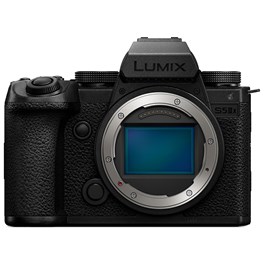
Sensor Resolution: 24.2MP full-frame CMOS Video Recording: 6K 30p, 4K 60p, internal ProRes & RAW output Autofocus: Phase Hybrid AF with 779 points Image Stabilisation: 5-axis IBIS rated to 5.5 stops Weight: 740g |
You don’t have a shortage of options when it comes to a full-frame mirrorless filmmaking camera, however our recommendation is going to the Panasonic Lumix S5 IIX, which provides an optimal balance of performance, quality and value for money. Its full-frame sensor is capable of producing sublime imagery, with 6K and 4K video on tap, and a host of options when it comes to codecs, frame rates, etc.
The body of the S5 IIX is well-engineered and not too bulky for a full-frame camera. You shouldn’t have any problems using it for a day-long shoot, and thanks to advancements in cooling tech, you can keep on recording for essentially unlimited periods (i.e. for as long as your battery and card space holds up).
Autofocus is reliably snappy, thanks to Panasonic’s much-welcomed introduction of phase-detection AF into its Lumix S series. All in all, it’s a professional performer, and one that comes at a lower cost than many of its similarly-specced rivals.
Best budget camera for travel filmmaking:
|
Pros:
Cons:
|
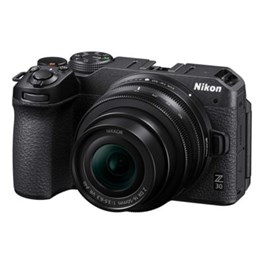
Sensor Resolution: 20.9MP APS-C CMOS Video Recording: 4K 30p, Full HD 120p Autofocus: Hybrid AF with Eye/Animal Detection Image Stabilisation: None (lens-dependent) Weight: 405g |
One of the lightest and most affordable offerings in the Nikon Z mirrorless range, the Nikon Z30 is a budget-friendly vlogging machine. It may be small, but Nikon’s designers have made sure to give it a satisfyingly deep handgrip that makes the Z30 comfortable to hold for long periods, while the light weight means you’ll have no problem wielding it one-handed.
Composition on the articulating LCD screen is an intuitive experience, especially for video, and we also have to give a shout-out to the excellent audio technology. While you can use the 3.5mm mic jack to plug in an external mic (and you arguably should), the sophisticated built-in stereo microphone with wind reduction technology means that if this isn’t an option, you’ll get by without it. Video AF is also fast and capable, perfect for recording on the move.

|
Pros:
Cons:
|
Sensor Resolution: 26.1MP APS-C X-Trans CMOS 4 Video Recording: 6.2K 30p, 4K 60p, Full HD 240p Autofocus: 425-point phase detection with AI subject tracking Image Stabilisation: Digital only (video mode) Weight: 355g |
If you’re looking for a travel filmmaking camera, chances are good that you want something fairly small, but don’t want to compromise on quality. The Fujifilm X-M5 is the perfect fit, as it’s the smallest interchangeable-lens camera Fujifilm has ever produced, weighing just 355g, but still offers a robust video feature-set that makes it ideal for filmmaking.
The X-M5 can capture 6.2K open-gate video, meaning it uses the full width of its sensor to maximise quality. It manages more than 13 stops of dynamic range in the FLog 2 gamma profile, which is designed for colour grading. However, if you’d rather produce great-looking footage straight out of camera, you can also take advantage of Fuji’s Film Simulation modes to effectively give your footage an instant grade. Emulating the looks of classic stocks, these Simulations aren’t quite LUTs, but they are a great way to quickly produce dynamic-looking footage.
How to choose the best travel tripod
Here are the key specs to think about when choosing a camera for travel filmmaking.
Video resolution / frame rate: Now, this isn’t to say that you need the ultimate in high-resolution 8K 60p monster cameras or your travel films will be worthless. That is of course not the case. You just need to make sure the camera you pick can shoot in high enough quality for your purposes.
For our money, a good travel filmmaking camera should offer at least 4K resolution, and a minimum frame rate of 30p (30 frames per second). While you may not need to shoot in 4K all the time, having it at your disposal opens up creative options like the ability to losslessly crop into footage.
If your shooting is strictly amateur, for enjoyment purposes only, then Full HD will be fine. However, if you have any intentions at all of filmmaking in a professional capacity, then 4K should at least be an option for you. It’s a similar story with frame rates: 30p is the minimum you’ll want to work with, but 60p is good for giving your footage a professional sheen.
Lightweight, weatherproof build: Travel is an adventurous, outdoor pursuit full of unpredictability, and as such, you don’t want a camera you’re going to be rushing to put away when the weather gets nasty. Similarly, while a good filmmaking camera won’t be feather-light, you should at least be able to carry it around for a day without putting your back out.
Fast, accurate autofocus: Travel filmmaking is often about capturing the unexpected, and as such, it pays to have a quick and reliable autofocus system. Additional features like Eye AF or automatic subject recognition are definitely a bonus too.
Articulating LCD screen: You’ll be composing your shots on the screen, and having one that fully articulates, rather than being fixed in place, is going to make that process much easier.
FAQs
What should I look for when choosing a camera for travel filmmaking?
When choosing a camera for travel filmmaking, you should consider factors such as size and weight, image quality, durability, battery life, and versatility.
Is a DSLR or mirrorless camera better for travel filmmaking?
Both DSLR and mirrorless cameras can be great for travel filmmaking, but mirrorless cameras tend to be smaller and lighter, making them easier to carry around.
What is the best lens for travel filmmaking?
The best lens for travel filmmaking depends on your specific needs, but a versatile zoom lens with a wide focal range, such as a 24-70mm or 18-135mm, can be a good choice.
What is the ideal resolution for travel filmmaking?
A resolution of 1080p or higher is generally recommended for travel filmmaking, as this provides good quality footage for most purposes.
Should I choose a camera with in-body image stabilisation (IBIS)?
In-body image stabilisation can be very helpful for travel filmmaking, as it can help to reduce camera shake and produce smoother footage, so it is worth considering.
How important is low-light performance for travel filmmaking?
Low-light performance can be important for travel filmmaking, especially if you plan to shoot in challenging lighting conditions, such as at night or indoors.
What kind of audio capabilities should I look for in a travel filmmaking camera?
Look for a camera with a built-in microphone and the ability to attach an external microphone, as well as features like manual audio control and a headphone jack for monitoring audio levels.
Is it necessary to have a camera with weather sealing for travel filmmaking?
Weather sealing can be helpful for travel filmmaking, as it can help to protect your camera from dust, moisture, and other environmental factors. However, it may not be necessary depending on your specific travel plans and shooting conditions.
How do we decide?
Our in-house photography specialists, store staff, and industry partners work together to review our buying guides and advice articles. We also monitor emerging trends and listen closely to customer feedback, ensuring our recommendations stay current and relevant to what photographers and filmmakers are actually looking for.
By carefully curating the products we recommend, our guides are designed to offer clear, trustworthy advice that helps customers choose the right kit with confidence.
If you would like further advice, our contact centre team are here to help. You can also reach us via email or social media. And remember, if you purchase based on our recommendations, your order is covered by our full returns policy.
The Wex Blog


Sign up for our newsletter today!
- Subscribe for exclusive discounts and special offers
- Receive our monthly content roundups
- Get the latest news and know-how from our experts