
Looking to kit out your Panasonic camera on a budget? Here’s our guide to ten affordable lenses for Panasonic users, where we cover the best wallet-friendly optics for both Lumix S and Lumix G cameras. Whether you’re using full-frame or Micro Four Thirds, these lenses will help you expand your shooting options.
So as not to play favourites with Panasonic’s two systems, we’ve included five lenses for each, and have divided the guide into two sections to make it easier to navigate. We’ve aimed to include a mix of zooms and primes, spanning from wide-angle to telephoto, and all of the lenses on this list are available for less than £500 (some, for considerably less).
So, let’s waste no more time, and dive in to find the best affordable lenses for Panasonic users!
Best affordable Panasonic lenses for Micro Four Thirds
Panasonic has been making Micro Four Thirds lenses for a long time, and is very good at it. Playing to the strengths of the system, Panasonic offers a selection of lightweight lenses that take advantage of the MFT crop factor to deliver big telephoto reach in small bodies. Quite a few of Panasonic’s MFT lenses are pancake lenses – so slim and light that they can slip easily into a small pocket.
We’ve arranged these lenses in ascending order of price – and all of them are comfortably less than £300. So, if you’re looking to build a Panasonic Micro Four Thirds lens system on a budget, this is the best place to start.
|
Pros:
Cons:
|
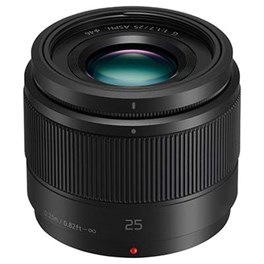
Focal Length: 25mm (50mm equivalent) Maximum Aperture: f1.7 Minimum Focus Distance: 0.25m Maximum Magnification: 0.14x Weight: 125g |
Once you remember the 2x crop factor of Micro Four Thirds, it clicks into place what this lens is – a nifty-fifty! That’s right, it’s an affordable and large-aperture 50mm equivalent, though with f1.7 rather than f1.8 as is usual on these sorts of lenses. Granted this isn’t much of a difference, but it certainly doesn't hurt, and is great for throwing out the background to create striking images with a thin depth of field.
For such a cheap lens, we really rate the optical performance of this little prime, and any Micro Four Thirds user should appreciate the crisp, clean images it produces. A combination of an UHR (Ultra High Refractive Index) lens and aspherical lenses help ensure images are sharp from corner to corner. Focusing is nice and quick, and the minimum focusing distance is an impressively short 25cm, so don’t be afraid to get in close.
|
Pros:
Cons:
|
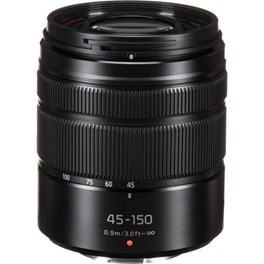
Focal Range: 45–150mm (90–300mm equivalent) Maximum Aperture: f4.0–5.6 Optical Stabilisation: MEGA O.I.S. Lens Construction: 12 elements in 9 groups Weight: 200g |
This lens works out to a 90-300mm telezoom in full-frame terms, and at this price, it’s one of the most affordable such zooms for any system. The fact that you also get a built-in optical stabilisation system – and one that’s highly effective, too – only sweetens the deal, and frankly any user of Panasonic MFT cameras should think about picking up this lens. It only weighs 200g, making it a lightweight addition to any kit bag and a wonderfully inexpensive way to give yourself telephoto reach whenever you need it.
Is it as sharp as high-end telephoto zoom lenses for professionals? Of course not – it’s less than a tenth of the price. But the Panasonic 45-150mm f4.0-5.6 ASPH OIS does deliver pretty consistently excellent sharpness in the centre of images, with distortion well controlled-for. And it’s only when you push the zoom to its outer limits that you might notice a little softness.
|
Pros:
Cons:
|
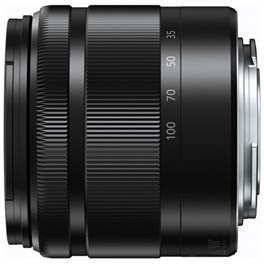
Focal Range: 35–100mm (70–200mm equivalent) Maximum Aperture: f4.0–5.6 Minimum Focus Distance: 0.9m Optical Stabilisation: MEGA O.I.S. Weight: 135g |
There’s a good reason that so many photojournalists favour a 70-200mm focal length – it’s a useful workhorse range that gives you reach when you need it. The Panasonic 35-100mm f4-5.6 LUMIX G VARIO ASPH OIS is much lighter than most 70-200mm lenses (as is the advantage of Micro Four Thirds) and its metal-finished barrel gives it a premium feel.
We also like the fact that this 70-200mm equivalent lens is optical stabilised, as this helps with control at the telephoto end. It also helps extend shutter speeds at narrower apertures – useful in low light, especially if you’re working at the tele end of the lens and have a maximum of f5.6 to work with. Bear in mind also that this lens isn’t weather-sealed, so you’ll need to be careful when working outdoors.
|
Pros:
Cons:
|
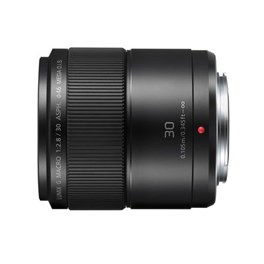
Focal Length: 30mm (60mm equivalent) Maximum Aperture: f2.8 Macro Capability: 1:1 magnification Minimum Focus Distance: 10cm Weight: 180g |
While we tend to think of macro photography as being something done on a fixed tripod with a big, heavy set of optics, this macro from Panasonic has a lot going for it as a hand-held close-up lens. For a start, its light weight and short telephoto focal length (60mm equivalent) make it easy to wield, while the optical stabilisation that’s built in means you’ll have an easier time getting sharp shots without a tripod. The autofocus is reliably snappy, and the minimum focusing distance is an impressive short 10.5cm, meaning you can get really close to your subjects.
We also like the fact that the mount on this lens is metal – it tends to be plastic on cheaper lenses, and metal is a lot more durable. Producing stunning,. Crisp images at 1x life-size magnification, this lens delivers a true macro experience at an absolute steal of a price. Recommended for any Panasonic user with an interest in close-up photography.
|
Pros:
Cons:
|
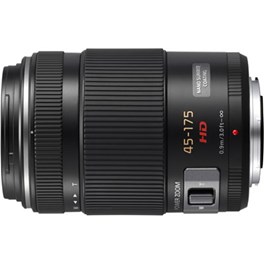
Focal Range: 45–175mm (90–350mm equivalent) Maximum Aperture: f4.0–5.6 Zoom Type: Power zoom with internal zooming Optical Stabilisation: POWER O.I.S. Special Coating: Nano Surface Coating |
One thing that the Micro Four Thirds system is great for is shooting with telephoto lenses. The 2x crop factor effectively doubles the focal length of a lens, meaning that amazing telephoto reach can be achieved with very compact lenses. Case in point: the Panasonic 45-175mm f4.0-5.6 LUMIX G X Vario, a lens that equates to 90-350mm in full-frame terms, and yet weighs just 210g. It’s an ideal companion for a long day’s wildlife photography, allowing you to fill the frame with your subject while keeping your distance.
This lens is optically stabilised, which is a huge help with ensuring the long telephoto reach is still useable hand-held, providing three stops of effective compensation to reduce image blur caused by camera shake. Interestingly, this is also a Power Zoom (PZ) lens, meaning its zooming action is motorised. This is a very useful feature for video, as it allows for smooth zoom transitions; the stepping motor autofocus also means that focus transitions are similarly slick.
Best affordable Panasonic lenses for L-Mount
The L-mount came about as an alliance between Leica, Sigma and Panasonic. With the former two manufacturers admirably taking care of most of the high-end lenses, Panasonic has done an admirable job of offering affordable full-frame lenses for the system. The trio of f1.8 prime lenses – all of which feature on our list – is a particularly welcome addition, making it much more practical to kit out an L-mount camera on a budget.
These lenses aren’t as affordable as the Micro Four Thirds options, but they’re still reasonably priced as far as full-frame glass goes. We’ve picked a selection of primes and zooms for L-mount, all of which are produced by Panasonic.

|
Pros:
Cons:
|
Focal Length: 26mm Maximum Aperture: f8 (fixed) Focus Type: Manual only Minimum Focus Distance: 0.25m Weight: 58g |
Now, here’s something interesting. The Panasonic Lumix S 26mm f8 immediately raised eyebrows when it was released alongside the Lumix S9. A slim, body-cap lens, it has a fixed aperture at F8, and absolutely no autofocus. What was Panasonic thinking?
Well, if you’re willing to go with the flow, it’s basically a perfect street lens, stripping out complications to allow you to immerse yourself in image-making. The lack of focus motors means it’s smaller and more affordable than basically any other full-frame 26mm lens on the market, and if you put some time into getting the feel of the focusing ring, it’s a really enjoyable lens that can deliver fun, expressive results. This isn’t a lens for pixel peepers — you can definitely find sharper tools in the box — and the F8 aperture means it’s also not one for the bokeh-obsessed. But all in all, this is a charming and unique lens that street photographers should definitely snap up.
|
Pros:
Cons:
|
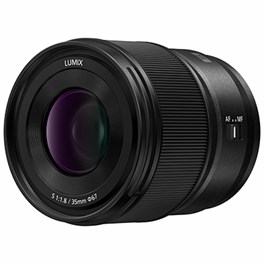
Focal Length: 35mm Maximum Aperture: f1.8 Minimum Focus Distance: 0.24m Weather Sealing: Yes (dust and splash resistant) Weight: 295g |
Of a piece with the 50mm f1.8 above, the Panasonic LUMIX S 35mm f1.8 is a great choice of reportage or storytelling lens. Its naturalistic but wide focal length is favoured by many documentary shooters who like to get plenty in the frame without distorting subjects, and the f/1.8 maximum aperture allows you to get plenty of light when you require it. The shallow depth of field on this lens looks great too, with gorgeous bokeh.
Once again, this lens lacks stabilisation, but other than that, there really isn’t much to nitpick here. The autofocus is reliably small and silent enough for video work, and props are due to Panasonic for adding weather resistance to such a lightweight lens (it weighs in at just 259g). The close focus distance of 24cm also goes to make it that much more versatile – don’t be afraid to get in close.
|
Pros:
Cons:
|
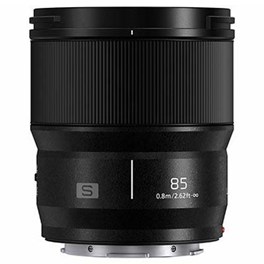
Focal Length: 85mm Maximum Aperture: f1.8 Minimum Focus Distance: 0.8m Maximum Magnification: 0.13x Weight: 355g |
This prime completes the trinity of affordable f1.8 lenses for L-mount, so it’s got many of the same pros and cons as its previous two stablemates. You get a weather-resistant body, but no stabilisation, which is a fair trade in our book, especially when the lens quality is as lovely as this. The 85mm focal length is the classic short telephoto beloved by portrait shooters, and produces beautifully flattering images of human subjects – aided by the lovely bokeh in defocused areas of the image.
The construction of the LUMIX S 85mm f1.8 consists of 9 glass elements in 8 groups, including two ED (Extra Dispersion) lenses. This produces pin-sharp images, with highly effective suppression of axial and chromatic aberration. The lens focuses quietly, and is excellent for video if you don’t mind working with a narrower perspective than is typical.
|
Pros:
Cons:
|
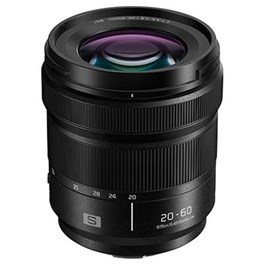
Focal Range: 20–60mm Maximum Aperture: f3.5–5.6 Minimum Focus Distance: 0.15m (at 20–26mm) Maximum Magnification: 0.43x Weather Sealing: Dust, splash and freeze resistant |
Weighing just 350g, the Panasonic LUMIX S 20-60mm f3.5-5.6 is a well-balanced lens that covers a short but useful focal range. Going from a wide perspective of 20mm to a narrow near-telephoto 60mm, it’s great for producing imagery with a naturalistic perspective, and has found favour with photo and video shooters alike. Focus breathing has been suppressed to ensure smooth, natural-looking footage, and the close-focusing distance of 15cm is handy. Optically, Panasonic has done a superb job of engineering this lens, with virtually no distortion or chromatic aberration to speak of, and extremely low vignetting.
Once again, there’s no optical stabilisation to speak of, and the sharp drop to f5.6 once you zoom in may make the lens more challenging to use in low light. Otherwise, this is a versatile and dependable lens for use with Lumix S cameras, whether you shoot stills, videos, or both.
|
Pros:
Cons:
|
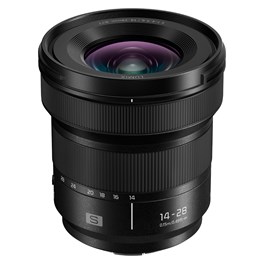
Focal Range: 14–28mm Maximum Aperture: f4–5.6 Minimum Focus Distance: 0.15m Maximum Magnification: 0.5x (at 28mm) Weight: 345g |
While this lens isn’t technically a “true” macro lens, it still dependably produces terrific close-detail images, and is a terrifically affordable option for anyone who wants to shoot close-up images with a Lumix S camera. The zoom range also expands to an ultra-wide 14mm perspective, which is great for landscapes and architecture, especially at this price. The weather-resistant build of the lens makes it ideally suited to outdoor adventures, and while there’s again no stabilisation, at such a wide perspective, it’s less of an issue.
With high-precision autofocus, the Panasonic LUMIX S 14-28mm f4-5.6 Macro is a dependable lens for a host of different applications. If you want to focus manually, the sensitivity of the focusing ring is highly customisable, meaning you can get it working just the way you prefer. The light weight of the lens, and the fact that it doesn't change length when zooming, also mean it balances well on a stabilising gimbal.
FAQs
What are Panasonic lenses known for?
Panasonic lenses are renowned for their high-quality optics, superb image stabilisation, and compatibility with Panasonic Lumix mirrorless cameras. They are characterised by their sharpness, clarity, and versatility in various photography and videography applications.
What is the difference between Panasonic Leica and Panasonic Lumix lenses?
Panasonic Leica lenses are developed in collaboration with Leica, known for their exceptional optical quality. They offer premium image quality and craftsmanship. Panasonic Lumix lenses are designed by Panasonic and also offer excellent performance, but they are typically more budget-friendly.
Do Panasonic lenses have image stabilisation?
Many Panasonic lenses feature optical image stabilisation (OIS) or in-body image stabilisation (IBIS), which helps reduce camera shake and allows for sharper images and smoother videos. However, not all Panasonic lenses have this feature, so it's essential to check the lens specifications.
Which Panasonic lenses are best for portrait photography?
For portrait photography, Panasonic offers several Micro Four Thirds (MFT) lenses around the 40mm mark which translates to around 80mm equivalent range in full-frame terms. This is an excellent focal range for portraiture, allowing for beautiful subject-background separation and often stunning bokeh.
Can I use Panasonic lenses for video recording?
Yes, Panasonic lenses are suitable for video recording. Many models offer smooth and quiet autofocus, making them ideal for video work. Lenses with wide apertures are also favoured for achieving cinematic depth of field.
How do we decide?
Our in-house photography experts, store staff and partners all work collaboratively to pour over our guides and tips articles. We also consider emerging trends and customer feedback to make sure our guides are always up-to-date and reflective of what people are truly looking for. By curating only the best products, our guides provide trustworthy recommendations, making it easier for customers to make informed choices with confidence.
If you would like more advice on any purchase our contact centre staff are here to help. Alternatively, you can reach us via email or social media. And don't forget. If you were to purchase anything based on our recommendations you'll be covered by our full returns policy
The Wex Blog



Sign up for our newsletter today!
- Subscribe for exclusive discounts and special offers
- Receive our monthly content roundups
- Get the latest news and know-how from our experts