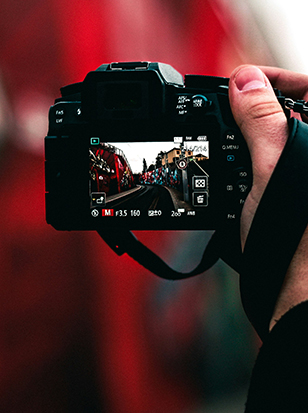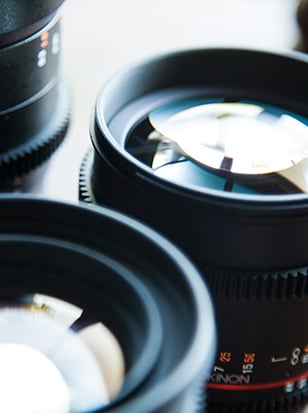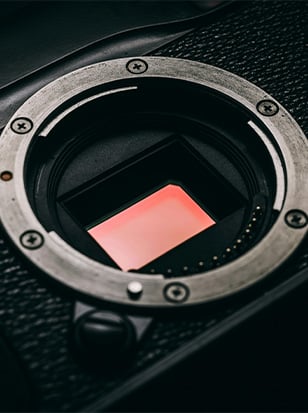
Picking the best portrait lens is arguably even more important than getting the right camera. If you want to capture the character of your portrait subjects in a way that’s flattering and looks professional, you absolutely need the right lens. As such, the lenses on this list are generally going to look quite similar, but we’ve made sure to pick out an option for all the major mounts in use right now.
At the bottom of this page, we’ve also put together a quick primer on what you need for a portrait lens. In brief, it’s a short telephoto focal length and a large aperture, but head there first if you want a more thorough explainer on what all that means. We have a guide to the best camera for portraits too, so take a look there if you’re still building your setup.
Make sure you check out our list of the best digital cameras on the market, which includes many fantastic options for portraiture. And now, let’s crack on with the best lenses for portraits.
Best Canon Lens for Portraits
|
Pros:
Cons:
|
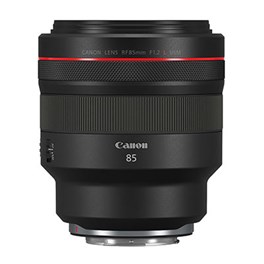
Maximum Aperture: f1.2 Minimum Focus Distance: 0.85m Maximum Magnification: 0.12x Diaphragm Blades: 9 (rounded) Weight: 1,195g |
This is the fastest lens for the RF system, and it’s specifically optimised to be a perfect portrait prime. The Canon RF 85mm f1.2L USM boasts a sophisticated optical construction of 13 elements in nine groups and includes both Blue Spectrum Refractive (BR) optics and an aspheric lens element. This help to effectively negate colour aberration and distortion, resulting in images of exceptional sharpness and clarity.
That f1.2 aperture makes it possible to produce images with dreamy bokeh and a gorgeously shallow depth of field, perfectly complementing the full-frame sensors of Canon’s flagship EOS R cameras. Of course, this f1.2 lens is built for serious pro photographers – not everyone is going to need this level of sophistication. If your aspirations (and budget) are a little more modest, we’d recommend looking at the Canon RF 85mm f2 IS Macro STM, a sharp lens that punches above its weight for portraiture.
Best Nikon Lens for Portraits

|
Pros:
Cons:
|
Maximum Aperture: f1.8 Minimum Focus Distance: 0.8m Maximum Magnification: 0.12x Lens Construction: 12 elements in 8 groups (incl. 2 ED elements) Weight: 470g |
If you want the sharpest portrait lens for your Z-mount camera, here it is. The Nikon Z 85mm f1.8 S Lens is optically near-perfect, delivering stunning image clarity in laboratory conditions and out in the real world too. While the f1.8 aperture isn’t as wide as others on this list, it’s still better than you’d get from most zooms, and will be fine for creating the sharp delineation between subject and background that portrait shooters are looking for.
This is also a pleasingly lightweight lens, weighing in at just 470g – an f1.2 lens will weigh considerably more than that. We’re also big fans of the customisable control ring around the barrel of the lens. It can be set to manual focus if you prefer to take control of this aspect yourself, but we also enjoy using it as an aperture ring for an SLR-shooting feel.
Best Sony Lens for Portraits
|
Pros:
Cons:
|
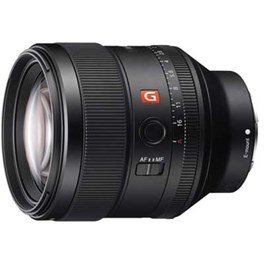
Maximum Aperture: f1.4 Minimum Focus Distance: 0.8m Maximum Magnification: 0.12x Diaphragm Blades: 11 (rounded) Weight: 820g |
The Sony FE 85mm f1.4 G Master Lens is the memory of Sony’s top-tier family that has been designed from the ground up to deliver perfect portraits. A lens needs to pass some pretty stringent optical tests to receive the “G Master” designation, and as such, the Sony FE 85mm f1.4 G Master produces absolutely top-notch sharpness throughout the entire frame, even when opened up to f1.4. The transition from the sharpest areas of the image to the artfully blurred background is beautiful. This is simply a remarkable lens.
G Master lenses are optimised for full-frame only, so this is one for users of main-line Alpha cameras like the A7R V or A7 IV. It is definitely heavy for a lens of this type, weighing in at 820g, so bear that in mind if you’re planning a prolonged shoot.
Best Micro Four Thirds Lens for Portraits
|
Pros:
Cons:
|
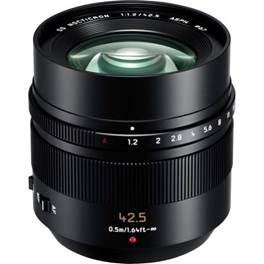
Effective Focal Length: 85mm (Micro Four Thirds) Maximum Aperture: f1.2 Minimum Focus Distance: 0.5m Optical Stabilisation: Yes (Power O.I.S.) Weight: 425g |
You can see the maths that has been done here. At first glance, a lens at 42.5mm sounds a bit weirdly specific, but double it up to account for the crop factor, and you get our old friend – 85mm equivalent. The Panasonic 42.5mm f1.2 ASPH Leica DG Nocticron OIS is a crisply sharp and solidly constructed lens – we particularly like the tactile aperture ring, which helps keep you in the moment when adjusting settings.
With a nine-bladed diaphragm and an f1.2 aperture, the Panasonic 42.5mm f1.2 ASPH Leica DG Nocticron OIS is adept at creating smooth, pleasing bokeh in the defocused areas of images. The Leica-made optics deliver exceptional sharpness, and having Optical Image Stabilisation (OIS) on board helps keep images sharp when you’re shooting hand-held and the light starts to drop. This lens is a good few years old now, but it still delivers the goods when it comes to portraiture.
Best Fujifilm Lens for Portraits

|
Pros:
Cons:
|
Effective Focal Length: 75mm (APS-C) Maximum Aperture: f1.0 Minimum Focus Distance: 0.7m Maximum Magnification: 0.08x Weight: 845g |
At first glance, this may feel like a bit of a stunt lens. But Fujifilm has put the work in, and the XF 50mm f1.0 R WR doesn’t just offer an F1.0 aperture, wider than anything else on this list, but also makes that aperture useable and practical. This lens is capable of capturing sublime portraits, with a crisply shallow depth of field and absolutely stunning bokeh in the background areas thanks to the rounded diaphragm.
When you’re working with such a shallow depth of field, precision is definitely required to ensure your focusing is spot on. Fortunately, the XF 50mm f1.0 R WR benefits from a fast and accurate focusing system, which can take advantage of Fujifilm’s Eye AF to lock the focus point exactly where you want it. The focusing is a little noisier than you might be used to, as Fujifilm elected to use a DC motor, but unless you’re shooting video, that shouldn’t realistically be a problem. A stunning lens that makes the most of Fujifilm X system’s unique characteristics, the Fujifilm XF 50mm f1.0 R WR is one of the finest portrait lenses we’ve ever used.
Best L-mount lens for portraits:
|
Pros:
Cons:
|
Maximum Aperture: f1.4 Minimum Focus Distance: 1.0m Maximum Magnification: 0.12x Filter Size: 105mm Weight: 1,745g |
L-mount users have plenty to choose from when it comes to portrait lenses, but we’re going to opt for one of the more interesting lenses we’ve seen – the Sigma 105mm f1.4 DG HSM Art Lens. This lens has a longer focal length than the others we’ve seen on this list, so you’re going to be a little tighter on your subject, but it’s still well within tolerances for stunning portraiture. There are weather seals on the barrel too, so you can shoot out on location without fear.
Sharpness is inhumanly good, even when the lens is wide open, and we have to praise the near-perfect circularity of the bokeh produced by this lens. It’s absolutely stunning. This lens has real character, producing stunning images in pretty much any situation, and is an outstanding choice for a portrait shoot. Be warned though – weighing in at more than 1.6kg, it is not a lightweight lens.
Best DSLR lens for portraits:
|
Pros:
Cons:
|
Maximum Aperture: f1.4 Minimum Focus Distance: 0.85m Maximum Magnification: 0.12x Filter Size: 86mm Weight: 1,130g |
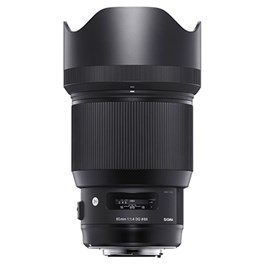
This lens is specifically designed to bring the most out of high-resolution full-frame DSLRs, such as the Nikon D850. The Sigma 85mm f1.4 Art DG HSM Lens is a stunning piece of kit, with a nine-bladed rounded diaphragm that produces gorgeous character in the out-of-focus areas in an image. While the Canon EF version has sadly been discontinued (consider instead the Canon EF 85mm F1.4L IS USM lens), Nikon users can take advantage of a lens that has been optimised for portraiture, with precise enough bokeh that you can focus on a subject’s pupils while rendering their eyelashes stylishly out of focus.
The Sigma 85mm f1.4 Art is super-sharp, even when set to its maximum aperture. We also appreciate the addition of a full-time manual focus override switch, meaning you can take over focusing duties whenever you want to, in case the camera isn’t precise enough for your liking. One thing to note, however, is that this lens isn’t suitable for Nikon’s DX-format DSLRs. It’s full-frame (FX) only. Crop-sensor DSLR users may want to consider the Nikon 50mm f1.8 G AF-S, which will deliver an equivalent focal length of 75mm.
How to choose the best travel tripod
What key things are we looking for in a good portrait lens? Here are the key specs we’ve kept in mind for this list.
Short telephoto focal length: In general, a longer, narrower focal length is better for portraiture. This is because it narrows and flatters facial features, as opposed to a wide angle, which stretches them out. A short telephoto between 75mm and 110mm is generally regarded as optimal – with longer lenses, you’ll struggle to get anything other than a tight facial crop without standing on the other side of the street from your subject.
It’s also important to consider crop factor if you’re using a smaller sensor. If you’re on full-frame, an 85mm lens will behave like an 85mm lens. However, if you’re using APS-C, you have a crop factor of 1.5x or 1.65x, meaning you should be looking at a 50mm lens to achieve the same effect. On Micro Four Thirds, the crop factor is 2x, meaning a 40mm lens or so is best (Panasonic produces an excellent 42.5mm MFT lens for this exact reason).
Large aperture: The key to portraiture is having a sharp main subject and an artfully blurred background – and for that, you want to slam the lens aperture wide open. The most premium portrait lenses will have ultra-wide apertures of f1.2, which is great if you can get it, but f2 or so will still work well. Be aware though that you have to be very accurate with your focusing when working with such a narrow plane of focus – a camera with Eye AF can be of help here.
Aperture blades: In portraiture, the character of the bokeh in the out-of-focus areas of an image can be very important to the overall look. Ideally, you want nicely rounded points of light – the best for achieving this is a lens with rounded aperture blades, and plenty of them. Most lenses have between 5 and 10, with premium lenses sporting 11 or more. It’s not essential by any means, but nice to have.
FAQs
What is a portrait lens?
A portrait lens is a type of camera lens designed specifically for taking portraits. They tend to have a longer focal length and wide aperture that helps to create a shallow depth of field and separate the subject from the background.
What is the best focal length for portraits?
Typically, a 50mm lens is considered the standard for portrait photography as it provides a natural field of view that closely resembles human vision. However, lenses with longer focal lengths such as 85mm, 100mm, and 135mm are also popular for portraits as they allow for a tighter crop and greater subject separation.
What is the ideal aperture for portraits?
The ideal aperture for portraits is often between f2.8 to f5.6. These settings will provide a shallow depth of field and help to blur the background. This helps to draw attention to the subject and isolate them from the surrounding environment.
Do I need a prime lens for portraits?
While zoom lenses can be used for portraits, prime lenses are often preferred for their wider maximum apertures and sharper image quality. A prime lens is also easier to use as it only has one focal length, which makes it simpler to compose shots.
What is the difference between a full-frame and a crop-sensor lens for portraits?
The main difference between full-frame and crop-sensor lenses is their field of view. Lenses designed for full-frame cameras will produce a wider field of view than lenses designed for crop-sensor cameras with the same focal length. This means that a 50mm lens on a full-frame camera will produce a wider field of view than a 50mm lens on a crop-sensor camera.
What is bokeh in portraits?
Bokeh refers to the out-of-focus areas in a photograph. A shallow depth of field and a wide aperture create a pleasing bokeh, which can help to separate the subject from the background and make portraits more visually appealing.
How do we decide?
Our in-house photography specialists, store staff, and industry partners work together to review our buying guides and advice articles. We also monitor emerging trends and listen closely to customer feedback, ensuring our recommendations stay current and relevant to what photographers and filmmakers are actually looking for.
By carefully curating the products we recommend, our guides are designed to offer clear, trustworthy advice that helps customers choose the right kit with confidence.
If you would like further advice, our contact centre team are here to help. You can also reach us via email or social media. And remember, if you purchase based on our recommendations, your order is covered by our full returns policy.
The Wex Blog


Sign up for our newsletter today!
- Subscribe for exclusive discounts and special offers
- Receive our monthly content roundups
- Get the latest news and know-how from our experts