

If you’re looking to get started with sports photography, you’ll need the right lens for the job. We’ve put together this guide to the best lens for sports photography for all the major systems to help you find the perfect fast-focusing telephoto to capture the action, whether it’s football players on the pitch, racing boats on the water, or tennis players on the court.
We haven’t just picked the most expensive, professional lenses, but have instead gone for options that we think are going to make sense for the majority of users – based on our expert team’s opinions.
If you’re building your whole setup, you can also check out our guide to the best cameras for sports photography. Otherwise, let’s get to the lenses!
Best Canon Lens for Sports Photography

Pros:
- Generous, versatile focal range
- Not too heavy, considering
- Very good image quality
Cons:
- Narrow maximum aperture
- Extenders can only be mounted at 300mm zoom
Offering a wonderfully broad and useful 100-500mm focal range, the Canon RF 100-500mm f4.5-7.1L IS USM is a terrific option for sports shooting. At just over 1.5kg, it’s also not too heavy for a lens of its class, making you nice and agile if you need to hand-hold the camera or quickly reposition. Image quality really is excellent right the way through the zoom range – images are remarkably distortion-free even if you for some reason decide to turn the distortion correction off (not that you would).
The maximum aperture is on the narrow side, true, especially when you zoom into 500mm, but it’s still perfectly useable. This lens is compatible with Canon’s RF 1.4x and RF 2x extenders, however there is a catch – mounting one will restrict the zoom mechanism to 300-500mm, to prevent the rear elements from crashing into each other.
Best Nikon Lens for Sports Photography
Pros:
- SPORT mode stabilises viewfinder image
- Very useful focal range
- Internal zoom mechanism
Cons:
- Narrower maximum aperture
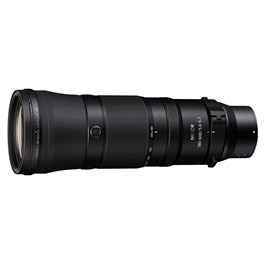
One of the newer Z-mount lenses, the Nikon Z 180-600mm f5.6-6.3 VR Lens arrived in June 2023, and is shaping up to be a cracking sports lens. The 180-600mm range covers pretty much exactly the distance you’d want for sports shooting, and the in-lens Vibration Reduction provides 5.5 stops of effective compensation. If you need things to be clearer when composing, you can also activate SPORT mode, which stabilises the viewfinder image.
A maximum aperture of f/5.6-6.3 isn’t for everyone, but otherwise there isn;t much to fault here. Of course, it’s early days for this lens, and we’ll have to see more closely how it bears out in real-world testing. If you want a tried and tested Nikon Z sports lens, try the Nikon Z 100-400mm f4.5-5.6 S.
Best Sony Lens for Sports Photography
Pros:
- Excellent value for money
- Beautiful bokeh thanks to 11-blade aperture
- Fast, precise focusing
Cons:
- Slower maximum aperture
- Some visible distortion (easily corrected)
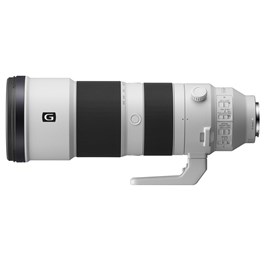
While this lens doesn’t get Sony’s coveted “G Master” designation, it’s a cracking telephoto zoom nonetheless and one that any Sony-using sports photographer should consider. Designed for full-frame cameras (though it’ll work with APS-C), it’s beautifully built with full weather sealing, and uses an entirely internal zoom mechanism, meaning its balance doesn’t change when zooming. This helps make what is admittedly a pretty hefty lens feel a bit more balanced on a Sony body.
Focusing is fast and precise, and the optical stabilisation has three settings for different shooting situations. Be aware that there is some visible distortion at certain points on the zoom range, though this is easily corrected in software. One thing we love is the eleven-bladed aperture, which gives the bokeh in defocused areas of an image a lovely, smooth, rounded quality. This lens delivers excellent value for Sony shooters.
Best Panasonic Lens for Sports Photography
Pros:
- Ultra-affordable
- Good AF tracking performance
- Nice and light
Cons:
- Naturally not as pin-sharp as the pricey lenses
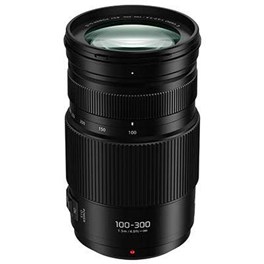
We’ve touched upon a few budget-friendly lenses already, but this Panasonic Lumix G optic is one of the best-value sports lenses around. You really do get a lot for your £499 – naturally there’s that 200-600mm equivalent focal range, but there’s also optical image stabilisation and a capable autofocus tracking system that’s great for moving subjects. All this is wrapped up in a lens that weighs a slender 528g, meaning it shouldn’t overbalance your Lumix G camera.
Does it stack up against a high-end sports lens that’s more than four times the price? No, of course not – but the Panasonic 100-300mm f4.0-5.6 II LUMIX G Vario definitely punches above its weight for the money, and should absolutely be on the shortlist of anyone putting together a cost-conscious sports photography setup. If you do want something a little more high end, consider the Panasonic 50-200mm f2.8-4.0 LEICA DG VARIO-ELMARIT POWER O.I.S, which offers a 100-400mm equivalent range.
Best L-mount Lens for Sports Photography
Pros:
- Access to L-mount teleconverters
- Push-pull zoom action
- Great sharpness throughout zoom range
Cons:
- On the heavy side
- Can’t remove tripod collar
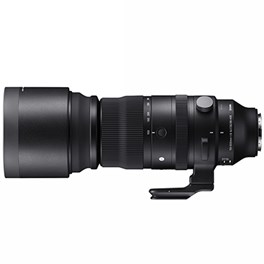
If you’re shooting with a full-frame Panasonic Lumix S camera, then you have the whole L-mount ecosystem to play with thanks to the L-mount alliance between Panasonic, Sigma and Leica. In that system, the Sigma 150-600mm f5-6.3 Sports DG DN OS is basically unrivalled, and anyone using a Lumix S camera to shoot sports would be crazy not to pick it up.
Delivering superb optical performance throughout its entire zoom range, the Sigma 150-600mm f5-6.3 Sports is a beast of a lens. What’s more, L-mount users can push it further still, as they have access to Sigma’s L-mount teleconverters, the Sigma TC-1411 (1.4x) and the Sigma TC-2011 (2.0x), meaning you can get even closer to the action if you need to. With a fast internal autofocus system, the 150-600mm also lets you use a push-pull action to zoom in and out, which both improves zooming speed and makes it easier to keep the lens trained on a distant subject while zooming.
Best Fujifilm Lens for Sports Photography
Pros:
- Whopping 229-914mm equivalent focal range
- … with teleconverter compatibility!
- Five-stop stabilisation
Cons:
- Narrow max aperture
- Not well-balanced on older Fujifilm bodies
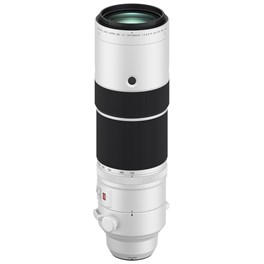
Fujifilm shooters were waiting a while for a true native super-telephoto lens – but the Fujifilm XF 150-600mm f5.6-8 R LM OIS WR Lens was fashionably late and worth the wait. The crop factor of APS-C transforms that 150-600mm range into an incredible 229-914mm equivalent, and that’s in a lens that weighs a comparatively slender 1,600g. There’s also a five-stop image stabiliser – pretty much a necessity to make that tele end useable.
Something had to give of course, and some photographers may balk at that restrictive f5.6-8 aperture. Incredibly, this lens is compatible with Fujifilm’s teleconverters, meaning you could hypothetically extend the focal length to an equivalent of 1828mm. Admittedly it’s hard to think of a real-world use case for that, especially given that it would reduce the maximum aperture to f16. You have to admit it’s cool though. Yes you do.
Best Olympus/OM-System Lens for Sports Photography
Pros:
- Incredibly light for a lens of its class
- Tough, sturdy build with IP53 weather resistance
- Excellent sharpness
Cons:
- No stabilisation
- Strong flare when shooting contre-jour
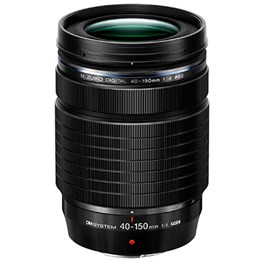
This relatively recent lens from OM-System sports an equivalent focal range of 80-300mm, and weighs just 382g, making it one of the lightest telephotos of its class. As with pretty much everything released under the OM-System banner, it’s thoroughly weather-sealed, bearing an IP53 rating that means you can take it out into basically any conditions without fear. The zooming mechanism is also entirely internal, meaning the balance of the lens won’t change as you zoom.
Image quality is great right all the way up to the tele end of the lens. It’s worth being careful when shooting directly into the light, as many users have noticed a pronounced flare effect, but otherwise it’s excellent across the board, with virtually no chromatic aberration or distortion to be seen. One thing to note though is that there’s no built-in image stabilisation, meaning you’ll be relying on the camera’s built-in system only.
How to choose the best sports lens
So, what makes for a good sports lens?
Prime or zoom - Many of the top pro sports lenses are ultra-high-end telephoto prime lenses, meaning they have a fixed focal length. We’ve elected not to include these in this guide, as they are priced at a level putting them out of reach of all but the top-end professionals (and if you’re in a position to buy a £15,000 lens, you probably don’t need us to tell you it’s good). Instead, we’ve focused on telephoto zoom lenses that can still deliver superb sports shots, without breaking the bank.
Telephoto focal length - This is pretty much essential. While we’d never say you could never use a wide lens for sports (here’s an interesting example of Canon pro Jakub Frey doing just that), for the vast majority of sports photography situations, you are going to need a telephoto lens. At least 100mm of focal length is going to be ideal. Popular zoom ranges for sports include 70-200mm, 100-400mm, 150-600mm and others – we’ve included examples of each in this guide.
Image stabilisation - A good optical stabilisation system will allow you to use slower shutter speeds at telephoto focal lengths and still get acceptably sharp shots. Useful once light starts to get low.
Weatherproofing - While not all sports are played outdoors, a lot of them are, and a good sports lens should be able to weather a little rain without seizing up.
Lastly, something to bear in mind as we go through is to remember the crop factor. Your camera’s sensor size is going to have an impact on your lens’ effective focal length, meaning you may get more telephoto than you were expecting if you’re using a smaller, more affordable camera. Cameras with APS-C sensors will multiply a lens’ stated focal length by 1.5x (or 1.6x in the case of Canon), while Micro Four Thirds cameras will double it, meaning a 300mm lens behaves like a 600mm. If you’re not sure what size your camera’s sensor is, check online with a quick Google. It may also affect which lenses you can use.
FAQs
What are the best lenses for sports photography?
Popular choices include telephoto lenses with focal lengths of 70-200mm or 300mm, and super-telephoto lenses with 400mm or more. These lenses offer reach, fast autofocus, and wide apertures.
How do I choose the right focal length for sports photography?
For outdoor sports, use longer focal lengths (e.g., 200mm or higher) for close-up shots. For indoor sports or closer proximity, shorter telephoto lenses (e.g., 70-200mm) offer versatility.
What is the importance of image stabilisation for sports photography lenses?
Image stabilisation reduces blur from camera shake, ensuring sharper shots. It's crucial in low-light conditions or when using longer focal lengths.
Should I choose prime or zoom lenses for sports photography?
Prime lenses have fixed focal lengths, offering wider apertures and better image quality. Zoom lenses provide flexibility for quickly adjusting focal lengths. Choose based on your shooting style and needs.
How do I ensure fast autofocus performance in sports photography lenses?
Look for lenses with advanced autofocus systems, quick subject tracking, multiple focus points, and fast-focusing motors. Pair with a camera body with robust autofocus capabilities and keep firmware updated.
How do we decide?
Our in-house photography specialists, store staff, and industry partners work together to review our buying guides and advice articles. We also monitor emerging trends and listen closely to customer feedback, ensuring our recommendations stay current and relevant to what photographers and filmmakers are actually looking for.
By carefully curating the products we recommend, our guides are designed to offer clear, trustworthy advice that helps customers choose the right kit with confidence.
If you would like further advice, our contact centre team are here to help. You can also reach us via email or social media. And remember, if you purchase based on our recommendations, your order is covered by our full returns policy.



Sign up for our newsletter today!
- Subscribe for exclusive discounts and special offers
- Receive our monthly content roundups
- Get the latest news and know-how from our experts