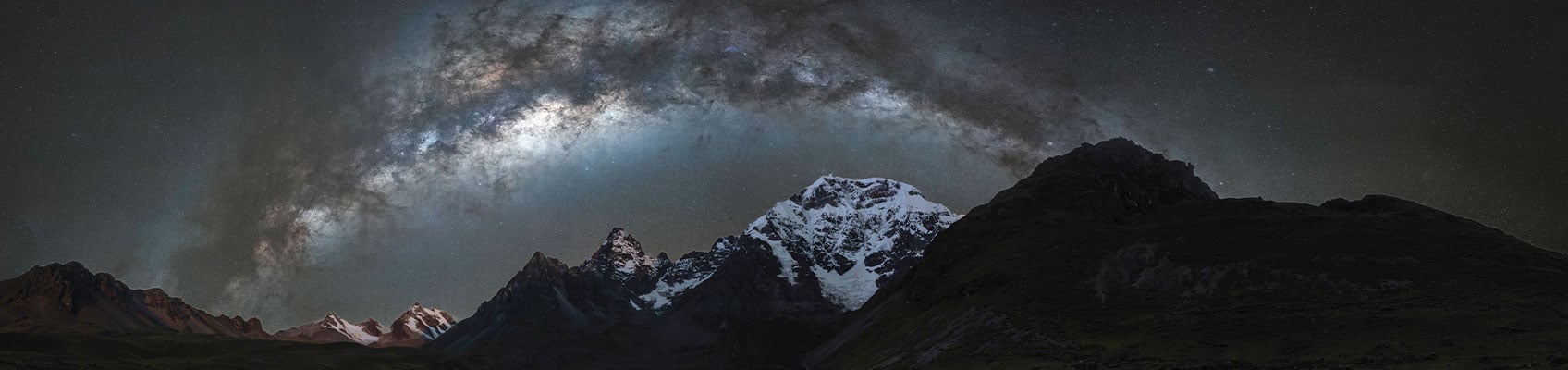
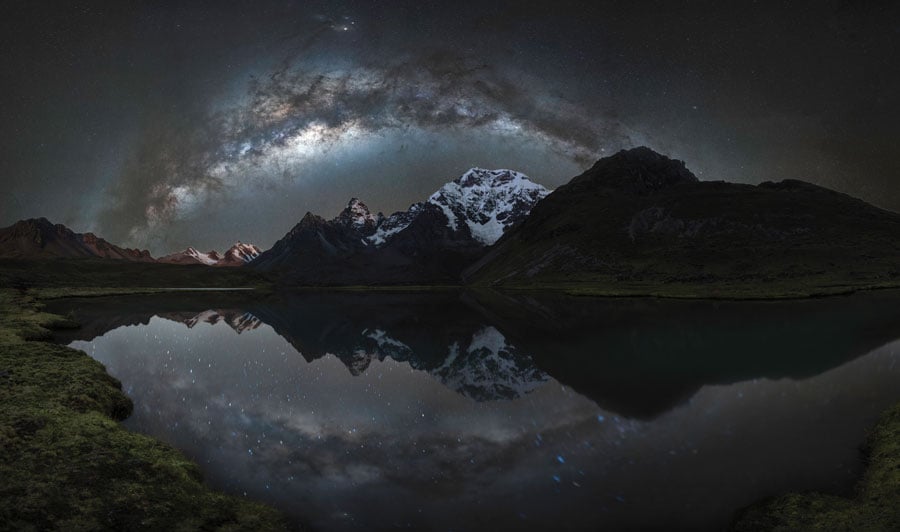
We don’t always choose the photographic subjects we love – sometimes, they choose us. So it was for Ollie Taylor, who in the early 2000s had been quietly noodling away as an amateur landscape photographer, when quite abruptly, a passion for astrophotography seized him and wouldn’t let go.
Now, he is a deservedly successful and recognised photographer of the night sky, with his images winning awards and being featured across a huge range of publications, including the New Scientist, Time, National Geographic and many, many more. He also runs tours and workshops on astrophotography around the world, helping amateur and beginner photographers with the ins and outs of getting incredible astro imagery.
We were thrilled to get a chance to chat with Ollie about all things astro – read on for our conversation…
Jon Stapley: Thanks for talking with us, Ollie. How did astrophotography all start for you?
Ollie Taylor: Just before I went to uni, I actually wanted to do photography full-time. [The industry] was transitioning from film to digital, and there was quite a lot of negativity about it in the magazines that I used to read, so I bottled it last minute, and did architecture.
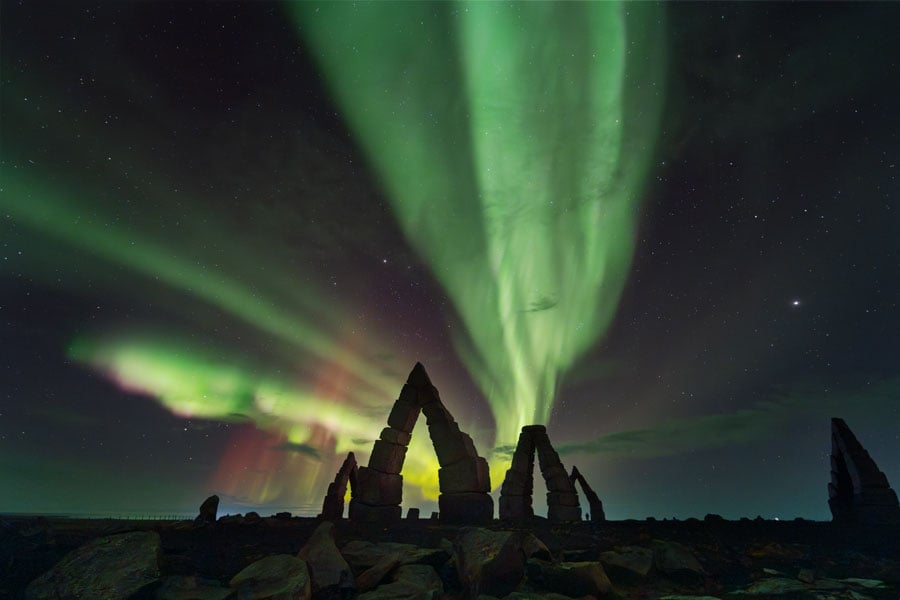
After, while I was at work, I built up a stock photography portfolio. I used to earn a part-time wage off it, and I got the odd commissions here and there. Through some of the guys I knew in one of the agencies, they said, “Do you want to do some work on some of the brochures we do in Iceland and Greenland?” What they paid me was peanuts, really, but I took a month on leave in Iceland, two weeks unpaid, two weeks paid.
Me and an ex-girlfriend sat by the lakes all night – the fjords and stuff in Iceland – and no Aurora came along. I was hopping out and shooting these snow-covered mountains with landscape settings: F11, 30-minutes exposure. And when I got back, I remember looking at some of these pictures, and the stars all over the place, they were out of focus. I remember thinking, “These would actually be really beautiful if they'd have been exposed properly – somebody, somewhere must be doing that.” This was 2010. I remember Googling, and I found this huge Milky Way panorama over a lighthouse in the States.
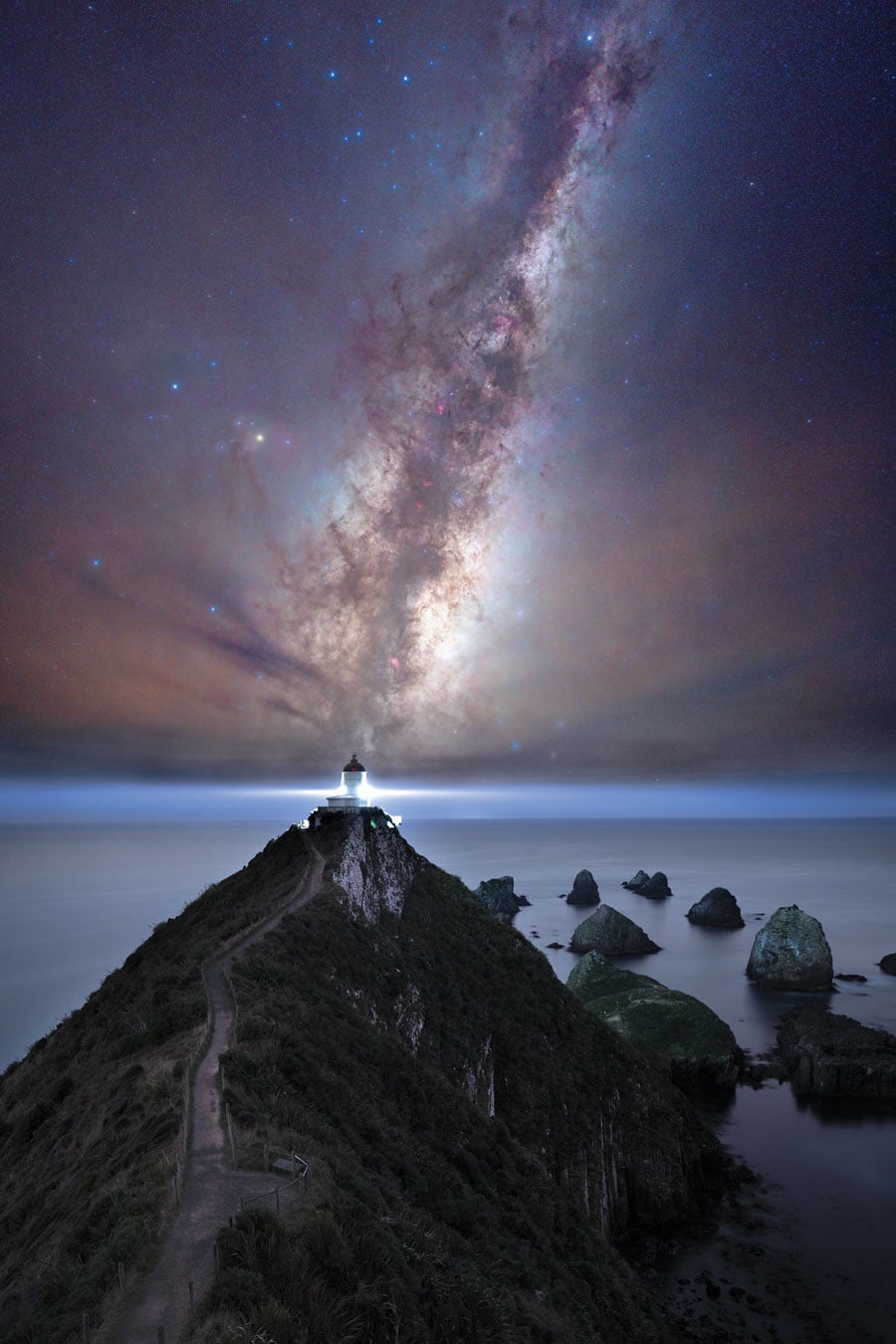
I was living near Portland Bill at the time, the lighthouse – and I was down there that night. I can't remember what had happened to my cameras, but I went and grabbed my mum's camera, and spent the night down at Portland Bill, and that was it. I spent three years going in and out of work with very little sleep. Every night I'd chase it down. And now here I am.
JS: You fully made the jump into astrophotography in 2013. Was it a bit nervy, when you made that leap?
OT: I was contracting architecture through my own limited company. I’d built myself up as a senior technician, and I left work with barely anything in the bank, one camera body and one lens. So, yes, it was one hundred per cent nervy.
Night photography, when it first took off, there was a lot coming in, but it wasn't paying enough. That’s why the workshops came in. At the time, you couldn't really find many people doing a portfolio of astrophotography workshops. People like [landscape photographer] David Clapp had incorporated it within some of their tours – I'm not saying that I was the first, by any means – but I think I was probably the first one to lay out a big portfolio of astro-based workshops
JS: There’s a phrase I’ve read you use when describing your work – a “low-key editing style”. Could you expand on that?
OT: When I first got into astrophotography, it was from a landscape background, and the sort of people that I used to look to for landscape – Joe Cornish, Lee Frost, all of those – it's a very natural style. And then I got into skyscape stuff, and it was so high-edit. I remember writing an article, I think in 2013 or 2014, and I literally wrote, “Why do we edit the night sky like this?”
So we did an article on more low-key editing, and I've tried to keep it like that. But it does not get you likes on Instagram. Everyone wants lots of colour, really high vibrancy, really crunchy. So I've kind of followed the pack a little bit now, and my stuff's been more vibrant, but I still try not to overkill it.
When we do post-production in the workshop sessions, we'll take it to a certain level, and then I’ll say, if you want more colour in the Milky Way core, or you want more “crunch”, as we call it, more clarity – this is how you add it. But this level is where I like to leave my images.
I'm just a bit of an upside-down fish with the Milky Way stuff. I still like to see it really cool and quite blue, quite subtle. Sometimes I think that maybe it’s a bit of a pair of shackles, you know. Because if I didn't have that landscape background, hadn’t started on film where subtlety is key, then I probably wouldn't have been as restrictive in my own post-production in astro. It'd be super bright orange cores, all over my Instagram feed.
JS: To talk about nicer things than Instagram, what are your favourite astro subjects? The ones that get you excited to shoot?
OT: I think now I strive for: what's the darkest location we can find. How out there is it? Has it been done before (which is getting harder and harder )? And can we create something in that location that hasn't been done before?
In terms of having a favourite astro subject – I think a lot of the elements have to come together. But if I had to pick one, and it's quite common, I think it's the small cloud cluster just below the Milky Way core, the Rho Ophiuchi. You have to do a little bit of overcooking, and it normally takes a modified camera to get the colour out in it, but if I had to pick one astro-based subject, that would be it.
JS: Are there any particularly special locations for astro shooting in the UK?
OT: The Highlands, without a doubt. They're really overlooked because weather is an issue. But there aren't many places where you can catch cattle, a little bit of the northern light, and the winter night sky. When it all comes together up there…
And then Cornwall, Dorset, and Devon, where I'm based, in the south west. I just recently moved to Devon from Cornwall. Cornwall has amazing, beautiful bays, dark skies, and Dorset is renowned, if not a little bit too renowned now. I don't think you’ll get a night at Durdle Door to yourself.
JS: I’ve been a city boy my whole life, but I remember a few years ago I went camping in Dorset, and at night I came out of the tent and I just looked up and was like, “Oh my god, the sky’s absolutely incredible.” I guess you never get tired of it, right?
OT: No, you don't. Even sometimes when it feels like a chore, and you're tired, and you've got all the gear… you get there, and you think, “This is not a bad office.” Especially when it all goes right.
JS: Looking at your kit bag, what are you using at the moment?
OT: I don't have any brand loyalty. I've gone between Nikon and Sony for the last seven odd years. At the moment, in the camera cupboard, there are two Nikon Z6 IIIs, two Sony A7 Vs, one Nikon Z6 III modified, one Sony A7 V modified. There's a whole bunch of Sony lenses, including one I just picked up for the eclipse, the 400-800mm, because we just got some solar filters for it. There's a whole bunch of primes that I very rarely get to use. Probably three trackers in there.
I did use [Panasonic] Lumix for a while, when they launched the S1. I really like those. The S1 had a really natural, pure colour spectrum. Sony cameras are easy and convenient and really good for night, but their colour is still a little bit out-there. But using Sony is really fluent and smooth.
JS: And finally, when you encounter absolute beginners in astro – maybe someone who is walking down to Portland Bill lighthouse with just their mum's camera and a dream – what are your first tips? The first steps for someone to start taking astro a bit more seriously?
OT: Going on the pretext that they’ve already got a camera setup that can do it – practice wherever you've got the means to practice, even if it's in your back garden. The whole camera has to go into manual. Where is everything in the dark?
Practice in an environment that you're familiar with. If you can just get to grips with your kit – focusing on a star, learning where the ISO buttons are, learning where the shutter speed is, so you can feel your way around it, so you're fluent with your camera kit… it's one less hurdle to go through when you actually get out on location and do it.
For more of Ollie’s photography and workshop information, visit ollietaylorphotography.com and follow him on Instagram @olliemtaylor.
View this post on Instagram
About the Author
Jon Stapley is a London-based freelance writer and journalist who covers photography, art and technology. When not writing about cameras, Jon is a keen photographer who captures the world using his Olympus XA2. His creativity extends to works of fiction and other creative writing, all of which can be found on his website www.jonstapley.com
Trending Articles
Trending Buying Guides
Sign up for our newsletter today!
- Subscribe for exclusive discounts and special offers
- Receive our monthly content roundups
- Get the latest news and know-how from our experts