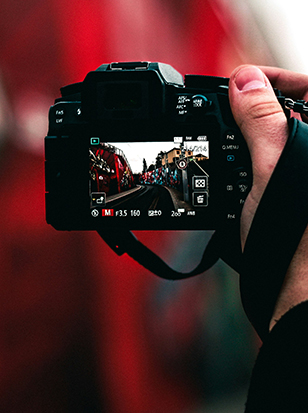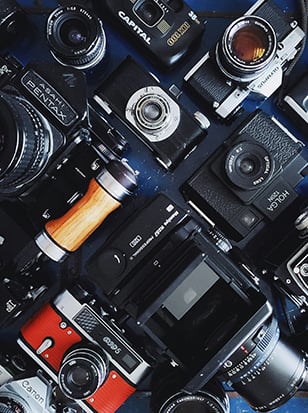
We celebrate World Photography Day because we love photography. We love taking pictures, we love viewing them, we love hearing about them and sharing the experience with other enthusiasts.
But even as hobbyists, photo-fans and professionals, it’s important to remember photography is not just a pastime. Indeed, it’s possibly one of the most important and impactful discoveries that humanity has made in our long life, due to the myriad ways in which it has reshaped and reordered our world, our society and the way we live.
Here, then, are 26 ways that photography has changed how we see the world, and will no doubt continue to change it as we forge a path into the future…
-
X-rays
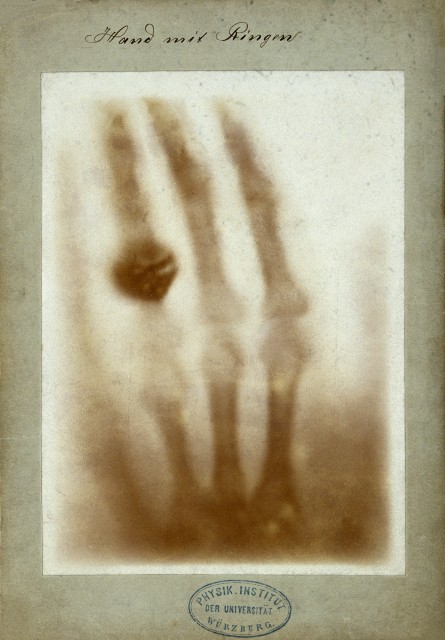
It was in 1895, still relatively early in photography’s life, when German experimental physicist Wilhelm Röntgen discovered that he could use photographic techniques to record wavelengths of light that the human eye could not see. His X-ray radiation would pass through soft tissue but be blocked by bone and other more solid matter. The first image he made was of his wife’s hand, and in doing so he ushered in a revolution that would transform the field of medicine almost immediately.
-
Democratising image-making
Throughout most of history, painting was an art form that only a few people had the time or resources to learn – it was the province of the privileged. When photography first appeared, the cumbersome, expensive and complicated nature of the equipment involved still locked it off from the majority of people.
However, in the 1880s, a man named George Eastman set out to change that. He wanted to make photography “as convenient as the pencil,” and through his development of roll film and affordable, simple box cameras, the art form became something that ordinary people could pursue. His first camera cost a dollar, with rolls of film costing fifteen cents, and the company he built – first named Eastman Kodak, later just Kodak – changed photography forever by putting it in the hands of practically everyone.
-
Driving us towards modern art
Before photography, the majority of painters strove towards visual realism. Their artworks were, after all, the principal means of documenting historical events and depicting notable people. But the advent of photography made this surplus to requirements – suddenly, people, places and events could be documented exactly as they were.
The effect on the art world was seismic. Painters and visual artists moved away from realism towards new forms of abstraction and representation. James McNeill Whistler’s Tonalist movement and Claude Monet’s impressionism forged a path towards modernism, as art rejected traditional realism in favour of abstraction, surrealism and new techniques.
-
Revealing natural animal behaviour
While photographs of animals and nature are almost as old as photography itself, it was American enthusiast George Shiras III who in the late 1890s and early 1900s pioneered the use of camera traps and flash photography to capture images of wildlife unawares. In doing so, he was able to capture behaviours of wild animals like deer that would simply never be exhibited if a human being was anywhere near the picture.
-
Revealing our own DNA
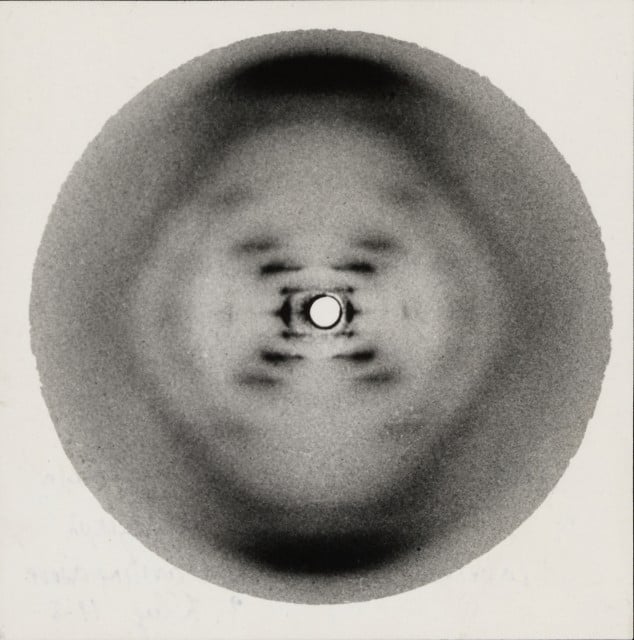
The above image may not be immediately decipherable to you, but its impact was enormous. It was captured by Raymond Gosling, assistant to chemist Rosalind Franklin, in 1952, and it is an X-ray diffraction image that shows the double-helix structure of DNA – the founding building block of all human life. This image settled the question of the structure of DNA, and was a fundamental building block for future work on the subject.
-
Showing the reality of war
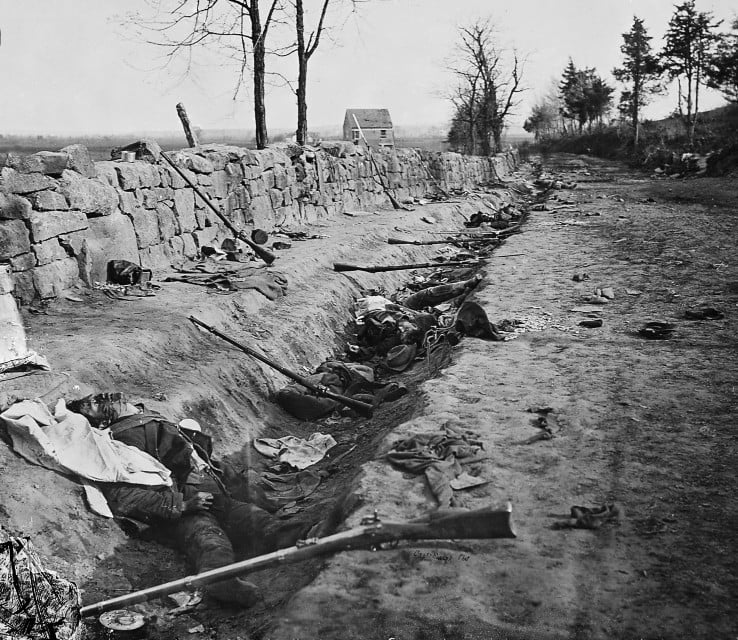
When war was painted, it tended to be glamorised, shown as a valiant struggle of heroes. But the advent of war photography, such as the above image of Confederate dead in the American Civil War, taken by Capt. Andrew J. Russell, showed war in all its unvarnished ugliness, and caused a stark shift in the public perceptions of it.
-
Showing us the farthest reaches of the cosmos
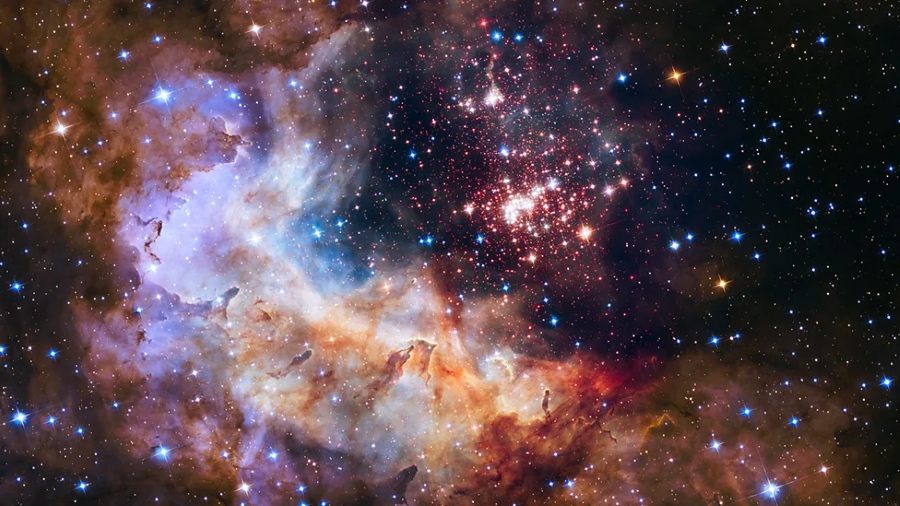
Through clouds of dust and particles, using near-infrared imaging, the Hubble telescope was able to capture this breathtaking image of stars and nebulae billions upon billions of miles away from our home planet – a simply breathtaking technological achievement that all began with photography.
-
Showing the structure of an atom
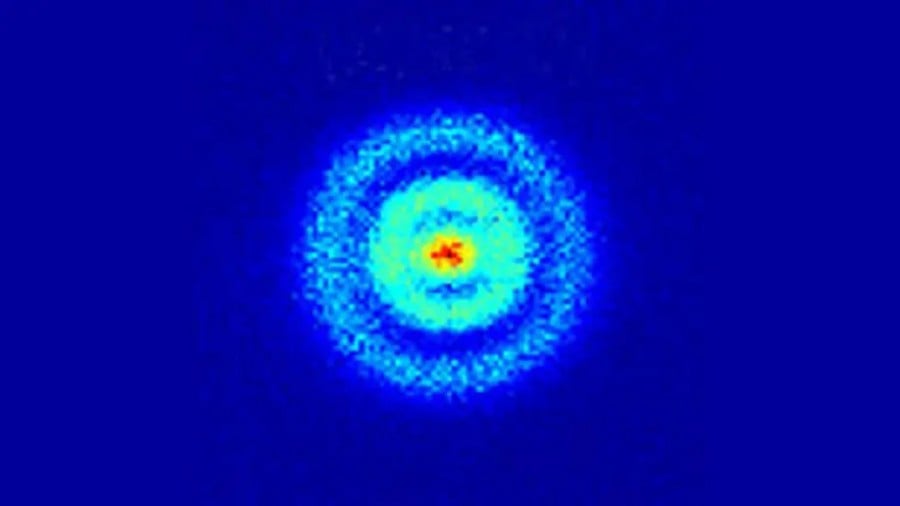
And at the complete other end of the scale, scientists were able to use a “quantum microscope” to capture an image of the inside of a hydrogen atom, and the whizzing orbit of its electrons, providing an astounding glimpse at the fundamental building blocks of all the matter in the universe.
-
Understanding our changing world
Climatic and planetary changes are hard for individuals to perceive. After all, things today tend not to look that different to yesterday. Photography over a long time period can be immensely useful for helping humans wrap our stubbornly visual brains around long-term processes like glacial melt. It’s one thing to be told how much of its ice California’s Lyell Glacier has lost – it’s another thing to see it.
-
Crime-scene photography
Crime-scene photography is so ubiquitous in our popular imagination of police work and crime-solving that it’s strange to think of a time before it was possible. But of course, photography revolutionised the field of crime-fighting as it did so many other things, providing investigators with a means of documenting every inch of a scene without disturbing it, and becoming an essential tool in a police force’s arsenal.
-
The citizen journalist
We live in a world where practically everyone has a camera in their pocket. This has given rise to a distinctly 21st-century phenomenon – the citizen journalist. Now, whenever a newsworthy event unfolds, whether it’s a natural disaster, a terrorist attack, a vehicle collision or just a celebrity’s unexpected appearance, you can be sure that it will be documented from several angles at once, not just by professional photographers, but by ordinary people.
-
Bridging cultural divides
More subjective perhaps, but I genuinely believe that photography has played a part in bridging cultural divides worldwide. One huge cause of prejudice is ignorance – baseless assumptions that come from a lack of familiarity with other cultures. Photography, beamed at the speed of light around the world via the internet and mass media, has been capable of teaching us things about each other, helping us appreciate the values and cultural differences of people far away – and providing much-needed reminders that in many ways, people aren’t so different from one another.
-
The political photo-op
Few people as keenly understand the power of a great photograph – or a bad one – as politicians. The rise of photography has led to the rise of the photo-op, with politicians worldwide looking to cast themselves in the best, strongest possible light on camera.
And chance photos can have unexpected impacts on a politician’s fortunes too. It’s impossible to know how much then-Labour leader Ed Miliband’s 2015 electoral chances were damaged by Jeremy Selwyn’s unfortunately unflattering image of him eating a bacon sandwich – or how much of a boost Donald Trump received from Evan Vucci’s photograph of him raising a defiant fist following the assassination attempt in 2024.
-
The art of cinema
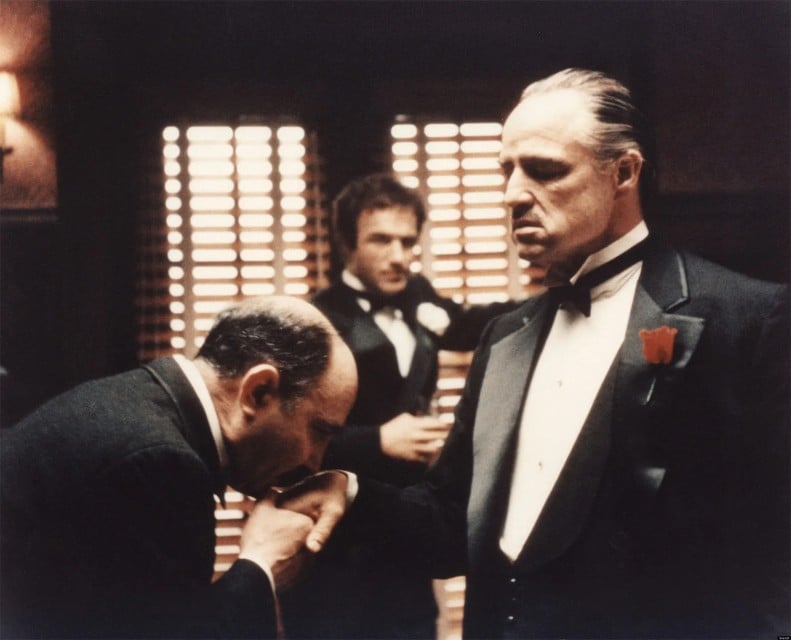
Look, no disrespect to the filmmakers, but you guys exist downstream of photographers. Video, after all, is nothing but a series of still images, played in succession to create the illusion of movement. The greatest, defining art form of the twentieth century owes its existence to the discovery of photography and the refinement of photographic processes. The Godfather, The Lord of the Rings, When Harry Met Sally, Sinners, Goodfellas, Star Wars, Titanic… none of them would exist without photography.
-
The decisive moment
A concept popularised by Henri Cartier-Bresson – though he famously quibbled with the translation from the French, Images à la sauvette, which means something closer to “images on the sly”. Nevertheless, photography’s ability to permanently record a split-second instance in time has given rise to an obsession among some photographers with chasing the decisive moment, the frame that was captured at the perfect time. We all know when we see it – and we all know when we miss it.
-
Seeing the tiniest things, thanks to photomicrography
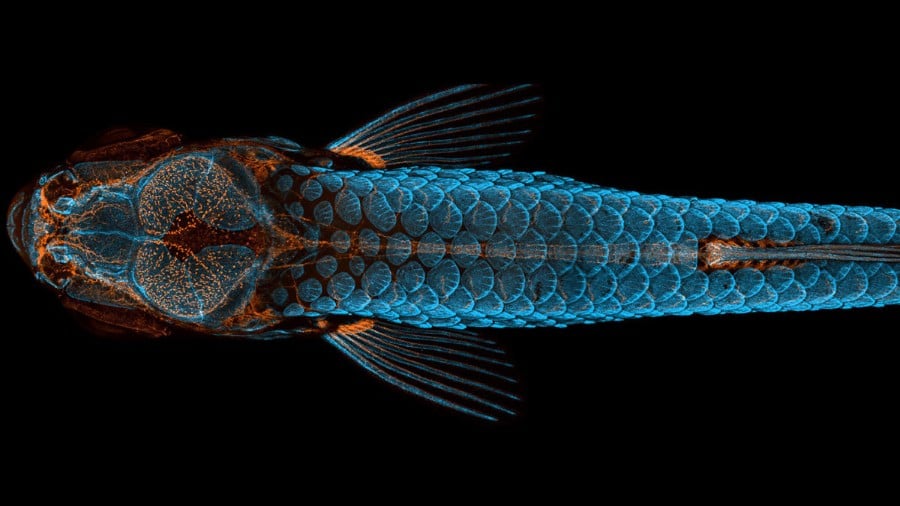
The advent of photography and microscopes has enabled the capture of imagery of all sorts of tiny subjects completely invisible to the naked human eye, teaching us valuable things about our natural world. As well as its superb cameras and lenses, Nikon also has a prosperous microscope business, and is an eager proponent of microphotography – in fact, the firm is currently celebrating a century of its microscopes with a microphotography exhibition in Tokyo, showing images from its “Small World” photography competition.
-
The photography community
This might be a relatively small thing, but I think in its way, it’s one of the most important. Whether your community is on Instagram, Reddit, on a newer platform like Irys, or through your local camera club, photography has the same power that any good hobby does – to bring people together through a shared passion.
-
Photoshop, FaceTune and beauty standards
Not all impacts of photography are positive. The rise of image editing tools like Photoshop, and the mass commodification of editing tools through apps like FaceTune, has led to impossible and increasingly homogenised beauty standards – a search for a “perfect” depiction of oneself that is never achievable, and can harmfully undermine body confidence for younger users of social media.
-
Effecting political change
Sometimes, a photograph is so powerful, so undeniable, that the world stops in its tracks – and in many cases, political change swiftly follows. Turkish photojournalist Nilüfer Demir’s photograph of Alan Kurdi, the two-year-old Syrian refugee who drowned in the Mediterranean Sea, shocked the world into demanding action on the refugee crisis. Nick Ut’s image “The Terror of War”, more commonly known as “Napalm Girl”, is credited by some as being instrumental in the decision to end the Vietnam War.
-
Seeing time sped up through time-lapse
Time-lapse photography is more than pretty clouds moving to an Einaudi soundtrack. Done right, it can reveal so much to us about our natural world, showing us things we simply cannot naturally perceive, like how a flower unfurls, or how the tides move around us.
-
Freezing high-speed motion
View this post on Instagram
And just as time can be sped up using photography, it can also be frozen with pin-point accuracy. First, Eadweard Muybridge’s bet-settling sequence of a galloping horse, then later Harold “Doc” Edgerton’s 1964 image of a bullet tearing through an apple, high-speed photography has revealed to us things that simply are not perceptible with the naked eye.
-
Recovering pieces of history
Did you know that infrared and ultraviolet photography have been used to recover text from historical documents? These techniques have even been used to improve the legibility of medieval manuscripts damaged in fires.
-
The selfie
It is ubiquitous. It is inescapable. Once much-derided by photographers, now simply a fact of life, the selfie is the means by which we say, “I was here,” or “We were together,” or “I met this celebrity”. The selfie is possibly the most pervasive form of photograph that exists today. It has reshaped how we communicate. Some modern-day children will learn to recognise that a selfie is being taken before they learn to talk. The selfie is more than a photograph. It is both medium and message.
-
Abstract photography
As photography has become the dominant means of accurately documenting the world, abstract photography has arisen as a response to it, just as impressionistic forms of painting did in the late 19th century. Photographs that seek to capture moods, feelings, tones, sensations, that eschew traditional forms with techniques like intentional camera movement or extreme close-up – all of these serve to remind us of the possibilities that exist within photography beyond simply its power to document.
-
The 2020s lo-fi craze
It seemed as inexorable as the tides that photographs would go on getting sharper, clearer, more accurate, higher-resolution, as cameras got better and better. But in the 2020s, something shifted. Younger people began embracing the lo-fi look not just of analogue film, but of the cheap point-and-shoot cameras that had been everywhere in the 2000s. Simple small-sensor cameras like the Kodak PixPro range flew off the shelves, as did tiny novelty cameras like the Kodak Charmera. Suddenly, the next generation was using photography to see the world differently.
-
AI and deepfakes
Photography used to be an unassailable trump card in any argument over veracity. The frequently invoked internet catchphrase of the 2000s and 2010s, “pics or it didn’t happen,” carried with it an unspoken corollary: “pics mean it DID happen”.
However, the rise of AI and deepfakes has severed this link. As AI’s ability to convincingly manufacture images improves, it’s no longer as easy to trust your instincts as to whether an image is “real” or not. It’s easy to imagine famous images like Nick Ut’s “The Terror of War” being published today and met with cries of “Fake!” and “AI!”. It’s also very easy to imagine such an image actually being faked with AI, or at least altered to change its content. This kind of thing is already happening, at a dizzying pace and on a colossal scale.
Photography has changed how we see the world. But the world has also changed how we see photography, and as we head into an uncertain future, we may never be able to look at a photographic image with the same confidence we once did.
About the Author
Jon Stapley is a London-based freelance writer and journalist who covers photography, art and technology. When not writing about cameras, Jon is a keen photographer who captures the world using his Olympus XA2. His creativity extends to works of fiction and other creative writing, all of which can be found on his website www.jonstapley.com
Trending Articles
Sign up for our newsletter today!
- Subscribe for exclusive discounts and special offers
- Receive our monthly content roundups
- Get the latest news and know-how from our experts