
The best accessories for macro photography are hugely useful for improving your hit rate and getting brilliant pictures of tiny subjects. You don’t necessarily need the most expensive cameras and lenses to make great macro pictures — and it’s amazing what a difference a cheap light or extension tube can make.
We’ve included on this list a selection of accessories for macro that the majority of photographers should be able to afford. These include means of turning your regular lenses into macro lenses, as well as handy extras like camera supports, lighting and lighting modifiers.
We also have guides to the best camera for macro photography and the best lenses for macro photography, which are worth checking out if you’re still building your setup.
Best Macro Accessories
Pros:
- Affordable alternative to macro lenses
- Allows for experimenting with different focal lengths
Cons:
- Not available for all lens mounts
- No autofocus or electronic aperture control
- Exposes delicate parts of lens to the elements
If you’ve always wanted to try macro photography but can’t countenance the cost of a macro lens, there is a much more affordable solution – a reversing ring. This is just one option - You can find the other mount option here. A reversing ring does just what it sounds like, and allows you to mount your lens on your camera backwards. In this configuration, a standard camera lens essentially functions as a magnifying glass – presto, you’ve got a quick-and-dirty solution for close-up photography!
A reversing ring needs to fit in two ways in order to work – it needs to match both the mount of your lens, and the filter thread size (measured in mm). JJC makes a number of different filter threads for Canon EF, Micro Four Thirds and Nikon F in various thread sizes, and Nikon also produces its own for F-mount.
Bear in mind also that once the lens is reverse mounted, you won’t be able to use autofocus or electronically set the aperture. A reversed lens also produces a very shallow depth of field and reduces the light that gets to the sensor – a tripod is probably a must if you want to stand a good chance of getting sharp images. Lastly, remember that this mounting style will result in your lens’ contact points being exposed to the elements. A solution some photographers use is a rear lens cap with a hole cut in the centre – unorthodox, but it works!


Pros:
- Availability for multiple lens mounts
- Can be stacked to increase effect
- Very affordable
Cons:
- Reduces light intake, which impacts focusing and depth of field
Another low-cost alternative to a macro lens, extension tubes can be considered as an alternative to reversing rings. They slot in between the lens and the camera body (just like teleconverters) and allow you to reduce the minimum focal distance of a lens and get even closer to your subject. An extension tube can be used in conjunction with a lens that already has macro capabilities, further enhancing the effect.
Unlike teleconverters, extension tubes don’t contain any optical glass elements – they are literally just increasing the distance between the lens and the sensor. This means they won’t introduce any optical flaws into your images or reduce the quality. They will, however, reduce the amount of light that comes into the lens, which can both make it harder to focus and restrict the use of narrow apertures to increase depth of field. For both reasons, a tripod is your friend when using extension tubes. Also, remember that you will of course need to get the correct extension tubes for your lens mount - you can find our full range of extension tubes here.
Pros:
- Useful, affordable, versatile flash unit
- Fast-charging via USB-C
- Easy to mount in different configurations
Cons:
- May require extra-purchase accessories to get the most out of it
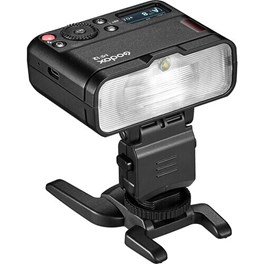
You may or may not want to hear this, but if you’re serious about macro photography, it’s pretty much essential to at least have the option of using flash. Getting enough light for a correct exposure is often a pressing concern for macro shooters, whether it’s because you’ve had to stop down your lens to get enough depth of field, or because you’re using macro accessories like reversing rings or extension tubes that have decreased your effective aperture – or, potentially, both. The best way to get more light is to inject a burst of it yourself, and the best way to do that is with a flash unit.
The Godox MF12 Macro Flash Light isn’t just a speedlight – it’s designed from the ground up to be useful for macro photographers. As such, it’s lightweight and made to work at close distances. With an optional adapter, it can be mounted directly onto the lens for an intense, ultra-close burst of light, and the slim profile of the flash means it’s easy to mount it in other ways too (using a GorillaPod, for instance). The rechargeable battery is good for 500 flashes, and once you’ve drained it you can quickly charge it up again via USB-C.
Pros:
- Ultra-affordable
- Very lightweight and compact
- Constant light allows for real-time adjustment
Cons:
- No rechargeable battery (runs on AAs)
- Not as much lighting power as more expensive LEDs
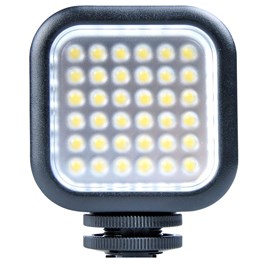
While flash is hugely popular in macro photography, many shooters prefer constant LED lighting. Flash is great for freezing movement, and you’re definitely better off using it for subjects like live insects or falling water droplets. However, if you’re fine-tuning a studio setup for a macro still-life shot, you may find constant LED lighting more useful. A constant light allows you to fine-tune your settings in real-time and get the exposure correct before you hit the shutter. This can be especially useful if you’re shooting on film, and don’t have the luxury of being able to fire off dozens of test shots.
We’ve opted for an outrageously affordable LED unit here, the Godox LED36, to show you how cheaply this kind of thing can be done. There are plenty of excellent LED lighting units available with more power though, so don’t be afraid to shop around to find one that works for you.
Pros:
- Folds down for easy transportation
- Multiple reflective surface options
- Easy way to soften light
Cons:
- May require an extra pair of hands
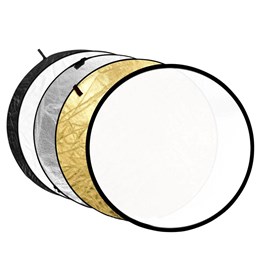
Once you’ve got yourself acquainted with using flash for your macro photography, the next step will be learning to control and enhance the light it creates. An easy, cost-effective way to do this is with a reflector, such as this 5-in-1 example from Godox. A cheap and simple device, a reflector does just what it says – lets you bounce the light back at your subject. This creates a much softer and more diffuse effect than you’d get from simply firing the flash directly at the subject, which makes for a more pleasing image without harsh contrast and shadows.
The ‘5-in-1’ aspect of the reflector refers to the different surfaces it offers – black, silver, gold, white and shoot-through translucent. These allow you to easily modulate the tone and intensity of your light, depending on what your subject calls for. A gold surface, for instance, creates a much warmer light which can be great for evoking a feeling of sunset. Lightweight and folding easily, the Godox LED36 is a wonderfully inexpensive addition to any macro kit – though at times you might find yourself wishing you had an extra pair of hands to hold it!
Pros:
- Simple, inexpensive way to soften light
- Lightweight but durable construction
- Includes honeycomb grid for beam direction control
Cons:
- Can be unwieldy when shooting close up
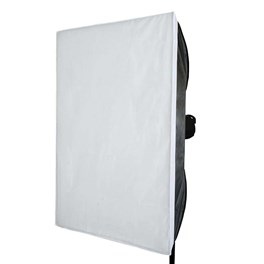
Another classic way to soften your light for pleasing results, a softbox is a time-honoured friend of the macro photographer. Easy to mount onto a flash unit, a trusty softbox like the Godox SB-BW spreads out the beam of your flash through a translucent surface, producing a much softer effect (hence the name). On the inside, the Godox SB-BW has silver reflective surfaces in order to maximise the amount of light that gets through, and there’s also a honeycomb grid that lets you control the direction of the beam.
While softboxes can be a little unwieldy when you’re working at close distances, the fact that they can be mounted directly onto your flash unit (unlike reflectors) is immensely useful if you’re working solo. This particular softbox is constructed from hardy materials designed to withstand the heat generated by flash units, and comes with a carry-case for easy transportation.


Pros:
- Brilliantly portable softbox for flash heads
- Can be mounted in multiple positions
- Part of a modular system
Cons:
- Requires separately purchased adapter
For another light-diffusing option, we really like the MagMod MagBounce 2. A slim light modifier constructed from silicone, the MagBounce 2 simply attaches to your flash head, and can then be angled and manipulated for soft, directional light as you please. Sleekly designed, it folds down when it’s not in use, and its textured surface ensures that light is diffused without being reduced. The silicone rubber is rated for 99% elasticity even after repeated use, meaning it won’t deform or harden over time.
The MagBounce 2 is part of a modular system from MagMod – get hold of the MagGrip 2 adapter and you can use the magnetic attachment system to easily swap in other accessories like the MagMod MagSphere 2 (also a good option for macro photography). It’s a cleverly designed system.
Pros:
- Fantastic for holding subjects still
- Inexpensive and easy to use
- Length and height can be extended
Cons:
- Quite a specific use case
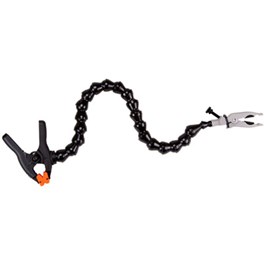
The humble hero of outdoor macro photographers everywhere, Wimberley’s Plamps hold a special place in our heart. If you’re wondering what on earth a ‘plamp’ could be, it’s quite simply a portmanteau of ‘plant’ and ‘clamp’, and that’s exactly what these clever things do – clamp onto plants (or similar subjects) and hold them still to be photographed.
For outdoor macro photographers, wind can be a real problem. It’s nigh-on impossible to work with precise focusing and shallow depth of field if your subjects are blowing all over the shop. With a Wimberley Plamp, you can fix the plant in place without damaging it, get the shot, and then remove the Plamp without having damaged the plant.
From the original positional arm, the Plamp system has expanded to include a version with a spiked base you stick in the ground, as well as extension parts to add length to the arm. You can find all Wimberly accessories here.
Pros:
- Reversible central column for ground-level shooting
- Lightweight, with significant load capacity
- Fast to set up
Cons:
- Not many!
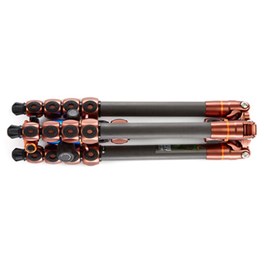
We’ve banged on about tripods a fair bit already, as they really are a non-negotiable for the majority of macro photography. However, it’s important you get the right kind of tripod rather than just buying the first one you see, as there are a few features that will make your life much easier when shooting macro images. For our money, the 3 Legged Thing Legends Bucky Carbon Fibre Tripod is a great shout for macro photographers.
One of the most important features for a macro tripod is a reversible central column. This allows you to essentially flip your camera upside down to get it very close to the ground, which is perfect for capturing macro images of plants and insects. The Bucky tripod is quick to deploy and set up, and its carbon fibre construction means it strikes the optimal balance between light weight and payload capacity. The legs are also easy to set at different angles for use on uneven ground.
This is a more expensive tripod, and if it’s beyond your budget there are plenty of other tripods available – just remember to look for that reversible central column, as it really will make things much easier.
Remote Controls
Pros:
- Enables remote triggering without touching the camera
- Can be used from distance (so as not to spook live subjects)
Cons:
- You need to get the specific one for your camera
- You may be able to achieve the same thing with your phone
A remote release can be very useful for macro photography, and given how inexpensive they are, it’s well worth finding space for one in your kit bag. A remote shutter release is just as it sounds — a device for triggering the shutter of your camera from a distance. Remote releases used to be wired physically into cameras in the old days, but now, they offer wireless functionality (though wired ones are still available for those who prefer).
A release is useful for macro for a number of reasons. First, eliminating any risk of camera-shake. For macro photography, you’re going to be positioning your camera very precisely, and working with a thin plane of focus. Even the slight movement of the camera caused by the physical depression of the shutter button could be enough to throw off your image. A remote release negates this risk.
Also, if you are working with live subjects like insects, your physical presence might spook them. Having a remote release will allow you to maintain some distance from your subject, and trigger the camera when the time is right.
You may be able to achieve the same effect using your smartphone and your camera’s Wi-Fi or Bluetooth connectivity. However, we think a remote release is the more reliable option — less reliant on a phone’s battery, and less likely to drop connectivity at a pivotal moment. But of course, if your phone works for you, that’s great!
FAQs
Do I need a tripod for macro photography?
While not strictly necessary, a tripod can significantly improve the quality of your macro shots by providing stability and reducing camera shake. It's especially useful when shooting at higher magnifications or in low-light situations.
What is a macro ring flash and why is it used in macro photography?
A macro ring flash is a specialised flash unit that fits around the front of your lens. Having the flash around the lens provides even lighting for close-up subjects. It's commonly used in macro photography to eliminate harsh shadows and evenly light small subjects for more balanced and detailed images.
How does a macro extension tube work?
A macro extension tube is a hollow, light-tight tube that fits between your camera body and lens, effectively increasing the distance between the lens and the camera's sensor. This extension allows you to focus much closer than the lens's normal minimum focusing distance. This means that you can take macro photographs without a dedicated macro lens.
What are the benefits of using a focusing rail in macro photography?
Focusing rails provide precise control over the distance between your camera and the subject, allowing for fine adjustments to achieve the desired focus in macro photography. This is particularly useful when shooting at high magnifications, where even the slightest movement can result in a significant change in focus.
Can I use a lens filter for macro photography?
Yes, you can use certain types of lens filters for macro photography, such as close-up filters or diopters. These filters screw onto the front of your lens and decrease the minimum focusing distance, allowing you to focus closer to your subject and achieve macro-like results. However, they may not offer the same image quality as dedicated macro lenses or extension tubes.
What is a diffuser and why is it important in macro photography?
A diffuser is used to soften harsh light. It reduces the appearance of shadows and highlights on your subject. This helps create a more natural and pleasing lighting environment, resulting in better-looking macro images with enhanced details and textures.
Do I need a remote shutter release for macro photography?
While not essential, a remote shutter release can be beneficial to minimise camera shake caused by pressing the shutter button manually. This is particularly important when shooting at slow shutter speeds or using a tripod, as even slight movements can result in blurry images at high magnifications.
How do we decide?
Our in-house photography specialists, store staff, and industry partners work together to review our buying guides and advice articles. We also monitor emerging trends and listen closely to customer feedback, ensuring our recommendations stay current and relevant to what photographers and filmmakers are actually looking for.
By carefully curating the products we recommend, our guides are designed to offer clear, trustworthy advice that helps customers choose the right kit with confidence.
If you would like further advice, our contact centre team are here to help. You can also reach us via email or social media. And remember, if you purchase based on our recommendations, your order is covered by our full returns policy.
Sign up for our newsletter today!
- Subscribe for exclusive discounts and special offers
- Receive our monthly content roundups
- Get the latest news and know-how from our experts