
For fantastic wildlife photographs, having the right lens is absolutely key. We've compiled a list of truly exceptional telephoto zooms and primes for wildlife, selected by our in-house team of photographers, writers and imaging experts, who have worked collaboratively to make sure we’re including the best wildlife photography lenses that will suit most photographers.
One thing to note is that we haven't included the kinds of ultra-professional telephoto prime lenses that sit at the top of many manufacturers’ ranges. The likes of the Canon RF 600mm f4 L IS USM or Nikon Z 400mm f2.8 TC VR S are designed for wildlife professionals, and come with price tags that put them out of reach for most people. We've aimed to include only lenses that are realistically within the budget of the average photo enthusiast.
As such, this list includes a selection of broadly affordable lenses for all the major systems, each one of which could be a brilliant addition to a wildlife photographer's kit bag. These are the lenses that have gone above and beyond to truly impress our technical team, and we feel confident that they will help you raise your game and become a better wildlife photographer.
For more wildlife kit ideas, check out professional wildlife photographer Tom Mason’s ultimate kit bag on our blog.
Best Lenses for Wildlife
|
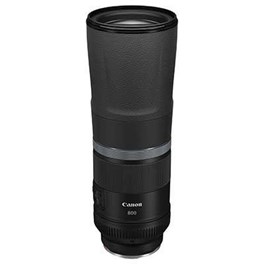
Aperture: f11 fixed Focal Length: 800mm Weight: 1,260g Image Stabilisation: Yes (up to 4 stops) Minimum Focus Distance: 6m |
Pros:
Cons:
|
It’s great to see that Canon hasn’t lost its spirit of innovation. Many photographers were surprised when it released a pair of telephoto primes for RF-mount with fixed f11 apertures that can’t be changed – surely that would be too restrictive? But once you dig into the Canon RF 800mm f11 IS STM Lens, the concept starts to make sense.
As well as the fact that the RF 800mm f11 IS STM is much more affordable than any other 800mm prime lens, you have to consider how much smaller and lighter it is. It weighs 1,260g – for comparison, the RF 800mm f5.6 L IS USM weighs 3kg, and costs £19,099. That is plainly not an option for most photographers, so the RF 800mm f11 IS STM is a great step in making super-telephoto wildlife photography accessible to more people.
Its images look fabulous too, making the most of those high-resolution EOS R sensors. The compromises it makes may be too much for some people, but if you want 800mm quality on a budget, this is how you get it.
|
Aperture: f5.6–6.3 variable Focal Length: 200-600mm Weight: 2,115g Image Stabilisation: Yes (Optical SteadyShot) Minimum Focus Distance: 2.4m |
Pros:
Cons:
|
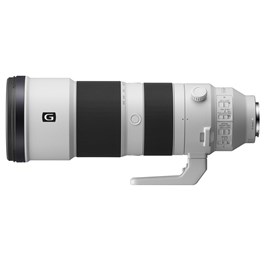
Tack-sharp and with telephoto reach for days, the Sony FE 200-600mm f5.6-6.3 G OSS Lens is a pretty tough act to beat when it comes to wildlife photography. Even with that generous zoom range, the zoom mechanism is all internal, meaning the lens doesn’t change shape or length when zooming. The Direct Drive SSM autofocus system is super-fast and reliable, and the lens also has an 11-blade aperture, which means you can open it up to its wider aperture settings to create images with a beautiful blurred background and bokeh.
This is one of the lenses that are compatible with Sony’s 1.4x and 2.0x teleconverters, meaning you can boost that focal range to extreme levels if you don’t mind a corresponding light loss of one or two stops. Focusing is quiet and accurate to a pin-point, while the focus range limiter also allows you to restrict it to a specific distance range, reducing the chances of accidentally focusing on the wrong subject.

|
Aperture: f5–6.3 variable Focal Length: 100-400mm Weight: 1,135g Image Stabilisation: Yes (Optical Stabiliser) Minimum Focus Distance: 1.12m |
Pros:
Cons:
|
Mounts: Sony E, L-mount, Fujifilm X
The Sigma 100-400mm f5-6.3 Contemporary DG DN OS Lens is a superb wildlife lens for different mirrorless systems. If you use the L-mount version, you can take advantage of the TC-2011 2x and TC-1411 1.4x teleconverters, as well as the USB dock.
Whether you use the full-frame Sony or L-mount versions or the Fujifilm X version (which provides an equivalent focal range of 150-600mm), sharpness is excellent throughout the zoom and aperture ranges, and autofocus is fast and silent thanks to the Hypersonic Motor (HSM) mechanism. We also appreciate that the zoom can be operated via the push/pull method if the user prefers – while this requires a bit of oomph at the top end, it’s great for making quick transitions between focal lengths.
|
Aperture: f5.6-6.3 variable maximum Focal Length: 180-600mm Weight: 1955g Image Stabilisation: Yes (Vibration Reduction, up to 5.5 stops) Minimum Focus Distance: 1.3m |
Pros:
Cons:
|
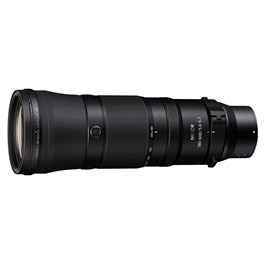
Now this lens is quite something. Nikon Z mirrorless shooters have a heck of a zoom at their disposal: the Nikon Z 180-600mm f5.6-6.3 VR, a broad telezoom that's much more affordable to buy than many of the professional primes and zooms favoured by wildlife photographers. And you'd normally need multiple lenses to cover a focal range this broad, but the Nikon Z 180-600mm f5.6-6.3 VR lets you go from telephoto to super-telephoto at the twist of a wrist.
None of this would matter of course if the lens didn't deliver quality where it counts, but fortunately, the Nikon Z 180-600mm f5.6-6.3 VR is an impressively sharp beast, with exceptional high-resolution detail running right the way through that beefy zoom range. This is complemented by a powerful optical image stabilisation system, Nikon's Vibration Reduction (VR), which can provide up to 5.5 stops of effective compensation. Focusing is fast and precise, and the combination of a control ring and four customisable Fn buttons allow you to set up the lens to work precisely the way you want it to.
|
Aperture: f5.6-8 variable maximum Focal Length: 150-600mm (equiv. 229-914mm) Weight: 1605g Image Stabilisation: Yes (up to 5.5 stops) Minimum Focus Distance: 2.4m |
Pros:
Cons:
|
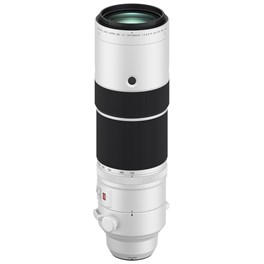
For Fujifilm X shooters, this lens represents top-tier telephoto power. The Fujifilm XF 150-600mm f5.6-8 R LM OIS WR delivers an equivalent focal range of 229-914mm when mounted to a Fujifilm X-series camera, as these models use smaller APS-C sensors. This means you get incredible telephoto length from a smaller and lighter lens than you would if you were using a full-frame system.
Also, amaizngly, this focal range can be further extended using Fujifilm's XF1.4TC and XF2.0TC teleconverters! Granted, this will further reduce the maximum aperture of the lens, potentially necessitating the use of higher ISO settings to produce useable images, so that's worth being aware of before you dream too hard of images at 1800mm. Still, having the effective on-board optical stabilisation system is great for keeping the lens useable hand-held, even when working at the outer edges of the telephoto zoom range. And it's weatherproof, too, so you can keep on shooting even if/when the weather takes a turn for the worse.

|
Aperture: f5–6.3 variable Focal Length: 100-400mm (200-800mm equivalent) Weight: 1,120g Image Stabilisation: Yes (up to 3 stops) Minimum Focus Distance: 1.3m |
Pros:
Cons:
|
Fully weatherproofed and designed to pair with hardy cameras like the OM System OM-1 II, this powerful telephoto zoom lens gives you huge flexibility when it comes to wildlife photography. The 2x crop factor of Micro Four Thirds lends itself quite naturally to wildlife shooting, allowing you to effectively extend the native 100-400mm focal range of this lens to a whopping equivalent 200-800mm. It’s not just for distance however — the minimum focal distance is an impressive 1.3m, meaning you’re also covered for close-up shots.
While the relatively narrow variable aperture means you may have to punch up the ISO from time to time, particularly if you are frequently working at the outer edge of the zoom, the speed, versatility and image quality offered by the OM SYSTEM M.Zuiko Digital ED 100-400mm f5-6.3 IS II means it should merit consideration from any wildlife photographer who’s working in the Micro Four Thirds system.
|
Aperture: f5–6.3 variable Focal Length: 150-600mm Weight: 1,930g Image Stabilisation: Yes (Optical Stabiliser with two modes) Minimum Focus Distance: 2.8m |
Pros:
Cons:
|
Mounts: Canon EF, Nikon F, Sigma SA
An older lens that still offers top-notch value for money, the Sigma 150-600mm f5-6.3 Contemporary DG OS HSM is a brilliant option for anyone who’s photographing wildlife on Canon or Nikon DSLRs — which we know is still quite a few of you. With a broad, flexible focal range, the Sigma lens incorporates specialised glass elements to ensure top-tier image quality at every focal length, and its body is hardy and weatherproofed for those long shooting days outdoors.
A feature we also particularly like is the full-time manual focus override, which is especially useful on older DSLRs that don’t have fancy modern conveniences like intelligent subject-recognition autofocus. If the AF system is getting confused and keeps focusing on the background rather than your subject, you can correct it manually with a swift twist of the ring. In wildlife photography, where time is truly of the essence, that is a hugely welcome feature.






How to choose the best lens for wildlife
If you’re wondering how we’ve chosen our lenses, here are the key criteria to keep in mind when selecting a good wildlife lens.
- Focal length: When it comes to wildlife, you may think the longer the focal length the better, as a long lens allows you to get close to a subject. This is true to an extent, but not all wildlife subjects are alike – urban animals like foxes and seagulls will let you get much closer than rural ones like deer or badgers, for instance. A longer lens will add weight to your kit bag, so it’s worth thinking about how much focal length you realistically need.
- Fast-focusing: Focusing is a game of two halves, with camera and lens both playing their role. A good wildlife lens needs a capable focusing mechanism that will lock onto subjects quickly and accurately.
- Zoom or prime? This is an age-old debate, so all we’ll say here is that both zooms and primes can be fantastic for wildlife photographers. Zooms give you the flexibility to tackle lots of different subjects in different situations, while primes give you unparalleled image quality and can often improve your discipline as a photographer by forcing you to think more carefully about positioning and framing. We’ve included both on this list.
FAQs
What are wildlife lenses and why are they important?
Wildlife lenses are specialised camera lenses that are specifically designed for photographing wildlife. They are important because they allow photographers to capture high-quality images of animals and other wildlife from a distance, without disturbing them.
What are the best wildlife lenses?
The best wildlife lenses are those that offer a long focal length, fast aperture, and image stabilisation.
How do I choose the right wildlife lens for my camera?
When choosing a wildlife lens, consider the type of camera you have (DSLR or mirrorless), the focal length range you need, the aperture range, and any additional features such as image stabilisation. You should also consider the weight and size of the lens, as well as the cost.
How can I take better wildlife photos with my lens?
Try to get as close to the animal as possible while still maintaining a safe distance and without disturbing them. Use a fast shutter speed to freeze any movement, and try to use natural light as much as possible.
How do we decide?
Our in-house photography specialists, store staff, and industry partners work together to review our buying guides and advice articles. We also monitor emerging trends and listen closely to customer feedback, ensuring our recommendations stay current and relevant to what photographers and filmmakers are actually looking for.
By carefully curating the products we recommend, our guides are designed to offer clear, trustworthy advice that helps customers choose the right kit with confidence.
If you would like further advice, our contact centre team are here to help. You can also reach us via email or social media. And remember, if you purchase based on our recommendations, your order is covered by our full returns policy.



Sign up for our newsletter today!
- Subscribe for exclusive discounts and special offers
- Receive our monthly content roundups
- Get the latest news and know-how from our experts