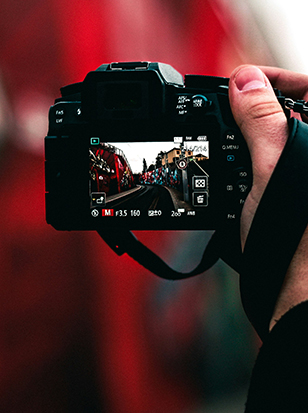
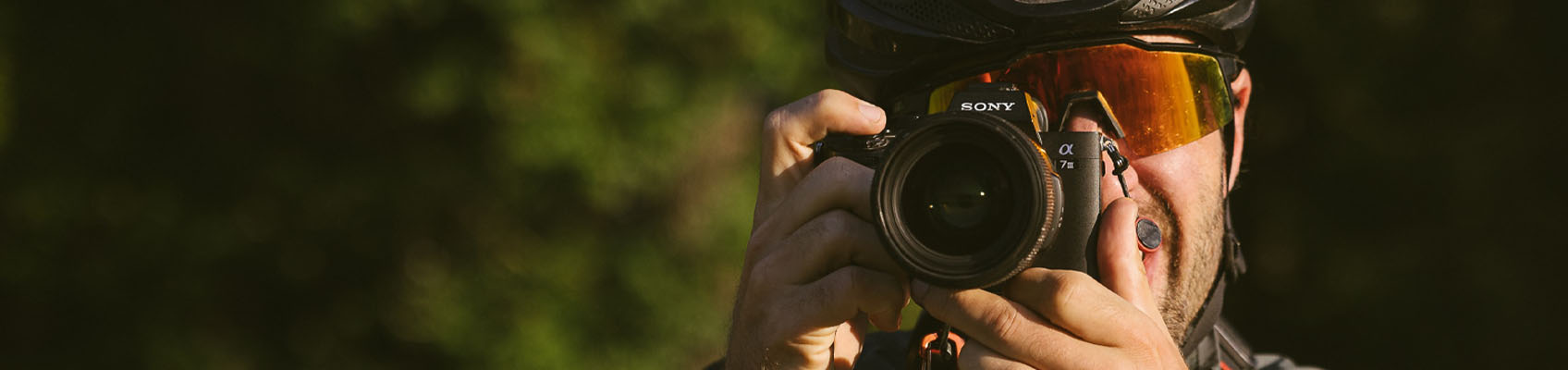
The best cameras for sports photography need to be dependable, high-speed machines that are guaranteed to bag the crucial shot even in tricky situations. There's very little margin for error in sports photography, with split-second moments that are unrepeatable.
As such, sports cameras tend to be the most sophisticated in any manufacturer’s stable, with top-of-the-line features and peerless image quality. These are the flagships of many manufacturers' lineups, boasting peerless shooting speeds and top-of-the-line weatherproofing.
There’s more of course, but we’ll get into it as we go. We’ve listed a lot of top-flight cameras here – scroll down if you’re on a tight budget, as we’ve also listed a more affordable option…
What's coming up:
Best Sony camera for sports photography: Sony A9 III
Best Nikon camera for sports photography: Nikon Z9
Best Canon camera for sports photography: Canon EOS R1
Best Fujifilm camera for sports photography: Fujifilm X-H2S
Best Panasonic Lumix camera for sports photography: Panasonic Lumix G9 II
Best OM System camera for sports photography: OM System OM-1 Mark II
Best budget camera for sports photography: Canon EOS R10
Best Canon DSLR for sports photography: Canon EOS-1D X Mark III
Best Nikon DSLR for sports photography: Nikon D6
Best Sony camera for sports photography
Pros:
- Class-leading 120fps RAW shooting
- Global shutter ensures zero distortion of fast-moving subjects
- Pre-capture mode ensures you never miss the moment
Cons:
- Highly specialised tool
- For professionals only
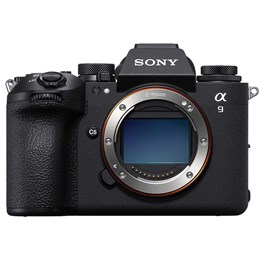
A true game-changer? The Sony A9 III just might be. This is a truly exceptional sports camera that feels like a glimpse of the future. Its global shutter technology enables incredibly fast readout speeds, allowing the camera to achieve absurd headline specs like 120fps burst shooting in full-resolution RAW. Other sports cameras may shoot at 120fps – but none of them do it in full resolution, making the Sony A9 III the current class leader for sport photography.
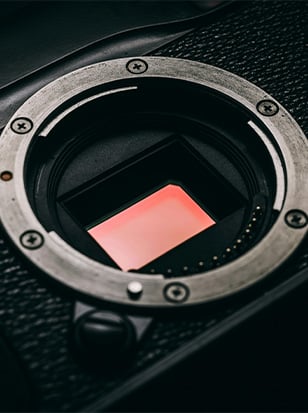
Essentially, the global shutter exposes every line in the frame simultaneously, rather than one at a time. This means that rolling shutter – where fast-moving subjects can appear distorted – is completely nullified as an issue. You also won't have any problems with flickering artifical lights, which can plague shoots conducted at indoor sports arenas.
Keeping up with all this is a shutter that can achieve speeds as fast as 1/80,000sec, and a powerful phase-detection autofocus system that benefits from AI-powered subject detection to lock onto discrete, identifiable subjects. This is a highly specialised tool for sports photography, and is priced as such, but if your someone who needs the top level of power and performance from a sports camera, there is quite simply nothing else like the A9 III on the market.
Best Nikon camera for sports photography
Pros:
- Exceptionally reliable tracking AF
- Lightning-fast burst modes
- Robust build and handling
Cons:
- Big and heavy
- Needs CFExpress or XQD cards
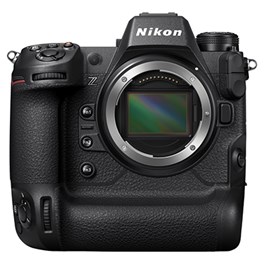
The Nikon Z9 is a masterpiece. You could call it a latecomer to the pro mirrorless party – but boy was it worth the wait. This is quite simply an exceptional mirrorless camera for sports, pairing a class-leading AI-powered autofocus system with some of the most blistering burst modes on the market. The Z9 can shoot at up to 20fps in full-res RAW, making the most of its 45.7MP sensor. Switch to JPEG, still full-res, and you can get 30fps. Drop the resolution to 11MP, and you get a whopping 120fps. You also get a blackout-free viewfinder experience while shooting at these dizzying speeds.
The AI-powered subject-detection autofocus system is freakishly good, showing an uncanny ability to grab the subject you want and hold onto it even as it moves. The ergonomics of the Z9 are also outstanding – with an integrated vertical grip, it’s one of the first mirrorless cameras that really feels like a replacement for a professional DSLR.
Best Canon camera for sports photography

Pros:
- Improved Eye Control AF
- Hardy, weather-resistant body
- Images can be upscaled to 96MP
Cons:
- Big and heavy
- For pros only
Canon's newest flagship sports shooter, the Canon EOS R1 provides a number of improvements over the previous EOS R3. The powerful Eye Control AF, introduced in previous Canon cameras, has been further refined and works more effectively than ever – allowing you to set the focus point simply by where you're looking in the viewfinder!
The brisk 40fps shooting speeds give you the tools you need to capture the crucial moment, and images look fantastic thanks to the full-frame sensor with 24.2MP of resolution. The Canon ES R1 has also been equipped for the demands of professional sports shooters, with high-speed connectivity options and industry-standard file formats ensuring you can get your files to clients as speedily and efficiently as possible.
With a robust, weatherproof construction designed to withstand the rigours of professional shooting, the EOS R1 is a tank-like camera that's built to last. Its high-quality viewfinder, super-long battery life and ergonomically laid-out controls all add up to a camera that gives sports-shooting pros everything they need and more.
Best Fujifilm camera for sports photography

- Superb image quality, especially in JPEG
- Fast shooting speeds and superb autofocus
- Can be upgraded with battery or network grips
Cons:
- On the heavy side for an APS-C camera
- Fujifilm X lens range has fewer telephotos than other brands
For a long time, Fujifilm wasn't known as much of a sports-shooting brand. However, that changed dramatically with the unveiling of the X-H2S, a super APS-C speedster that delivers the brilliant, vibrant Fujifilm image quality that fans know and love in a package that's capable of keeping up with the pros.
A stacked sensor design enables rapid shooting of up to 40fps, available in full-resolution RAW, and the buffer offers a generous 140 frames. This is with the electronic shutter; the mechanical shutter can still manage a respectable 15fps. The autofocus system keeps up with the action, locking onto subjects quickly and reliably, and also benefiting from AI-powered subject recognition.
The Fujifilm X-H2S is possibly the most advanced APS-C cameras available right now, and is the no-brainer choice if you want to shoot sports on Fujifilm equipment. The X system doesn't have as many powerful telephotos as other systems, but there are still some excellent choices – try the Fujifilm XF 150-600mm f5.6-8 R LM OIS WR for a powerful telezoom to cover your bases.
Best Panasonic Lumix camera for sports photography
- Portable build with great control layout
- Micro Four Thirds delivers extra telephoto reach
- Advanced AF with subject recognition
- Some may prefer larger-sensor quality
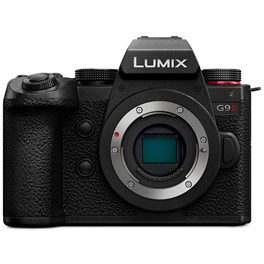
Panasonic's Lumix G9 II is one of the most advanced Micro Four Thirds cameras available, and is well-equipped for sports photography. Its burst-shooting with continuous autofocus can reach speeds of 60fps, and its powerful Phase Detection AF with subject-tracking can acquire and keep hold of fast-moving subjects with ease.
While the Micro Four Thirds sensor standard is smaller than full-frame or APS-C, this does confer certain advantages when it coms to sports photography. The smaller sensor size means that MFT cameras have a 2x crop factor, meaning the effective focal length of a lens is doubled. So, a 50mm lens behaves in practice like a 100mm lens. This is excellent for sports photography, where telephoto reach is essential.
Solidly built, with a splash-resistant chassis,the Lumix G9 II is made to withstand the wear and tear of outdoor sports photography.
Best OM System camera for sports photography

- Powerful 1053-point AF system
- IP53 weather-sealing
- 120fps burst shooting with deep buffer
Cons:
- Smaller MFT sensor
- Comparatively low 20.4MP resolution
OM System's OM cameras are some of the most comprehensively weather-sealed in the business, making them the optimal choice for those who want to shoot oudoor sports in all weathers. The OM-1 Mark II, like its compatriots, meets IP53 dustproof and splashproof standards, meaning it is thoroughly protected against inclement weather.
Equipped with 120fps burst shooting and a deep buffer to make the most of it, the OM-1 Mark II also sports sophisticated autofocus with subjetc recognition. As a Micro Four Thirds camera, it can make use of an enormous range of lenses, including not only OM System branded lenses, but Olympus and Panasonic Lumix G lenses too.
The OM-1 II also offers a number of unique computational filters, such as a built-in Live GND (Graduated Neutral Density) filter function that makes it easier to control for super-bright skies and produce a balanced exposure.
Best budget camera for sports photography

Pros:
- Dual Pixel CMOS AF II with subject tracking
- Supports UHS-II class SD cards
- Very lightweight build
Cons:
- Not weather-sealed
- No in-body stabilisation
Canon has released plenty of budget-friendly, beginner-friendly cameras for its EOS R range, and the reasonably priced EOS R10 hits a lot of key considerations for sports photographers. It’s nippy, with a sophisticated AF system that benefits from modern developments like subject-tracking. Indeed, this is the same Dual Pixel CMOS AF II system that has been seen in cameras like the EOS R5, EOS R6, and yes, even the flagship EOS R3. Who said only the pros get the good stuff?
The silent electronic shutter can shoot at up to 23fps, and the 24.2MP APS-C sensor delivers crisp, high-quality images. The EOS R lens range is coming on apace, with a fair few lightweight optics that’ll suit this slender camera. Just be aware that it’s not weather-sealed, so you’ll need to be careful in the wet. Also, the EOS R10 doesn’t have built-in stabilisation, so you’ll need to either rely on lens-based IS or just watch your shutter speeds, especially when using longer telephotos.
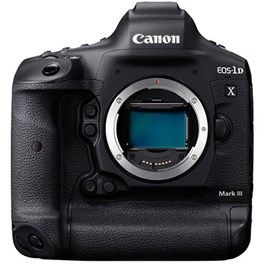
Best Canon DSLR for sports photography
Pros:
- Best autofocus on a DSLR
- Respectable burst modes
- Battery lasts well
Cons:
- Lower resolution than rivals
- No image stabilisation
One of the last great DSLRs, the Canon EOS-1D X Mark III was in many ways a preview of what was to come. It was released in 2020, but came sporting a new feature that would soon become all the rage – AI-powered subject-detection autofocus. While it’s not as sophisticated as the systems that would appear in later cameras, it’s still excellent, and it’s hard to imagine many sports photographers being too dissatisfied with it.
The EOS-1D X Mark III shoots at a respectable clip of 20fps in Live View mode – again, not as fast as the flagship cameras of today, but still realistically fast enough for most purposes. Where you might find it wanting is in resolution. Back in the day it was generally accepted that sports cameras would boast fewer pixels in order to achieve their dizzying shooting speeds. This isn’t really the case any more, and accordingly, the EOS-1D X Mark III’s 20.1MP sensor does look a bit meagre by modern standards.
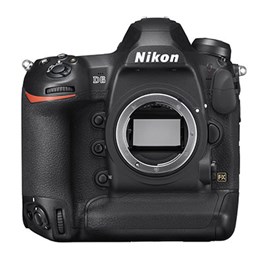
Best Nikon DSLR for sports photography
Pros:
- Huge range of F-mount lenses
- Reliable workhorse AF system
- Extremely solid build
Cons:
- Live View autofocus is contrast-detect only
- 1D X Mark III has smarter, better autofocus
The Nikon D6 also represents the end of an era, being almost certainly the last pro-spec F-mount DSLR we’re going to see. Happily, it’s an absolute beast for sports shooting, with a 14fps burst mode that just goes and goes, and a thoroughly reliable autofocus system with impressive tracking. This may not sound that impressive compared to the mirrorless monsters in our first section, but let’s not lose perspective – it is more than enough to get the job done in most sporting situations.
The enormous F-mount lens range will give you a huge range of options when building your sports-shooting setup, even given the fact that we aren't likely to see many new ones coming in the future. One thing to note is that the Nikon D6 uses phase-detection autofocus, but only when you’re shooting with the viewfinder. Attempt to use Live View and you’ll be forced to rely on a much less capable contrast-detect system, which also somewhat compromises the Nikon D6 as a tool for video.
How to choose the best camera for sports photography
When shopping for a sports camera, there are a few particular features worth concentrating on:
Autofocus - Absolutely critical in sports photography, as the entire discipline is based around getting pin-sharp shots of fast-moving subjects doing unrepeatable things. Ideally you want a camera with on-sensor phase-detection autofocus, as this tends to be much faster than the older contrast-detection systems. Newer models also have features like subject tracking, face and eye detection, and even AI-powered subject recognition, which can lock onto humans in the frame, and even in some cases specific individuals.
Fast burst with a deep buffer - Being able to rattle off a good burst of frames in a few seconds increases your chances of nailing the shot. However, it’s also worth paying attention to a camera’s buffer, meaning how many consecutive shots it can take before it needs to cool off, as this will tell you how long your bursts can last.
Fast card compatibility - All those high-res bursts are going to crunch a lot of data, and you’ll need memory cards that can keep up. High-end cameras use CFExpress and XQD card slots, which offer very fast transfer speeds, but are more expensive than the standard SD. You can definitely use SD cards for sports shooting, but to be on the safe side, it helps if the camera can take advantage of the faster UHS-II class of SD card.
FAQs
What is the best camera for sports photography?
The best camera for sports photography depends on various factors such as budget, specific sports requirements, and personal preferences. However, it's crucial to consider factors like burst rate, autofocus performance, and low-light capabilities when choosing a camera for sports photography.
What is the ideal lens for sports photography?
The ideal lens for sports photography also depends on several factors like the type of sport, shooting distance, and lighting conditions. Sports photographers typically opt for telephoto lenses with fast autofocus and wide apertures.
How do I capture action shots in sports photography?
To capture action shots in sports photography, you need to consider a few key techniques including the use of a fast shutter speed, pre-focus, anticipating the action and shooting in burst mode.
How can I improve low-light performance in sports photography?
To improve low-light performance in sports photography, you should use a camera with good high ISO performance and use a wide aperture lens (e.g. f2.8 or wider). You can also experiment using external lighting such as flash or strobes if allowed in the sports event.
What are the advantages of shooting in burst mode for sports photography?
Put simply, shooting in burst mode increases the chance of capturing the perfect moment in action-packed scenes. Additionally, it allows you to choose from a series of images with slightly different compositions or expressions.
What are some essential accessories for sports photography?
There are several accessories we would suggest but most importantly, a telephoto lens for capturing distant subjects, extra camera batteries and memory cards, a tripod or monopod and a rain cover!
How do we decide?
Our in-house photography specialists, store staff, and industry partners work together to review our buying guides and advice articles. We also monitor emerging trends and listen closely to customer feedback, ensuring our recommendations stay current and relevant to what photographers and filmmakers are actually looking for.
By carefully curating the products we recommend, our guides are designed to offer clear, trustworthy advice that helps customers choose the right kit with confidence.
If you would like further advice, our contact centre team are here to help. You can also reach us via email or social media. And remember, if you purchase based on our recommendations, your order is covered by our full returns policy.



Sign up for our newsletter today!
- Subscribe for exclusive discounts and special offers
- Receive our monthly content roundups
- Get the latest news and know-how from our experts