
The best lenses for wedding photography will help make sure you never miss those all-important shots. Every image matters in wedding photography, from the getting-ready shots to the vows and rings, right to the last people standing on the dancefloor, so you need to make sure your setup is equipped for the job. These are the lenses that will help you do just that.
We’ve selected a standout wedding photography lens from each of the major systems and manufacturers. In most cases, these aren’t going to be the only lenses you use; wedding photographers will always need to have multiple lenses at their disposal, due to the broad range of shooting situations they find themselves in. However, we think these are the standout lenses from each manufacturer, and all of them deserve a place in the kit bag of any photographer using the corresponding system.
If you want some broader recommendations on which focal lengths are best for wedding photography, scroll to the bottom of this page where we’ve put together an FAQ section on how to choose the right lens for weddings.
What's coming up:
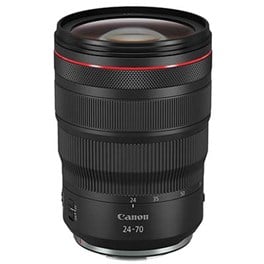
Best Canon lens for wedding photography: Canon RF 24-70mm f2.8L IS USM Lens
Best Nikon lens for wedding photography: Nikon Z 70-200mm f2.8 VR S Lens
Best Sony lens for wedding photography: Sony FE 16-35mm f2.8 G Master Lens
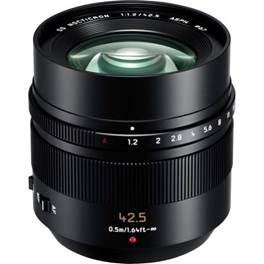
Best Panasonic lens for wedding photography: Panasonic 42.5mm f1.2 ASPH Leica DG Nocticron OIS Lens
Best Fujifilm lens for wedding photography: Fujifilm XF 50-140mm f2.8 WR OIS Lens
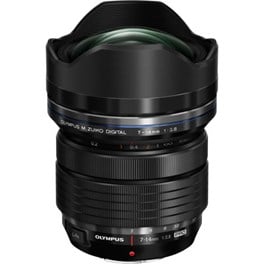
Best Olympus/OM System lens for wedding photography: Olympus M.Zuiko Digital ED 7-14mm f2.8 PRO Lens
Best Canon lens for wedding photography:
|
Pros:
Cons:
|
Focal Length: 24–70mm Aperture: f2.8 (constant) Stabilisation: 5-stop Optical IS Autofocus: Nano USM Weight: 900g |
The Canon RF 24-70mm f2.8L IS USM is an absolutely outstanding workhorse for the mirrorless RF-mount system. It’s pin-sharp, equipped with fast Nano USM autofocus, and has excellent stabilisation that works in-tandem with the IBIS in compatible EOS R bodies. You can hardly ask for more when it comes to getting sharp shots at weddings, and that 24-70mm focal length — beloved by documentary photographers and newshounds — is a great catch-all for most subjects and situations you’ll come across on a wedding day.
One slightly unexpected treat about this lens is also how good it is for close-ups. It can close-focus at distances as short as 21cm, and it provides an impressive 0.30x magnification capability. This means you can get nice and close to the rings before they go on the fingers, and pick out other details from the day to augment your imagery and provide a better service for your clients. Just be aware that it’s not a light lens, tipping the scales at around 900g.
Best Nikon lens for wedding photography:

|
Pros:
Cons:
|
Focal Length: 70–200mm Aperture: f2.8 (constant) Stabilisation: Optical VR (5 stops) Autofocus: Dual STM Weight: 1,360g |
A good 70-200mm lens is your best friend when it comes to picking out moments and details. You can capture portrait-style images from a decent distance by zooming in, or more naturalistic images at the 70mm end of the focal range. Once again, the lens that’s great for news and documentary photography also proves itself an excellent choice for weddings. It makes sense when you think about it — both news photographers and wedding photographers need to be versatile, flexible and ready for anything.
As such, a lens like the Nikon Z 70-200mm f2.8 VR S is a superior choice when it comes to wedding photography. Its high-end optical construction delivers dazzling sharpness, while its bright, constant aperture of F2.8 lets you keep on shooting even when the light gets low. It’s designed to complement high-performance Z-series cameras like the Z8 and Z9, and as such, its focusing speed and resolving power are top of the line. Any serious wedding photographer should have a 70-200mm lens at their disposal — especially if it’s as good as this.
Best Sony lens for wedding photography:

|
Pros:
Cons:
|
Focal Length: 16–35 mm (full‑frame) Aperture Range: f2.8 to f22 Minimum Focus Distance: 22 cm Magnification: 1:3.13 (approx. 0.32×) Weight: 547 g |
An absolute diamond of a lens, the Sony FE 16-35mm f2.8 G Master has risen admirably to the challenge presented by the ultra-high megapixel counts of some of the manufacturer’s full-frame mirrorless cameras. Its construction internally consists of two glass XA (extreme aspherical) elements, three aspherical elements and two ED (extra low dispersion) glass elements. What this translates to in real terms is exceptional control of distortion and aberrations, meaning pin-sharp images from edge to edge.
This wider focal range is handy for the big group shots, where you want to make sure you get the whole party in the frame, even those who are loitering at the edges. A high-end lens like the FE 16-35mm f2.8 G Master will keep even the outermost corners of the image nice and sharp. It is a professionally priced lens however — if you want a more affordable option in a similar focal bracket, consider the Sony FE 12-24mm F4 G lens, or the Sigma 14-24mm F2.8 DG DN lens.
Best Panasonic lens for wedding photography:
|
Pros:
Cons:
|
Focal Length: 42.5 mm (equivalent to ~85 mm on full‑frame) Aperture Range: f1.2 maximum to f16 minimum Stabilisation: POWER Optical Image Stabiliser (O.I.S.) Minimum Focus Distance / Magnification: 0.50 m (1.64 ft) with approx. 0.10× (1:10) magnification Weight: ~425 g |
A good portrait prime is a handy thing to have at a wedding, allowing you to pick out images of individual guests. With an equivalent focal length of 85mm, the Panasonic LUMIX G Leica DG Nocticron 42.5mm f1.2 ASPH Power OIS is pitch-perfect for portraits. While the tighter field of view may take some getting used to if you’ve been working with wider lenses, it’s great for getting flattering images of subjects with the background nicely thrown out – aided by the f1.2 maximum aperture. This lens is pretty affordable by f1.2 standards, and it still performs brilliantly wide open, so you can be confident in taking advantage of all that dreamy bokeh.
There’s a handy aperture ring on the body for intuitive control – just be aware that this only works on Panasonic bodies, not Olympus or OM-System. The lens is also optically stabilised, helping you keep your shots sharp when using it handheld (as you will be once the dancing gets started).
Best Fujifilm lens for wedding photography:
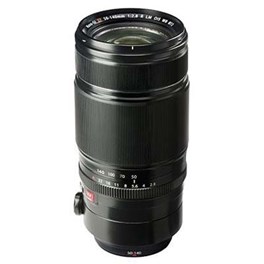
Fujifilm XF 50-140mm f2.8 WR OIS Lens
The Fujifilm 50-140mm f2.8 lens is an incredibly versatile, weather-resistant telephoto zoom designed for use with Fujifilm's X series of compact system cameras. Its focal length and constant f2.8 aperture across the board makes it perfect for sport, travel, wildlife and night time photography. This lens also comes equipped with the world's first Triple Linear Motor! This motor uses an inner focusing system that maximises portability and ensures a fast, smooth and quiet autofocus. This is a beautiful lens to use and you will not be disappointed.
£1,274.00 inc. Cashback View
|
Pros:
Cons:
|
Focal Length: 50–140 mm (≈75–210 mm full‑frame equivalent) Aperture Range: f2.8 (constant) to f22 Stabilisation: Optical image stabilisation up to 5 stops Autofocus: Triple Linear Motor Weight: 995 g |
Running to an equivalent focal length of 75-210mm, the Fujifilm XF 50-140mm f2.8 WR OIS is an effective telephoto zoom for wedding shoots. As is commonly the case with Fujifilm lenses, its optics are absolutely first-rate – delivering dazzling quality throughout the zoom range. We’d go so far as to say that this is an essential lens for any Fujifilm X-using wedding shooter — and it’s reasonably affordable for an f2.8 lens in its class. Everything about the lens feels premium, including its metallic body construction.
It doesn’t focus as closely as some equivalent lenses for other systems, needing a metre of space in order to work, so you may want to make sure you also pack a close-focusing lens to keep all your bases covered. Be aware too that the lens is a little prone to flare when shooting into the light — though sometimes this can look quite aesthetic, giving images a dreamlike quality that is great for weddings. Just be careful not to overuse it!
Best Olympus/OM System lens for wedding photography:
|
Pros:
Cons:
|
Focal Length: 7–14 mm (≈14–28 mm full-frame equivalent) Aperture Range: f2.8 (constant) to f22 Minimum Focus Distance / Magnification: 0.2 m (7.5 cm working distance), max mag ≈ 0.12× (0.24× full‑frame equiv.) Autofocus: High-speed Imager AF (MSC) Weight: 534 g |
A useful wide-angle zoom for MFT, the Olympus M.ZUIKO Digital ED 7-14mm f2.8 PRO is an essential buy for getting those all-important group shots. Its equivalent zoom range of 14-28mm should fit the bill nicely, and its rectilinear design (rather than fisheye) ensures that images won’t come out looking wildly distorted. The maximum aperture of f2.8 gives the lens real flexibility in low light, and the autofocus is whip-fast and accurate – as well as being practically silent. Also, the lens can focus at distances as short as 20cm, which puts into play the potential for interesting detail close-ups.
Be aware that there’s no built-in stabilisation – the lens relies on in-camera systems. Also, its wide-angle optics mean there’s no thread on the front to attach a filter, so you won’t be able to manage reflections with a screw-on polariser, or control light with an ND.
How to choose
What focal length is best for wedding photography?
Here are the key lens types that make for a solid wedding setup, which we’ve focused on in this guide:
24-70mm standard zoom. A highly versatile focal length, a 24-70mm can be a lifesaver if you find yourself operating in a tighter space than anticipated (venues always look bigger in the promo shots). You may well end up keeping this lens on your camera more than any other – it’s a great way to be prepared for anything.
70-200mm telephoto zoom. The standard workhorse lens for news-shooting professionals is also an excellent choice for weddings. The focal range produces flattering portraits without being so tight it’s hard to wield, and if you’ve got a wide maximum aperture (f2.8 is ideal) then you can easily throw out backgrounds to keep the viewer’s attention on your subjects.
50mm wide-aperture prime. A prime lens with a maximum aperture of at least f1.4 is an excellent choice for candid shots, especially once day turns to evening and the light gets low. A 50mm is great for naturalistic portraits, though if you prefer to get more in the frame at a time, you may want to go for a 35mm. Some photographers also swear by having an 85mm in their back pocket.
16-35mm wide zoom. When it’s time for the big group shots, you’re going to need a wide-angle perspective. Having a zoom gives you a little play when it comes to framing while still allowing you to make sure all those ancillary cousins at the edges are definitely in the shot.
100mm macro. This may seem like an unusual choice, but when it comes to weddings, the details really matter. A telephoto macro around the 100mm mark will enable you to get those essential detail shots that add colour, ambience and vibes to a wedding album. The ring on the finger, the close study of the floral arrangement, the place settings on the table.
FAQs
What are the essential lenses for wedding photography?
The essential lenses for wedding photography typically include a prime lens with a wide aperture (e.g. 50mm f1.8 or 85mm f1.4) for portraits, a zoom lens (e.g. 24-70mm f2.8) for versatility, and a wide-angle lens (e.g. 16-35mm f2.8) for capturing group shots and venue details.
Why is a fast prime lens recommended for wedding photography?
A fast prime lens with a wide aperture (e.g., f1.8 or f1.4) is recommended because it allows you to capture stunning portraits with beautiful background blur (bokeh) and perform well in low-light conditions, common at weddings.
Should I use a zoom lens or prime lens for wedding photography?
Both have their merits. A zoom lens like the 24-70mm f2.8 offers versatility, while prime lenses (e.g., 50mm or 85mm) provide excellent portrait quality. Many wedding photographers use a combination of both to cover various situations.
Is image stabilisation important in wedding photography lenses?
Yes, image stabilisation can be beneficial, especially if you plan to shoot in low light or without a tripod. It helps reduce camera shake and allows for sharper images, particularly with telephoto lenses.
What is the ideal focal length for wedding photography?
The ideal focal length can vary depending on your style and preferences. However, many photographers find that lenses in the range of 35mm to 85mm work well for capturing wedding moments, with 50mm and 85mm being popular choices for portraits.
Are prime lenses better than zoom lenses for wedding portraits?
Prime lenses are often preferred for wedding portraits due to their wide apertures and ability to create stunning background blur. However, zoom lenses offer flexibility for capturing candid moments and group shots.
Do I need a macro lens for wedding detail shots?
While a macro lens is not essential, it can be useful for capturing intricate details like wedding rings, flowers, and other small items. A lens with a close-focusing capability can also work well for this purpose.
Should I invest in expensive lenses for wedding photography?
Investing in high-quality lenses is recommended for wedding photography, as they can significantly impact the overall image quality. However, you can find excellent lenses at various price points, so choose based on your budget and needs.
Can I use my kit lens for wedding photography?
While kit lenses can produce decent results, they may not perform as well in low light or provide the same level of image quality and control as dedicated wedding photography lenses. Upgrading your lenses is often a good investment.
What factors should I consider when choosing wedding photography lenses?
When choosing wedding photography lenses, consider factors such as focal length, aperture, image stabilisation, lens quality, and your shooting style. It's essential to have a well-rounded lens kit to cover various wedding scenarios.
How do we decide?
Our in-house photography specialists, store staff, and industry partners work together to review our buying guides and advice articles. We also monitor emerging trends and listen closely to customer feedback, ensuring our recommendations stay current and relevant to what photographers and filmmakers are actually looking for.
By carefully curating the products we recommend, our guides are designed to offer clear, trustworthy advice that helps customers choose the right kit with confidence.
If you would like further advice, our contact centre team are here to help. You can also reach us via email or social media. And remember, if you purchase based on our recommendations, your order is covered by our full returns policy.
The Wex Blog

Sign up for our newsletter today!
- Subscribe for exclusive discounts and special offers
- Receive our monthly content roundups
- Get the latest news and know-how from our experts