
Welcome to our up-to-date guide to the best Panasonic lenses! Here, we’ve picked out a few favourites from Panasonic’s two lens ranges: its Lumix G lenses for the Micro Four Thirds mount, and its Lumix S lenses for the full-frame L-mount. Whichever of these two fantastic camera systems you use, and whatever you like to shoot, this guide should provide you with a few new lenses for your wishlist.
Remember that Micro Four Thirds and L-mount are entirely different systems — there’s no adapting one to the other, so you can use the jump links to navigate straight to the section that’s relevant to you. If you use MFT, remember that you can also make use of the best OM System lenses, as the mount is shared between the two manufacturers.
We’ve made specific lens recommendations for different use cases, from portrait and wildlife photography to landscape and video, so whatever you like to shoot, there will be a great lens here for you.
Best Panasonic Micro Four Thirds lenses
In this section, we’re dealing with the best Panasonic-made lenses for Micro Four Thirds. The MFT system was designed as a collaboration with Olympus (now OM System), meaning cameras and lenses are interchangeable between the two brands. However, using a Panasonic-made lens with a Panasonic camera can confer certain advantages, such as improved stabilisation and autofocus. Here are our picks of the Panasonic Micro Four Thirds lenses for different genres.
Best all-purpose MFT lens:

|
Pros:
Cons:
|
Focal Range: 35–100mm (70–200mm equivalent on Micro Four Thirds) Maximum Aperture: f2.8 (constant throughout zoom range) Minimum Focus Distance: 0.85m Optical Stabilisation: POWER O.I.S. with Dual I.S. compatibility Weather Sealing: Dust-, splash-, and freeze-resistant to -10°C |
A 70-200mm lens is many a photographer’s best friend, with this versatile focal range being well suited to different types of shooting. Events, weddings, wildlife, sports — a 70-200mm will do it all, and as such, a 70-200mm lens with an F2.8 constant aperture is the trusty workhorse of many a professional shooter. This lens is the Micro Four Thirds equivalent, its 35-100mm focal length doubling to an equivalent of 70-200mm on MFT bodies.
The natural advantage of the MFT system is that this lens is much smaller than its full-frame equivalent would be, making it arguably even better for events photography as you’ll be able to keep a lower profile. Image quality is outstanding, with brilliant crisp sharpness thanks to an optical assembly made to Leica’s exacting standards. A powerful optical image stabilisation system also helps to make the telephoto focal length easier to use. The small body of the lens does mean that some of the physical control features common to 70-200mm lenses are missing, most notable a customisable control ring, but this is an acceptable trade-off for such portability.
Best MFT portrait lens:
|
Pros:
Cons:
|
|
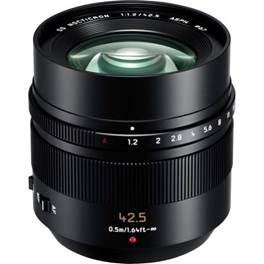
You can’t go wrong with 85mm when it comes to portraiture, and Panasonic’s 42.5mm f1.2 Asph. Leica DG Nocticron OIS lens delivers just that once the crop factor is taken into account. A premium lens, as you could probably guess from the f1.2 aperture, it’s perfect for crisply separating your subject and background to create images with a beautifully shallow depth of field. The nine-bladed diaphragm ensures great-looking bokeh, and the Nano Surface Coating helps protect the front element from water and dust.
This is also just a lovely lens to use, with a sleek metal finish and an aperture ring, which many photographers feel makes for a much more tactile shooting experience. It won’t be within everyone’s budget — if you need a cheaper option, then the Panasonic 42.5mm f1.7 Lumix G Asph. Power OIS is a brilliant affordable portrait lens for MFT.
Best MFT lens for wildlife:

|
Pros:
Cons:
|
|
Micro Four Thirds is a brilliant system for wildlife. The 2x crop factor of the sensor becomes a crucial asset, doubling your telephoto capability and giving your lenses incredible reach from lightweight bodies. There are also plenty of tough, capable cameras from both Panasonic and OM System, with weatherproof builds and excellent autofocus systems.
For our money, a brilliant Panasonic lens to use for wildlife is the Panasonic 100-400mm f4-6.3 Leica DG Vario-Elmar ASPH Power OIS II. This far-reaching zoom covers an impressive 200-800mm equivalent zoom range, and if that’s not enough, it’s also compatible with Panasonic’s teleconverters. Constructed from 20 elements in 13 groups, it’s a fairly beefy lens — though a lot less than the equivalent would be on full-frame. It produces brilliantly sharp images from edge to edge — you just need to watch for that maximum aperture, which gets quite narrow when you zoom in.
Wildlife photographers with a little more cash to spend may also want to consider the Panasonic 200mm F2.8 Leica DG Elmarit Power OIS, a stunning prime delivering high precision and crisp, punchy imagery.
Best MFT lens for landscapes:

|
Pros:
Cons:
|
|
It can be a challenge to get a lens for Micro Four Thirds that provides the kind of wide, expansive field of view that landscape photographers generally prefer. A good option for Panasonic is the Panasonic 7-14mm f4 Lumix G Vario, which delivers an equivalent zoom range of 14-28mm, with brilliant performance across the frame. Nicely compact, it keeps a constant f4 aperture throughout the zoom range, and comes with a petal-design lens hood that provides protection and shading without encroaching on your images.
Having a bit of zoom at your disposal is a real asset in landscape photography, allowing you to frame up and fine-tune your compositions even when working at distance. The Panasonic 7-14mm f4 Lumix G Vario is a reliable lens for doing just that, and any landscape shooter using Micro Four Thirds should strongly consider adding it to their kit bag.
Best MFT lens for video:

|
Pros:
Cons:
|
|
As many of Panasonic’s Lumix G cameras offer brilliant video capabilities, particularly the Lumix GH series, many of its lenses are also built with the same thing in mind. The Panasonic 12-35mm f2.8 Leica DG Vario-Elmarit Asph. Power OIS, as well as being a highly capable stills lens, also offers a number of features that are optimised for videography. It includes mechanisms to suppress focus breathing for smooth zooming transitions, as well as micro-step aperture control for graduated exposure adjustments.
If you’re running and gunning, you may also make use of the effective optical stabilisation system which makes it easy to capture smooth video on the move. Granted, most serious video shooters will likely use a gimbal, but it’s still a useful thing to have in a pinch. If you want a wider angle, which you may for vlogging, then the Panasonic 7-14mm f4 Lumix G Vario lens discussed in our landscape section could be a good choice, or perhaps the Panasonic 8-18mm f2.8-4 Asph. Vario lens.
Best MFT lens for travel:
|
Pros:
Cons:
|
|
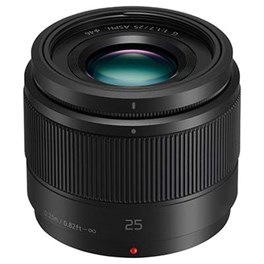
A good old nifty fifty — an inexpensive 50mm prime with a decently wide aperture and a lightweight build — is an excellent choice for travel photography. While some may want the shooting flexibility of a zoom lens, in practice a good 50mm focal length is going to be suitable for a lot of subjects you encounter, especially for urban wandering and sightseeing. Plus, the wide aperture gives you much more scope to keep shooting once the light gets low.
As such, anyone travelling with a Micro Four Thirds camera should definitely consider the Panasonic 25mm f1.7 Lumix G Asph., an outstanding lens that may well become your best friend for holidays and breaks. The aforementioned equivalent focal length of 50mm means you get a very naturalistic field of view — close to that of the human eye. The maximum aperture of f1.7 is actually a little better than most nifty fifties, which normally give you f1.8, which is even better news for low light and shallow depth of field.
Best Panasonic L-Mount Lenses
These are the best Panasonic-made L-mount lenses to fit Lumix S cameras. The L-mount is also a collaboration between different manufacturers — initially, it was Panasonic, Sigma and Leica, though other manufacturers have since joined. As such, these lenses will also work on L-mount Leica and Sigma bodies like the Sigma fp L or the Leica SL3.
Best L-Mount lens for portraits:
|
Pros:
Cons:
|
|
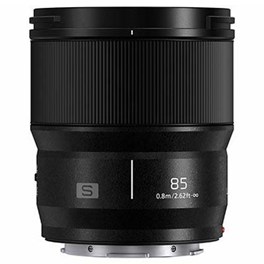
Reasonably affordable for most users, this is a cost-effective choice for portraiture on Panasonic Lumix S cameras. The short telephoto focal length of the Panasonic Lumix S 85mm f1.8 gives you the ideal means of flattering your subject’s features, and the weatherproof construction means it’s suited for on-location work as well as in the studio. The lens makes use of a nine-bladed aperture, and it delivers lovely bokeh quality in the defocused areas of images — perfectly circular, just the way you want it. Top marks.
Some users may yearn for a more premium portrait lens with an f1.4 or f1.2 maximum aperture — it’s worth looking at the Sigma range for L-mount if so. If you prefer to stick with a Panasonic-made lens, then this affordable short lens is your best bet for achieving perfect people pictures.
Best L-Mount lens for wildlife:

|
Pros:
Cons:
|
Focal Range: 100–500mm (full-frame) Maximum Aperture: f5–7.1 Minimum Focus Distance: 0.8m (at 100mm); 1.5m (at 500mm) Maximum Magnification: 0.36x (at 500mm) Optical Stabilisation: Dual I.S. 2 rated to 7 stops |
If you’re a wildlife photographer using Panasonic Lumix S cameras, this new lens should be rocketing to the top of your wishlist. The Panasonic Lumix S 100-500mm f/5-7.1 O.I.S. is a powerful lens covering a super-telephoto focal range without weighing you down too much — with a weight of just over 1.2kg and a length of just under 20cm, it’s impressively compact.
Images delivered by this lens are just utterly sublime. Right the way through the zoom range you get crisp central sharpness, with a clear delineation between subject and background and a pleasing bokeh. Even with the maximum aperture dropping as you zoom in, this lens makes it easy to get a beautifully shallow depth of field and focus all the viewer’s attention on your subject.
Panasonic’s stabilisation is also among the best in the business, and even though for wildlife you’ll likely be using short shutter speeds anyway, the optical unit included in the Lumix S 100-500mm makes accurate framing so much easier, even when you’re working at the outer edge of 500mm.
Best L-Mount lens for landscapes:
|
Pros:
Cons:
|
|
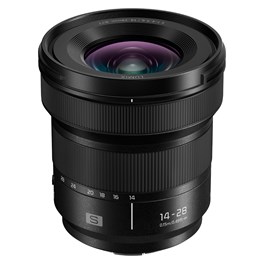
Delivering a nice, wide angle of view, the Panasonic Lumix S 14-28mm f4-5.6 Macro is a winning zoom for landscape photographers. Its imaging clarity is a cut above the rest — with an optical construction of 14 elements in ten groups, including a number of aspherical lenses, it effectively suppresses aberration and distortion to deliver images of sublime detail and clarity, right the way to the corners.
Thanks to the splash-resistant design, this is a safe lens to use for outdoor excursions. What’s more, it also offers impressively capable macro performance for a lens of its type, with a minimum focusing distance of 15cm. This adds another string to your bow as an outdoor shooter, allowing you to get nice and close to small details as well as capturing those sweeping vistas.
Best L-Mount lens for travel:
|
Pros:
Cons:
|
|
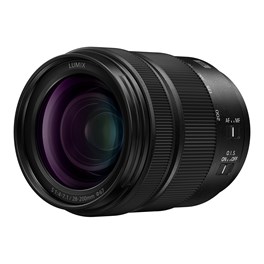
A superzoom lens can be your best friend for travel, allowing you to radically change the composition of your shot with a simple twist of the zoom ring. If you like the idea of taking one lens to cover everything for your travels, you should definitely consider the Panasonic Lumix S 28-200mm f4-7.1 Macro OIS. This is a brilliant lens, somehow packing all that range into a body that weighs just 413g. It can also capture close-up subjects just as ably as it can capture far-off ones, with a close-focusing distance of 0.15m and a magnification factor of 0.5x.
While there are inevitable sharpness compromises with a superzoom, the performance of this lens remains pretty impressive across the board. The main thing you have to be aware of is the narrowing aperture once you zoom in, which goes all the way down to f7.1 when the lens is at its full tele extension.
Best L-Mount lens for video:
|
Pros:
Cons:
|
|
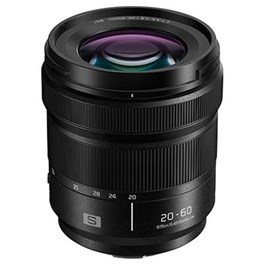
A good wide-to-standard zoom can be your best friend when it comes to videography — and so is the case here. The Panasonic Lumix S 20-60mm f3.5-5.6 gives you a little more play at the wide end than a standard 24-70mm lens, which is immediately useful for video. It’s clearly been designed with video shooters in mind, boasting features like a dedicated mechanism to suppress focus breathing, and its performance throughout the entirety of the zoom range is impressive.
Bear in mind that this lens doesn’t have optical stabilisation. As discussed already, this isn’t really a deal-breaker for many video shooters, as those who really need a run-and-gun setup will almost inevitably end up using a gimbal. However, it is something that’s worth being aware of. The fact that the lens is impressively lightweight, weighing in at just 360g, means it should balance well if you do use it on a gimbal.
FAQs
What’s the difference between Panasonic MFT and L-Mount lenses?
Panasonic MFT lenses are designed for Micro Four Thirds cameras, offering compact, lightweight designs and a 2x crop factor. L-Mount lenses, on the other hand, are built for full-frame and APS-C cameras, providing a wider field of view and more professional-grade options. Your choice depends on your camera system and shooting needs.
Are Panasonic lenses compatible with other brands?
Panasonic MFT lenses are compatible with any Micro Four Thirds camera, including models from Olympus. L-Mount lenses are part of the L-Mount Alliance, so they work with cameras from Panasonic, Leica, and Sigma, offering great flexibility across brands.
Do Panasonic lenses have image stabilisation?
Many Panasonic lenses feature Optical Image Stabilisation (OIS), which works seamlessly with Dual I.S. in compatible Panasonic cameras for smoother handheld shooting. Check individual lenses for specific stabilisation features.
Are Panasonic lenses weather-sealed?
Most Panasonic lenses designed for outdoor and professional use offer weather-sealing to protect against dust and splashes. This is especially common in their L-Mount range and higher-end MFT lenses, ensuring reliability in tough conditions.
Are Panasonic lenses good for video?
Yes, Panasonic lenses are popular for video thanks to smooth focus, quiet motors, and minimal focus breathing. These features make them ideal for vloggers, filmmakers, and hybrid shooters who need reliable performance across both photo and video.
How do we decide?
Our in-house photography specialists, store staff, and industry partners work together to review our buying guides and advice articles. We also monitor emerging trends and listen closely to customer feedback, ensuring our recommendations stay current and relevant to what photographers and filmmakers are actually looking for.
By carefully curating the products we recommend, our guides are designed to offer clear, trustworthy advice that helps customers choose the right kit with confidence.
If you would like further advice, our contact centre team are here to help. You can also reach us via email or social media. And remember, if you purchase based on our recommendations, your order is covered by our full returns policy.
The Wex Blog



Sign up for our newsletter today!
- Subscribe for exclusive discounts and special offers
- Receive our monthly content roundups
- Get the latest news and know-how from our experts