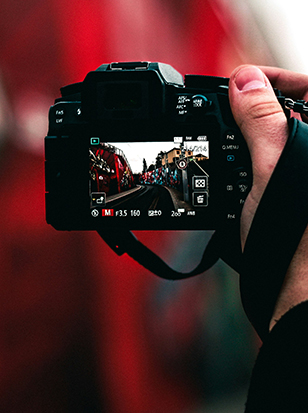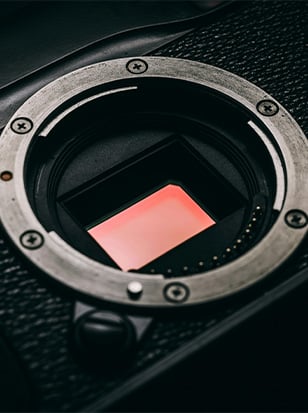

The best Fujifilm cameras represent an intoxicating blend of style and substance. Yes, they look great — they’re some of the best-looking cameras on the market, drenched in retro cool. But they are also some competent imaging machines, able to hold their own for professional and serious enthusiast photographers and videographers.
Fujifilm’s digital offering is split into two lines — the X series of mirrorless cameras and compacts which use APS-C sensors, and the larger GFX medium format cameras. We’ve largely concerned ourselves with the X cameras here as these are going to be more useful for the majority of people, but we have included a medium format option for those who demand the utmost in image quality.
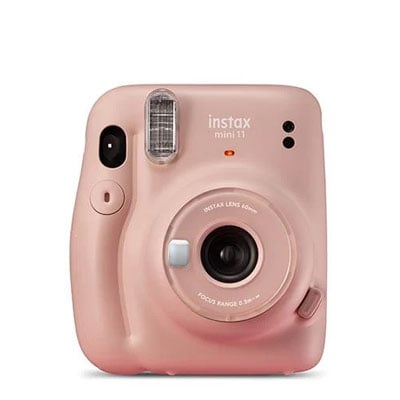
These cameras have been handpicked by our in-house team of photography experts. We’ve included options across Fujifilm’s range, with budget-friendly and beginner-oriented cameras as well as high-end professional models. We’ve kept the focus on digital here — if you’re interested in Fujifilm’s Instax range, check out our rundown of the best instant cameras. And finally, don’t forget to take a look at the best Fujifilm lenses to pair with your camera.
Best Fujifilm camera for photographers

|
Sensor: 40.2MP APS-C X-Trans CMOS 5 HR ISO Range: 125–12,800 (expandable to 64–51,200) Shutter Speed: 1/180,000s (electronic) / 1/8,000s (mechanical) Image Stabilisation: 5-axis IBIS (up to 7 stops) Video Resolution: 6.2K at 30p |
Pros:
Cons:
|
As we’ll see, Fujifilm has considerably expanded its offering for video over the years, producing more and more cameras with great video features. While this is welcome for many content creators, naturally it’s not a priority for everyone, and if you are a photographer first and photographer always, the Fujifilm X-T5 is the camera for you.
While it does shoot video, and does it well, photography is very much the focus here, with the X-T5 retaining the classic, analogue-style dial-based control layout that has made the series so popular. A powerful in-body image-stabilisation system makes the camera more versatile in low light, and the electronic shutter is ridiculously fast, able to achieve exposure times as fast as 180,000/sec.
As the X-T5 is a relative newcomer in the series, you also get to take advantage of all the latest Film Simulation modes — Fujifilm’s clever pre-baked imaging looks that emulate classic film stocks such as Provia, Velvia and Classic Chrome. It makes the X-T5 an ideal camera for those who prefer to shoot in JPEG and do minimal editing rather than spend hours processing RAWs (though of course, if you want to do that, you can).
While it’s still more affordable than full-frame rivals, the X-T5 sits at the upper end of Fujifilm’s range. If you want something similar but a little less expensive, you may want to consider the X-T50, which is a kind of “baby” version of the X-T5, offering the same sensor in a smaller package.
Best Fujifilm compact camera
|
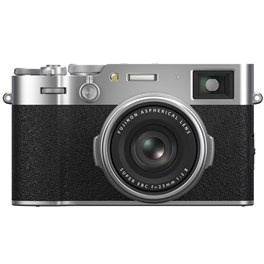
Sensor: 40.2MP APS-C X-Trans CMOS 5 HR ISO Range: 125–12,800 (expandable to 64–51,200) Lens: Fixed 23mm f2 Image Stabilisation: 5-axis IBIS (up to 6 stops) Video Resolution: 6.2K at 30p |
Pros:
Cons:
|
One of the most popular camera releases of recent years, the Fujifilm X100VI caused a frenzy on arrival — and even now, stock can be hard to come by. It’s the sixth iteration of a formula that worked brilliantly well the first time, with Fujifilm pairing its APS-C X-Trans sensor with a deliciously sharp 35mm lens. This makes an X100 a wonderful camera for day-to-day photography, travel and photowalks, producing dynamic images in a fairly naturalistic perspective. This is obviously anecdotal, but something we’ve heard from plenty of photographers is that picking up an X100 camera helped them rediscover the fun in photography, and enjoy shooting again.
This latest edition brings in a number of modern bells and whistles. There’s a sophisticated in-body stabilisation system, allowing you to use longer shutter speeds without the need for a tripod, which is great for low light. It also has the more recent generation of the X-Trans sensor with 40MP of resolution. You probably don’t need 40MP all or even much of the time, but these extra pixels allow you to losslessly crop in, effectively giving you a digital zoom to expand the versatility of the (excellent) fixed lens. All in all, a triumph of a camera that is well worth a little patience to wait for.
Best Fujifilm camera for vlogging

|
Sensor: 26.1MP X-Trans BSI CMOS 4 ISO Range: 125–12,800 Image Stabilisation: 5-axis IBIS (up to 7 stops) Autofocus: Intelligent subject detection AF Video Resolution: 6.2K/30P, 4K/60P |
Pros:
Cons:
|
It seems incredible just how much functionality Fujifilm managed to pack into its X-M5, a fairly recent mirrorless offering that also happens to be one of the best vlogging cameras on the market. Despite its slim size, it’s capable of shooting 6.2K video open-gate, meaning it uses the entire width of its sensor, rather than cropping in. This gives you much more latitude in post-processing to crop into the footage yourself, and is a brilliant thing to have on a vlogging camera at this price.
Fujifilm is overtly gunning for the vlogging market here, with a dedicated Vlog mode that makes it easy to shoot content for different purposes (e.g. in a 9:16 aspect ratio for TikTok and Reels). The X-M5 has also inherited another popular feature — a dedicated dial for the Film Simulation modes, which first appeared on the X-T50. This makes flicking between them very intuitive and natural-feeling, and they’re also all useable on video as well as stills. They’re not quite full-on LUTs, but they’re great for giving your footage a distinctive look.
The only potential strike against the X-M5 as far as our team is concerned is that it might be too small for some users, especially anyone with larger hands. An alternative is the larger X-S20, which has a similar video offering, but with better battery life and higher bit-rate options.
Best Fujifilm camera for beginners

|
Sensor: 26.1MP APS-C X-Trans CMOS 4 Processor: X-Processor 5 ISO Range: 160-12,800 (expandable to 80-51,200) Burst Shooting: Up to 20fps (electronic shutter) Video Resolution: 6.2K at 30p / 4K at 60p |
Pros:
Cons:
|
If you’re new to photography and you’re looking for a great place to start, the Fujifilm X-T30 III would be an excellent choice. This is a camera that builds on the much-loved predecessor, the X-T30 II, bringing it more in line with the current flagship Fujifilm models; most notably, the X-Processor 5, which improves speed and power. It also features a new dedicated Film Simulation dial that lets you instantly switch between 20 of Fujifilm’s iconic colour profiles, and once you’re a bit more confident, you have three custom recipe slots as well, meaning you don’t have to dive through menus.
While this model doesn’t include in-body stabilisation or the advanced subject-recognition AF found in those higher-end models, the X-T30 III remains an excellent all-rounder that is perfect for beginners. It’s compact, capable, easy to use, and incredibly good value for money
Best medium format Fujifilm camera

|
Sensor: 102MP medium format CMOS II HS ISO Range: 80–12,800 (expandable to 40–102,400) Image Stabilisation: 5-axis IBIS (up to 8 stops) Burst Shooting: 8fps (mechanical shutter) Video Resolution: 8K at 30p / 4K at 60p |
Pros:
Cons:
|
The Fujifilm GFX series redefined what was thought possible with medium format. These large-sensor cameras used to offer greater image quality than full-frame, but at the cost of being extremely unwieldy, ponderous and expensive. The GFX cameras upended this, offering the same level of large-sensor quality, but housing it in a mirrorless body that was relatively lightweight, fast-shooting and much more affordable than its rivals.
The GFX100 II is one of the most recent in the series, and it’s arguably the best yet. Once again you get that outstanding 102MP resolution with all that large-sensor quality, however this is housed in a camera that can shoot at 8fps and boasts a fast autofocus system with AI-powered subject detection. It’s also a brilliant camera for handling, with a ridiculously lovely electronic viewfinder boasting 9.44 million dots of resolution, as well as a tilting three-way LCD. Video-wise, you get gorgeous 8K, and of course, there are still all those wonderful Film Simulation modes.
FAQs
Are Fujifilm cameras good for beginners?
Yes, Fujifilm cameras are excellent for beginners. They offer simple controls, automatic shooting modes, and tactile dials that make learning photography straightforward. The built-in film simulations let you create stunning, vintage-style photos without editing, making Fujifilm mirrorless cameras perfect for beginners who want beautiful results straight out of the camera.
Why do photographers love Fujifilm cameras?
Photographers love Fujifilm cameras for their exceptional image quality, unique colour science, and classic film-inspired aesthetics. Fujifilm’s APS-C sensors produce sharp, detailed images, while the iconic film simulation modes emulate classic films like Velvia and Acros. The compact, lightweight camera bodies, combined with a range of high-quality Fujinon lenses, make them ideal for travel, street, and portrait photography.
Are Fujifilm cameras good for video?
Yes, Fujifilm cameras are highly capable for video recording. Many models offer 4K video, high frame rates, and advanced colour profiles, making them popular for vlogging, filmmaking, and content creation. Features like in-body image stabilisation (IBIS) and face/eye detection autofocus help capture smooth, sharp footage, even when shooting handheld or on the go.
What lenses are compatible with Fujifilm cameras?
Fujifilm uses the X-mount system for its APS-C cameras and the G-mount for its medium-format cameras. There are many Fuji lenses are available, including versatile zooms, fast prime lenses, and specialised macro and telephoto options. Third-party lens brands also offer X-mount lenses, giving photographers even more choice for landscape, wildlife, and portrait photography.
Are Fujifilm cameras durable and weather-sealed?
Yes, many Fujifilm cameras are built with durable, weather-sealed bodies, making them perfect for outdoor and travel photography. Weather resistance protects against dust, moisture, and cold temperatures, so you can shoot confidently in challenging conditions. Combined with rugged, weather-sealed Fujinon lenses, Fujifilm cameras are a reliable choice for adventurous photographers.
How do we decide?
Our in-house photography specialists, store staff, and industry partners work together to review our buying guides and advice articles. We also monitor emerging trends and listen closely to customer feedback, ensuring our recommendations stay current and relevant to what photographers and filmmakers are actually looking for.
By carefully curating the products we recommend, our guides are designed to offer clear, trustworthy advice that helps customers choose the right kit with confidence.
If you would like further advice, our contact centre team are here to help. You can also reach us via email or social media. And remember, if you purchase based on our recommendations, your order is covered by our full returns policy.



Sign up for our newsletter today!
- Subscribe for exclusive discounts and special offers
- Receive our monthly content roundups
- Get the latest news and know-how from our experts