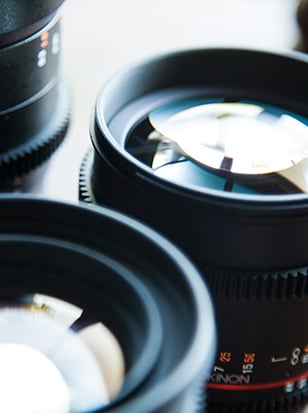
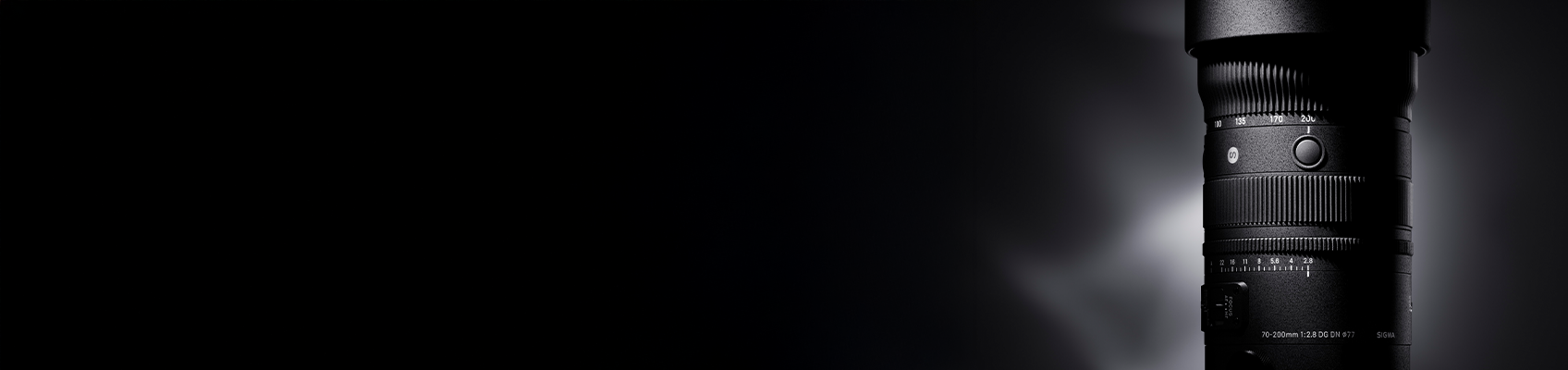
Whichever camera system you use, chances are good that you can make use of some of the best Sigma lenses. One of the most well-known third-party lens manufacturers in the business, Sigma has established a well-earned reputation for offering affordable and high-quality alternatives to native lenses, often in unique and interesting focal lengths. Here, we’ve gathered just a selection of our favourites.
Sigma offers a broad range of lenses covering multiple different mounts. While there are the most options for Sony E-mount and L-mount, Sigma also offers plenty of lenses for Fujifilm X-mount, Nikon Z-mount, Micro Four Thirds and — most recently — Canon RF-mount.
We’ve chosen to focus on mirrorless lenses, as this is where Sigma is currently putting the majority of its resources, and is where all the exciting new lenses are coming out. Of course, if you are a DSLR user, there are still many exciting Sigma-made lens options for you, and you can check out the full range of Sigma DSLR lenses here.

|
Pros:
Cons:
|
Aperture: f2.8 maximum Focal Length: 10-18mm (equivalent to 15-27mm on APS-C sensors) Features: Ultra-wide zoom range with excellent optical performance for landscapes and architecture Autofocus: Stepping motor for fast, smooth, and silent focusing, ideal for stills and video Build Quality: Lightweight yet durable design with dust- and splash-resistant sealing |
Available mounts: Canon RF-S, Fujifilm X, L-mount (APS-C), Sony E
Small and light, this is a lens designed specifically for APS-C systems. This means that while it’s available for RF and E mounts, it’s specifically made to fit the smaller-sensor cameras like the Canon EOS R50 or the Sony A6700. It’s also available for Fujifilm X — an entirely APS-C system — and L-mount, which doesn’t really have APS-C cameras other than the Leica CL.
This wide zoom is very lightweight, and offers plenty of functionality for both photographers and videographers. Its constant aperture of F2.8 significantly expands your versatility in different lighting conditions, and the large 109.7°angle of view means you can really fit a lot in the frame. The focus system is entirely internal, meaning the lens doesn't change physical size when focusing, which is useful if you’re balancing it on a gimbal — and video shooters will almost certainly want a gimbal, as the lens doesn't have any of its own stabilisation.

|
Pros:
Cons:
|
Aperture: f1.4 maximum Focal Length: Ultra-wide-angle diagonal fisheye for unique and creative perspectives Features: Exceptional optical design with advanced coatings to minimise flare and ghosting Autofocus: High-speed stepping motor for precise and quiet focusing, optimised for stills and video Build Quality: Premium Art-series construction with weather-sealing for reliable performance in challenging conditions |
Sigma has long been known for innovation, and the Sigma 15mm f1.4 AF DG DN Diagonal Fisheye I Art lens turned heads when it was announced. It’s the first full-frame F1.4 diagonal fisheye lens, delivering an incredibly expansive 180° field of view with an F1.4 maximum aperture that opens up possibilities for low-light shooting. This makes it a brilliant choice for astrophotography and nightscapes, allowing you to really open up and capture a wide vista. Barrel distortion is, of course, highly visible and pronounced — just what you want from a fisheye lens. Images look distinctive and brilliant.
Naturally, you’re not going to get a front-mounted filter on this thing, as it has a bulbous front element, but there is an option to slot in rear-mounted filters if you want to control light levels or quality. The build is also weather-resistant, with a lens heater retainer to ward off condensation when using the lens in cold conditions. The lens features a clickless aperture ring, which is useful for video.

|
Pros:
Cons:
|
Aperture: f3.5-6.7 variable maximum Focal Length: 16-300mm (equivalent to 24-450mm on APS-C sensors) Features: Superzoom range spanning from wide-angle to telephoto Autofocus: HLA (High-response Linear Actuator) motor for fast and accurate autofocus Build Quality: Dust- and splash-resistant construction for outdoor shooting |
Available mounts: Sony E (APS-C), Fujifilm X, L-mount (APS-C), Canon RF-S
Sigma likes to try new things and come up with unique propositions in its lenses, and the 24-450mm equivalent zoom range of this APS-C superzoom lens is among the broadest available on any lens (an 18.75x zoom). To get a wider zoom range than that, you have to start looking at bridge cameras, and this makes the Sigma 16-300mm f3.5-6.7 DC OS Contemporary a fantastic choice for anyone who prizes shooting versatility.
Weighing in at 615g, the lens is on the heavy side for an APS-C optic, but that was always going to happen. It benefits from Sigma’s HLA (High-response Linear Actuator) motor, delivering fast and silent autofocus with impressive accuracy. Sure, it’s not at the level of top-end sports lenses in terms of moving-subject tracking, but again, that’s an acceptable compromise for a lens with this level of versatility.
Image quality is excellent, particularly in the centre. Shots don’t hold up to pixel-peeping quite as well as images from shorter zooms, but this isn’t a lens for pixel-peepers. It’s for people who want a capable lens to cover all eventualities, to fix onto their camera at the start of the day and be secure in the knowledge that they’ll be able to bag any kind of shot they want to.

|
Pros:
Cons:
|
Aperture: f1.8 maximum Focal Length: Versatile standard zoom range for general-purpose and creative shooting Features: Advanced optics with superior sharpness and minimal aberration, ideal for low-light and portrait work Autofocus: High-speed stepping motor for smooth and accurate focusing, suitable for both stills and video Build Quality: Premium Art-series construction with robust design and weather-sealing for durability |
Available mounts: Sony E, L-mount
Another world’s first from Sigma, this zoom lens maintains a constant aperture of F1.8 from 28mm to 45mm, giving you plenty of shooting latitude in low light. Combine this with the 11-blade aperture and you’ve got a potent lens for producing a shallow depth of field, in ways that are useful for both stills and video. This lens is pretty well optimised for video all-around, with an internal zooming design that means the length doesn’t change when you zoom in, and a click switch for the aperture ring.
The lens weighs 960g, which is on the heavy side, but for an F1.8 zoom lens is certainly not bad. Some users may find the zoom range quite restricting — if you think you might want to regularly go wider than 28mm or longer than 45mm, this might not be the lens for you. For many users however, particularly in video, that range is a pretty good sweet spot for day-to-day shooting.

|
Pros:
Cons:
|
Aperture: f1.2 Focal Length: 35mm Features: Exceptional resolution and clarity, even when used wide open at f1.2, and reduced weight from previous version Autofocus: Dual HLA (High-response Linear Actuator) motors for fast, quiet autofocus Build Quality: Dust- and splash-resistant design with water- and oil-repellent coating |
Available mounts: Sony FE, L-mount
A gorgeous, lightweight lens with an ultra-fast aperture and an affordable price tag. This kind of balancing act is what Sigma does best, and if you’re a Sony or an L-mount shooter, the sublime Sigma 35mm f1.2 DG II Art deserves serious consideration for a spot in your kit bag.
Delivering exceptional resolution and clarity in the popular 35mm focal length, this is an ideal lens for day-to-day shooting in high quality. Its dual HLA (High-response Linear Actuator) system drives two focus groups with impressive speed and accuracy, meaning you’ve got a capable shooting setup for moving subjects as well as more static ones. We also truly adore the build and handling of this lens; its customisable AFL button can be assigned your preferred function, and there’s an aperture ring with click and lock switches.
As the “II” in the name implies, this is an updated version of an existing lens, and the main change is that Sigma has managed to make this version significantly smaller and lighter than the previous. It’s now just 755g, which is frankly amazing for a full-frame F1.2 lens, and Sigma has also kept the price consistent.

|
Pros:
Cons:
|
Aperture: f1.4 maximum Focal Length: 56mm (equivalent to 84mm on APS-C sensors) Features: Compact design with excellent sharpness and smooth bokeh for portraits and low-light shooting Autofocus: High-speed stepping motor for fast, silent, and accurate focusing Build Quality: Sturdy construction with a protective gasket at the mount; lacks full weather sealing |
Available mounts: Canon RF, Sony E, Nikon Z (DX), Canon EF-M, Fujifilm X, L-mount (APS-C), Micro Four Thirds
One of Sigma’s most widely available lenses, this lightweight option for crop-sensor cameras comes in many different mount flavours, as you can see. It produces an equivalent focal length of around 84mm on APS-C bodies, and 112mm on Micro Four Thirds, meaning it falls firmly in the portrait-friendly short telephoto category. It’s aided in this by its lovely F1.4 maximum aperture, which allows for the creation of images with a beautifully shallow depth of field.
Image quality is crisp and punchy across the board, and the build of the lens is very lightweight indeed, which makes it a nicely portable addition to the kit bag. The lens construction itself incorporates ten premium elements in six groups, including a special low dispersion (SLD) element to reduce aberrations and two aspherical elements to limit distortion. Autofocus performance is consistently good across the board, and in many individual cases it has been tweaked and optimised to play well with the specific camera system the lens is designed for.

|
Pros:
Cons:
|
Aperture: f5.6 maximum Optics: Advanced multi-coating technology to reduce flare and ghosting, ensuring high image clarity Features: Exceptional telephoto reach with advanced optical design for wildlife and sports photography Autofocus: High-speed and precise AF system, optimised for tracking fast-moving subjects Build Quality: Rugged Sports-series construction with comprehensive weather sealing for durability in challenging environments |
Available mounts: L-mount, Sony FE
One of Sigma’s fast and agile “Sports” lenses, the Sigma 500mm f5.6 AF DG DN OS I Sports is an impressive prime for photographers looking to capture challenging, fast-moving subjects. It’s a surprisingly compact lens for its type too, weighing in at 1,370g, and this combined with its effective optical stabilisation system makes for a lens that can easily be used for handheld shooting, even with its long focal length. The autofocus is blazingly fast thanks to the high-speed HLA motor, and you can use the focus limiter switch to narrow the focal distance for greater accuracy.
With an 11-bladed diaphragm, the lens produces great-looking bokeh in the defocused areas of images, and while the F5.6 aperture might sound restrictive in this regard, the long focal length means it’s still relatively straightforward to get a good separation of subject and background. The lens is also built for outdoor use, with dust- and splash-protection.
FAQs
Are Sigma lenses compatible with my camera?
Sigma lenses are designed for a variety of mounts, including Sony E, Canon RF, Nikon Z, and more. Always check the mount type and compatibility details to ensure it works with your camera system.
Are Sigma lenses good for professional photography?
Sigma lenses are renowned for their exceptional optical performance, robust build quality, and advanced features, making them a great choice for both professionals and enthusiasts.
Do Sigma lenses have weather sealing?
Many Sigma lenses, particularly from their Art, Sports, and Contemporary lines, feature weather sealing to protect against dust and moisture, making them suitable for outdoor and challenging conditions.
How do Sigma lenses compare to first-party lenses?
Sigma lenses often match or exceed the optical performance of first-party lenses, offering innovative designs and competitive pricing, making them an excellent alternative.
Are Sigma lenses good for video?
Sigma lenses are equipped with features like smooth focus rings, quiet autofocus motors, and high optical quality, making them a popular choice for videographers.
How do we decide?
Our in-house photography specialists, store staff, and industry partners work together to review our buying guides and advice articles. We also monitor emerging trends and listen closely to customer feedback, ensuring our recommendations stay current and relevant to what photographers and filmmakers are actually looking for.
By carefully curating the products we recommend, our guides are designed to offer clear, trustworthy advice that helps customers choose the right kit with confidence.
If you would like further advice, our contact centre team are here to help. You can also reach us via email or social media. And remember, if you purchase based on our recommendations, your order is covered by our full returns policy.
The Wex Blog



Sign up for our newsletter today!
- Subscribe for exclusive discounts and special offers
- Receive our monthly content roundups
- Get the latest news and know-how from our experts