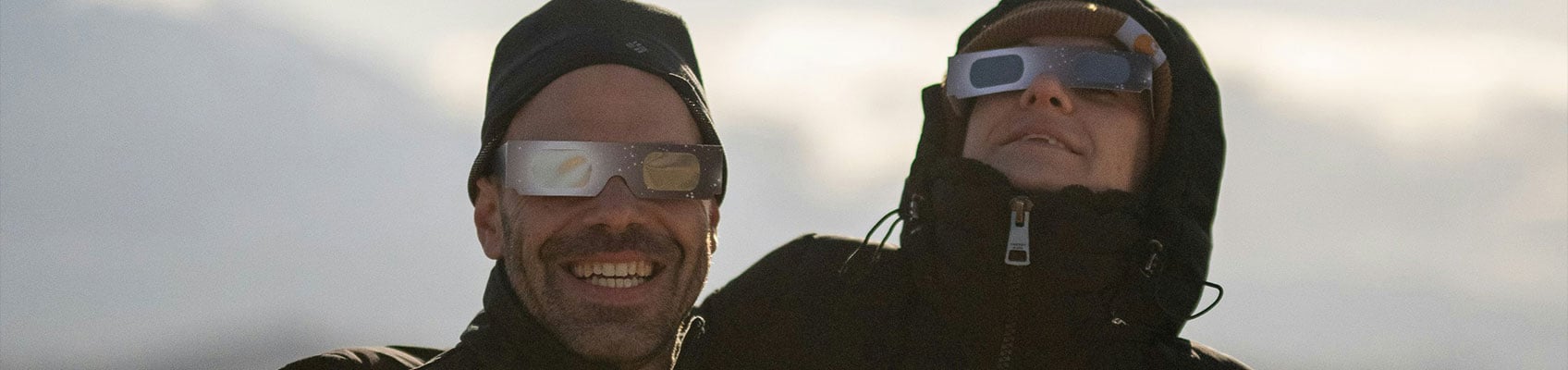
For many of us, what’s happening on August 12th could well be a once-in-a-lifetime event. In the UK, we’re set to see a near-total solar eclipse, with the moon covering between 80% and 90% of the surface of the sun, depending on where in the country you’re located.
It’s going to be spectacular, and wherever you are in the country, chances are good that you’re going to want to see it – but it’s important to make sure that you do so safely. Looking directly at the sun, even at the peak of the eclipse, is extremely dangerous and can cause permanent retinal damage.
So, be smart, be safe. Here are our top suggestions for safe, easy viewing of a total solar eclipse.
Solar eclipse glasses
The Celestron EclipSmart Solar Eclipse Glasses are the easiest and most affordable way to safely view the eclipse. Celestron, a manufacturer best known for its excellent telescopes, produces these simple glasses that allow safe direct solar viewing. They use an ISO 12312-2:2015(E) certified filter, meaning they are legally considered safe for looking directly at the sun, their Solar Safe film blocking harmful IR, UV and 99.999% visible light.
All this means, you’ll be able to directly watch the eclipse as it happens, without damaging your eyes! The glasses also have an orange tint to make the view of the sun feel more natural and easier to enjoy for long periods (it would naturally be white). They have a cardboard frame, fold down for transportation, and weigh just 4g.
They’re only designed for unaided viewing – so don’t combine them with binoculars or a telescope. Always double-check the film is intact before viewing – particularly if you are giving the glasses to children – and avoid bending the film. Do all this and you’ll have everything you need to safely view this spectacular, once-in-a-lifetime solar event, for just £2.99!
Solar telescopes


Want to get a bit closer to the action? Viewing an eclipse with a standard telescope is very dangerous and should not be attempted – however, using a telescope with a solar filter can allow you to get an incredible close-up view of the phenomenon, completely safely!
Some telescopes have a permanently mounted solar filter, while others come with an attachable solar filter that can be used at will. The latter tends to be more affordable – but naturally, you need to always triple-check that the solar filter is securely attached before engaging in any viewing. You do not want it falling off halfway through!
If you plan to view the eclipse with a solar telescope, it's a good idea to practice a couple of days beforehand. The eclipse is due to take place at 7:05pm and 7:13pm BST, so go out in the days beforehand and get a feel for where the sun is going to be. Practice setting up and focusing your telescope, in order to ensure that you have the perfect viewing experience on the big day.
For more, see our full guide to the best telescopes, which includes solar options.
Your camera with a solar filter

Also available in 72 mm, 77 mm, 82 mm, and 67 mm.
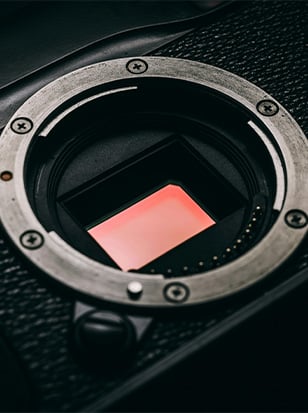
Finally, since you’re here on Wex Photo Video, it’s quite possible that you already have a great means of viewing the eclipse – your camera! Once again, it’s important to take precautions; pointing a camera with a telephoto lens attached directly at the sun can damage the sensor. However, attaching a solar filter – an ultra-strong ND – allows you to do so safely. Urth makes a number of dedicated solar filters which screw onto the front of lenses via the filter thread. And if your lens size isn’t included, you can always use step-up filters to bridge the gap.
Of course, once you’ve gone to the trouble of pointing your camera at the eclipse… you might as well photograph it! Lucky for you, we have assembled a few tips for eclipse photography to help you make the most of these few precious minutes.
As long as you remember to be safe, you can enjoy this spectacular celestial event in style!
About the Author
Jon Stapley is a London-based freelance writer and journalist who covers photography, art and technology. When not writing about cameras, Jon is a keen photographer who captures the world using his Olympus XA2. His creativity extends to works of fiction and other creative writing, all of which can be found on his website www.jonstapley.com
Trending Articles


Sign up for our newsletter today!
- Subscribe for exclusive discounts and special offers
- Receive our monthly content roundups
- Get the latest news and know-how from our experts