Finding the best camera for wildlife photography is going to depend a little on you – your needs, and your budget. There are absolutely loads of brilliant cameras for capturing fabulous images of wildlife at a distance, all across the price range, from beginner-friendly models to the high-end cameras used by pros. This guide is designed to help you find the right one for you.
For this guide, we’ve focused on precision autofocus, fast burst rates, and rugged build quality. Many of the options we’ve selected are the top-tier options on the market: flagship mirrorless models with high-speed performance and AI-powered subject tracking. We’ve also thrown in a solid beginner option, and an all-in-one bridge camera that delivers the goods.
Scroll to the bottom of this page for more on our selection criteria, and if you're looking for a broader range of recommendations, check out our full guide to the best mirrorless cameras. And if you’ve already chosen and put your camera in the basket, you’ll need a lens. Check out our guide to the best lenses for wildlife photography.

|
Sensor: 24.2MP APS-C CMOS Autofocus: Dual Pixel CMOS AF II Speed: 15fps Video: 4K 30p Build: Lightweight APS-C |
Pros:
Cons:
|
For an affordable, beginner-friendly route into wildlife photography, you can’t go wrong with the Canon EOS R50. This lightweight mirrorless model uses a 24.2MP APS-C sensor, providing a significant image-quality upgrade compared to a smartphone, and it also benefits from Canon’s exceptional Dual Pixel CMOS II autofocus. This system is able to lock onto and track moving subjects with superb accuracy, and even has some of the automated subject recognition technology seen on professional cameras.
The APS-C sensor of the EOS R50 is smaller than the full-frame sensors used in professional cameras. While this does have an impact on image quality and dynamic range, it also provides certain benefits for wildlife photography – the crop factor of the smaller extends the effective telephoto reach of lenses, meaning you can effectively get closer to your subjects without having to drop mega-bucks on expensive telephoto lenses. And since the EOS R50 is also able to use older EF-mount DSLR lenses via the EF-EOS R adapter, it’s an ideal choice for anyone looking to build a wildlife setup on a budget.

|
Sensor: 20.1MP 1.0-type stacked Exmor RS Autofocus: 575-point phase-detection AF Speed: 30fps burst shooting Video: 4K 120p Lens: ZEISS Vario-Sonnar T* 24-600mm f2.4-4 |
Pros:
Cons:
|
A welcome return for arguably the greatest bridge cameras ever made, the Sony RX10 V – released in 2026 – is a powerful all-in-one camera for those who don’t want the fuss of interchangeable lenses. Instead of a lens mount, it simply has a sharp ZEISS Vario-Sonnar T* 24-600mm f2.4-4 lens welded to its front, pairing it with a high-quality 20.1MP 1.0-type stacked Exmor RS sensor to deliver superb image quality.
Now with a dedicated AI processing unit, the Sony RX10 V is faster than ever – it’s able to take advantage of the latest advancements in autofocus to deliver ultra-fast and accurate focus tracking performance, with intelligent subject recognition that’s able to lock onto your animal subjects.
It doesn’t offer the greatest zoom range among bridge cameras – the Nikon Coolpix P1100 has it beat there, with a 24-3000mm equivalent focal range. However, the Sony RX10 V remains our pick thanks to its superb image quality and operability improvements, making it an excellent all-in-one choice for those who are looking for a straightforward wildlife photography solution.
|
Sensor: 25.2MP Micro Four Thirds Live MOS Stabilisation: 8-stop Dual I.S. 2 Autofocus: Phase-detect hybrid AF Video: 5.7K 60p and 4:2:2 10-bit Speed: 60 fps electronic burst |
Pros:
Cons:
|
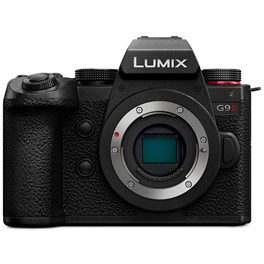
The Lumix G9 II is the first of two Micro Four Thirds cameras for wildlife photography. It’s an excellent choice for its speed, portability, and arsenal of compatible lenses. Its 2x crop factor means a 300mm lens gives you the equivalent of 600mm reach, making it easier to fill the frame with distant subjects.
Speed-wise, it can fire off bursts at 60 fps with its electronic shutter, making it one of the fastest cameras in this lineup. Combined with Panasonic’s improved phase-detection autofocus, the G9 II easily locks onto birds and animals, though it’s not quite as advanced as Sony or Canon’s AF tracking systems. One of the biggest pros of this camera is its image stabilisation, offering up to 8 stops of compensation, which is a huge plus when it comes to shooting handheld.
Where it differs from other options on this list is its smaller sensor with just 25 megapixels. This results in a less effective low-light performance, and its AF isn’t quite as impressive. That said, this camera is far more budget-friendly. While some features aren’t on the same level, it remains highly effective and highly recommended.

|
Sensor: 26.1MP APS-C stacked X-Trans CMOS 5 HS Autofocus: AI-assisted subject detection Speed: 40fps blackout-free burst Video: 6.2K 30p and 4K 120p Stabilisation: 7-stop in-body IS |
Pros:
Cons:
|
The X-H2S is Fujifilm’s answer to the need for speed. Its 40MP stacked APS-C sensor offers a fast 40 fps with its electronic shutter. This is admittedly slower than other options in this guide, however, its full-res RAW burst rate beats the likes of the Z9, so it’s a balancing act of what you need in a camera. That stacked sensor design also enables an exceptional 14 stops of dynamic range, fast readout speeds and blackout-free continuous shooting, so your viewfinder experience isn't dulled.
Its subject-detection autofocus has been significantly upgraded, offering reliable tracking for a variety of subjects, especially animals. The X-H2S also features up to 7-stops of image stabilisation and is one of the best out there, making it great for handheld shots.
If you’re a Fujifilm fan, you may miss all the manual controls we’ve come to expect from the X-T series, as this one has a more modern control layout. And while autofocus is good, other options on this list have a slight edge. But for anyone who loves Fujifilm’s colour science and wants a super-fast APS-C camera and a range of stunning Fuji lenses, this is a great choice.

|
Sensor: 20.4MP stacked Micro Four Thirds Live MOS Autofocus: AI-driven 1053-point phase-detect AF Speed: 120fps electronic burst Video: C4K at 60p, Full HD at 240p Stabilisation: 8.5-stop IBIS |
Pros:
Cons:
|
The OM System OM-1 Mark II is a very capable option for wildlife photography. It’s built for speed, portability, and durability - it’s supposed to be out in the wild. It’s compact, lightweight and features some of the best weather sealing in any camera (rated to IP53); it can handle heavy rain, dust, and freezing temperatures. It also offers up to 8.5 stops of compensation, which is a huge advantage when shooting with long lenses. And, with its 2x crop factor - turning a 200mm into a 400mm equivalent - you’ll need that stabilisation if you’re shooting handheld.
When it comes to performance, the OM-1 Mark II doesn’t stop there. It features a stacked 20MP Micro Four Thirds sensor that delivers excellent readout speeds, allowing for blackout-free 120 fps burst shooting. Combine this with a precision AI-powered autofocus, you can track birds, mammals with ease.
|
Sensor: 45.7MP full-frame stacked CMOS Autofocus: 493-point phase-detection AF with deep learning Speed: 120fps burst with 11MP images Video: 8K 60p and 4K 120p internal recording Build: Pro-level weather sealing |
Pros:
Cons:
|
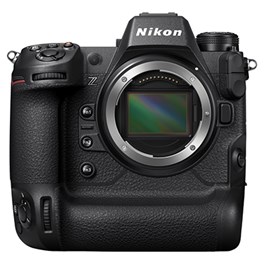
The Nikon Z9 is an excellent choice of camera for wildlife photography. It’s that stacked 45.7MP sensor that offers incredible speed and detail - it can shoot up to 120fps - impressive. It’s reliable, with autofocus that just locks onto subjects and doesn’t let go. The lack of a mechanical shutter is actually a plus – it eliminates blackout and makes tracking moving subjects seamless.
While we’re focusing on photography in this guide, the Z9 also has amazing video specs. It can shoot 8K 60p with huge recording time. Pair that with some fantastic AF performance, the Z9 is a very capable camera for animal videography.
It’s built like a tank, which is great for durability but does mean it’s big and heavy. If you’re hiking for hours with a telephoto lens, you’ll really feel it. And, of course, it’s pricey – but if wildlife photography is your thing, it’s hard to beat. This camera is designed for wildlife photography, and the results really do speak for themselves.
If the size puts you off, there’s always the Nikon Z8, which is essentially a smaller version of the Z9. You still get fantastic image quality, crazy-fast autofocus, and pro-level build quality, but in a smaller package that’s a bit easier to carry around.

|
Sensor: 50.1 MP Exmor RS stacked CMOS Autofocus: AI-driven subject detection AF Speed: 30fps blackout-free burst Video: 8K 30p and 4K 50/60p 10-bit 4:2:2 Stabilisation: 8.5-stop central and 7.0-stop peripheral image stabilisation |
Pros:
Cons:
|
The Sony A1 II takes everything that made the original A1 great and pushes it even further, making it one of the best cameras for wildlife photography. The new 60MP sensor delivers incredible detail, allowing for hefty cropping without losing clarity, which is great if you can’t get close to your animal subjects.
Speed hasn’t taken a back seat either. The 120fps burst mode (when using the electronic shutter) is super fast, matching the A9 III’s speed while maintaining a much higher resolution. This means you get both extreme detail and rapid-fire shooting, a combination that’s hard to beat. The autofocus system has also been refined, with even better Real-Time Eye AF for animals and birds.
How does the A1 II compare to the A9 III? The A9 III is still the king of speed, with its global shutter eliminating any rolling shutter distortion. But it has a lower 24.6MP resolution, meaning you won’t get the same level of fine detail or cropping flexibility as the A1 II’s 60MP sensor. You also could save yourself some money (not loads, but still some) and go for the original A1, which remains a fantastic all-rounder camera.






How to choose the best camera for wildlife photography
What do you need to think about when picking a camera for wildlife photography? Here is a quick précis of what we think are the key specs:
Sensor size - In many genres of photography, you basically want to get the largest sensor you can afford. However, in wildlife it’s a little less cut and dried. Sure, a big full-frame sensor will give you all the usual advantages – better dynamic range, overall better image quality, better low light performance. However, the crop factor of a smaller sensor gives you extra telephoto reach, which can be hugely helpful with shyer subjects. See our Photography Jargon Buster if any of these terms are unfamiliar.
Autofocus speed - In wildlife, your subjects aren’t going to hang around. So something that’s very important, even more important than burst rate, is having an autofocus system that can lock onto a subject quickly and reliably. Having good AF tracking is really helpful too, as it means you can keep focus on an animal even as it starts to move.
Build quality - Wildlife photography is an outdoor pursuit. This means a camera with solid weatherproofing is going to be invaluable in ensuring you can stay outside when the weather turns unpleasant – as it is known to do in the UK! Also, as you’ll be out all day, it’s useful to have a camera with long battery life and multiple memory card slots.
For more help choosing, see wildlife pro Tom Mason’s wildlife photography kit bag. And once you’ve got your camera, check out our guide to the best wildlife photography lenses.
FAQs
What type of camera is best for wildlife photography?
While you could use more or less any camera, a DSLR or mirrorless camera with a high-resolution sensor and fast autofocus is the best option for wildlife photography.
What lens should I use for wildlife photography?
A telephoto lens with a long focal length is best for capturing close-up shots of wildlife. You can also use a teleconverter to increase the focal length. Equally, there are scenes where a wider focal range can help capture an entire scene e.g. a starling murmuration.
Should I use a tripod for wildlife photography?
A tripod can help steady the camera and reduce blur in your photos, but it can also be cumbersome and limit your mobility. A monopod or beanbag can be a good alternative.
What is the best shutter speed for wildlife photography?
A fast shutter speed (1/1000 or faster) is ideal for freezing the motion of wildlife. A slower shutter speed can be used for creative effects, such as motion blur.
Do I need to use a high ISO for wildlife photography?
Using high ISO allows you to shoot in lower light conditions, but it can also introduce noise into your photos. It's best to use the lowest ISO possible while still maintaining a fast enough shutter speed to freeze any motion.
How do we decide?
Our in-house photography specialists, store staff, and industry partners work together to review our buying guides and advice articles. We also monitor emerging trends and listen closely to customer feedback, ensuring our recommendations stay current and relevant to what photographers and filmmakers are actually looking for.
By carefully curating the products we recommend, our guides are designed to offer clear, trustworthy advice that helps customers choose the right kit with confidence.
If you would like further advice, our contact centre team are here to help. You can also reach us via email or social media. And remember, if you purchase based on our recommendations, your order is covered by our full returns policy.






Sign up for our newsletter today!
- Subscribe for exclusive discounts and special offers
- Receive our monthly content roundups
- Get the latest news and know-how from our experts