
Welcome to our guide to the best lenses for travel filmmaking. Whatever system you use for on-the-go movie-making, you’ll want a lightweight, affordable and high-quality lens that won’t let you down. This list contains exactly that.
A good travel filmmaking lens needs to be light on its feet. Quiet focusing is a plus, as is built-in stabilisation (though as many filmmakers will be using a gimbal, the latter isn’t mission-critical). Good optics are a must, naturally, and a fairly wide zoom range can be handy if you’d rather carry one lens than several.
The lenses on this list are all designed to deliver the above, at a price that isn’t going to blow your budget. You can scroll to the bottom of the page for more detail on the criteria we’ve used for our picks.

|
Pros:
Cons:
|
Focal Length: 14-30 mm (22.4-48 mm equivalent APS-C) Aperture Range: f4-6.3 Stabilisation: 5-Stops of Optical Image Stabilisation Minimum Focus Distance: 0.15 m Optics: 10 elements in 9 groups; includes 1 UD element + 2 aspherical lenses |
Since it was released as the kit lens alongside the vlogger-focused EOS R50 V, it makes total sense that the Canon RF-S 14-30mm f4-6.3 IS STM PZ would be a terrific lens for on-the-go filmmaking. Weighing just 181g, this is an impressively lightweight optic that’s designed specifically for the smaller, APS-C members of the EOS R family. This includes not just the EOS R50 V but plenty of other cameras like the EOS R10, EOS R100 and the original EOS R50.
The “PZ” acronym in the name stands for “Power Zoom”, which means that the lens’ zoom mechanism is electronically powered rather than manual. This offers a number of advantages for filmmakers. One, it enables smooth and natural-looking zoom transitions that are great on camera. Two, it allows the zoom to be remotely triggered, using a smartphone or a compatible Canon remote, meaning you don’t have to be physically near the camera to activate it.

|
Pros:
Cons:
|
Focal Length: 24-120 mm Aperture: f4 (constant max) to f22 Diaphragm Blades: 9 (rounded) Weight / Dimensions: 630 g; 84 mm max diameter × 118 mm length Filter Size: 77 mm |
The “S” designation on Nikon Z lenses refers to lenses that meet a stringent standard of optical quality, and accordingly offer some of the best sharpness in the business. As such, you can expect the Nikon Z 24-120mm f4 S to deliver impressive image quality right the way through its zoom range – and it does. Really, as far as imaging performance goes, it’s a very difficult lens to fault. Images are bright and vivid, full of contrast and clarity.
With a relatively lightweight build at 630g and a construction that’s resistant to dust and moisture, the Nikon Z 24-120mm f4 S ticks a lot of boxes for the travel filmmaker. Clearly recognising this, Nikon has tuned the lens nicely for video, minimising focus breathing (the subtle but noticeable change in focal length that can occur when a lens adjusts focus) for smoother transitions. There are more lightweight options in the Z system, like the Z 24-70mm f4 S, but we love this lens for its versatility.
|
Pros:
Cons:
|
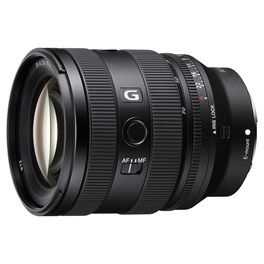
Focal Length: 20-70 mm Aperture: f4 - f22 Lens Construction: 16 elements in 13 groups Minimum Focus Distance: ~0.25 m Weight / Filter Thread: 488 g; Filter size 72 mm |
A newer lens from the Sony camp, the FE 20-70mm f4 G lens has been designed for those who are hankering for an all-in-one workhorse for most of their projects. As such, it’s an ideal choice for the travel filmmaker. Its 20-70mm zoom range may not sound like the widest, especially compared to some of the other options on this list, but in reality it’s the focal range you’re likely to be working most of the time. Sony has cleverly optimised this lens for video, with minimal focus breathing or focus shift occurring when you zoom, and it’s also built nice and tough. We wouldn’t exactly throw it in a river and expect it to come up smiling, but it’ll cope in the rain with no issues.
One thing to bear in mind though is that the focusing action, while quick and certainly quiet, is not completely silent – so you may pick up a little of it in your audio.

|
Pros:
Cons:
|
Focal Length: 12 mm (APS-C) - Aperture Range: f1.4 (max) to f16 (min) Lens Construction: 14 elements in 12 groups (includes 2 SLD + 3 aspherical elements) Minimum Focus Distance / Magnification: 0.172 m / 1:8.4 (≈0.12×) Weight: 225 g |
Sony’s APS-C range includes several brilliant cameras for vloggers and run-and-gun filmmakers. If you’re using one of these cameras, such as the ZV-E10 II or the A6700, an excellent lens to pick up is Sigma’s 12mm f1.4 DC Contemporary. With a wide 18mm equivalent focal length, it hits the sweet spot for general-purpose video shooting, allowing you to fit plenty into the frame without distortion.
The lens has a whisper-quiet focusing mechanism, and has also been specifically engineered to minimise focus breathing. Lightweight and low-profile, the 12mm will also balance well on gimbals, so you shouldn’t have a problem slotting it into your existing video setup. And while you may miss the flexibility of a zoom, having an F1.4 aperture brings plenty of advantages of its own, both in terms of low-light shooting potential, and the ability to create a lovely shallow depth of field.
|
Pros:
Cons:
|
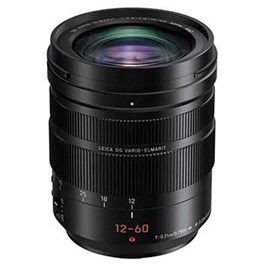
Focal Length: 12-60 mm (24-120 mm equivalent full-frame) Aperture Range: f2.8 (wide) – f4.0 (tele) maximum; minimum f22 Optical Stabilisation: POWER O.I.S. included Optical Design: 14 elements in 12 groups; includes 4 aspherical + 2 extra-low dispersion (ED) elements |
This effective, flexible zoom lens is an ideal choice for the travelling filmmaker. With an equivalent focal range of 24-120mm, it covers you for a lot of shooting situations in one, and the Dual IS is hugely effective when paired with a Panasonic body that has its own in-body stabilisation. The systems work in tandem to produce a stabilisation effect rivalling that of a gimbal, meaning that’s one accessory you can leave at home if you’re short on space in your kit bag.
The quality the lens produces is excellent, with chromatic and spherical aberration well corrected. Video-optimised features include silent focusing, a micro-step drive in aperture control that ensures changes in brightness are dealt with smoothly, and a barycentric optical design that minimises image shift when zooming. With a dust- and splash-resistant design, this lens is ready to take whatever conditions your travels throw at it – and one last thing we particularly like is the impressively short focusing distance of 20cm. The only downside is the variable f2.8-4 maximum aperture, which is going to limit your ability to produce bokehlicious imagery with a shallow depth of field. For that, you may want to also think about packing an inexpensive prime lens with a wider aperture – the Panasonic 9mm f1.7 LUMIX G LEICA DG SUMMILUX ASPH is a good choice.
|
Pros:
Cons:
|
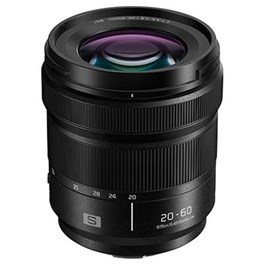
Mount: L-Mount (Full-frame format) Focal Range: 20–60mm versatile zoom Aperture: Variable f3.5–5.6 Close Focus: 0.15m minimum at 20mm Weight: 350g with weather-sealed construction |
If you sometimes like to get a slightly wider perspective than most standard zooms allow, the Panasonic LUMIX S 20-60mm f3.5-5.6 Lens is an excellent choice of optic for your L-mount camera. It’s impressively lightweight too for a full-frame lens, weighing in at just 350g, meaning it’ll balance well with the smaller L-mount cameras like the Lumix S5 and Lumix S5 IIX (and, for that matter, the Sigma fp L).
So, that’s already a big tick for the travel filmmaker – but the LUMIX S 20-60mm f3.5-5.6 Lens has other things going for it. For a start, it’s optically excellent – that’s something of a given when a lens has Leica in its name – but there’s also been a concerted effort to suppress focus breathing, and there’s essentially no visible breathing as focus changes, which is great for keeping your video smooth. The lens lacks its own stabilisation system – though if you stick with Panasonic-made bodies, this won’t be an issue.
|
Pros:
Cons:
|
Mount: Fujifilm X (APS-C format) Focal Range: 16–55mm (24–84mm equivalent) Aperture: Constant f2.8 Autofocus: Twin Linear Motors for fast, silent AF Weight: 655g with full weather resistance |
We absolutely love this lens. It makes for a perfect kit lens upgrade for anyone who has outgrown the XF18-55mm f2.8-4 R LM OIS XF, but also tosses in a lot of features that make it fantastic for travel filmmakers. For a start, it’s weather-resistant, meaning you don’t have to worry about a downpour curtailing your shoot, and its constant f2.8 aperture gives you flexibility in low light. Sharpness is excellent right the way through the zoom range, which spans a very useful 24-84mm equivalent, pushing a little further on the telephoto end than many standard zoom lenses.
For video work, it might have been nice to have the option to de-click the aperture ring, allowing for smoother exposure changes. It’s also worth noting that the lens doesn't have its own stabilisation system, meaning you’ll be reliant on the camera body’s. Otherwise, there’s no reason for us not to thoroughly recommend this lens as a jack of all trades for travel filmmaking.
|
Pros:
Cons:
|
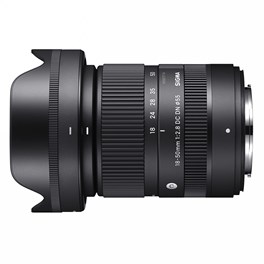
Mount: Fujifilm X (APS-C format) Focal Range: 18–50mm (27–75mm equivalent) Aperture: Constant f2.8 Design: Compact and lightweight at just 285g Close Focus: 12.1cm minimum focusing distance |
It was welcome news indeed for Fujifilm shooters when Sigma brought its 18-50mm f2.8 DC DN Contemporary lens to the X-mount. This really is an excellent lens – covering an equivalent focal range of 25-75mm, it hits the all-purpose sweet spot for filmmaking, and it’s tack-sharp to boot. It’s probably sharper than a lot of comparable native Fujifilm X lenses, especially in the centre – you’ll find some corner softness at the widest zoom and aperture settings if you go looking for it, but this is pretty much always the case with a zoom such as this.
Having f2.8 at your disposal throughout the zoom range makes this a tidy, capable lens for just about any travel filmmaking situations. And while constant apertures have a reputation for making lenses unpleasantly heavy, this one is pleasingly light, weighing just 285g. Note that it’s not officially rated as weatherproof, though it does have a rubber-sealed mount.

|
Pros:
Cons:
|
Mount: Micro Four Thirds (MFT format) Focal Range: 12–45mm (24–90mm equivalent) Aperture: Constant f4 Optics: High-grade construction with ZERO Coating Weight: 254g with dust-, splash-, and freeze-proof design |
OM System’s PRO zoom covers an equivalent zoom range of 24-90mm, making it a brilliant all-purpose lens for travel filmmaking. True, some users may wish for a bit more width, but if you can cope with 24mm, you’ll find this to be a brilliant travel filmmaking lens. It produces crisp, high-contrast imagery right the way through its zoom range, and weighs just 254g (one of the real strengths of Micro Four Thirds is how much telephoto reach you can get from lightweight lenses).
OM System’s “PRO” designation means the lens is built for tough conditions, and can stand up to difficult weather. Its focusing performance is fast, silent, and accurate, and it can focus in at distances as close as 12cm. The glass elements have been treated with ZERO coating, which suppresses flare and ghosting to produce images full of vivid colour and contrast.
FAQs
What type of lens should I use for travel filmmaking?
It depends on your preferences and the style you're going for, but typically a versatile zoom lens with a focal range of 18-200mm or 24-70mm is a good choice for travel filmmaking. This will allow you to capture both wide landscapes and close-up details.
Is it better to use a prime or zoom lens for travel filmmaking?
Again, it depends on your preferences and style. Prime lenses generally offer better image quality and a wider aperture, which can be useful for low-light situations or for achieving a shallow depth of field. However, zoom lenses offer more versatility and convenience, allowing you to quickly change your focal length without having to switch lenses.
Should I invest in expensive lenses for travel filmmaking?
It's not necessary to invest in the most expensive lenses, but it's important to choose lenses that are of good quality and fit your needs. A mid-range zoom lens with good image stabilisation can be a great choice for travel filmmaking.
What is image stabilisation, and do I need it for travel filmmaking?
Image stabilisation is a feature that reduces camera shake, resulting in smoother footage. It can be especially useful for handheld shots or when using longer focal lengths. It's not absolutely necessary, but it can significantly improve the quality of your footage.
Can I use my smartphone for travel filmmaking, or do I need a dedicated camera and lenses?
Smartphones have come a long way in terms of camera technology and can be a great tool for travel filmmaking. However, dedicated cameras and lenses still offer more versatility and better image quality in most cases. It's a matter of personal preference and your budget.
How do we decide?
Our in-house photography specialists, store staff, and industry partners work together to review our buying guides and advice articles. We also monitor emerging trends and listen closely to customer feedback, ensuring our recommendations stay current and relevant to what photographers and filmmakers are actually looking for.
By carefully curating the products we recommend, our guides are designed to offer clear, trustworthy advice that helps customers choose the right kit with confidence.
If you would like further advice, our contact centre team are here to help. You can also reach us via email or social media. And remember, if you purchase based on our recommendations, your order is covered by our full returns policy.
The Wex Blog



Sign up for our newsletter today!
- Subscribe for exclusive discounts and special offers
- Receive our monthly content roundups
- Get the latest news and know-how from our experts